


Every human being is god himself, but it does not understand its true self, and it is constantly engulfed by the influence of its mind, its intellect, which you call as a great illusion, says Vamsi Krishna.
All people are as droplets in an ocean, says David Icke.
And all it is, as everything else is, a choice. A choice between fear and love.

Mr Icke was previously a European footballer, free kicks and defensive walls. For life to be choice between fear or love, it would be the bipolar disorder.
He could be yet the most remarkable as the first in history Briton to claim that Shakespeare would not make it for a fish pond.
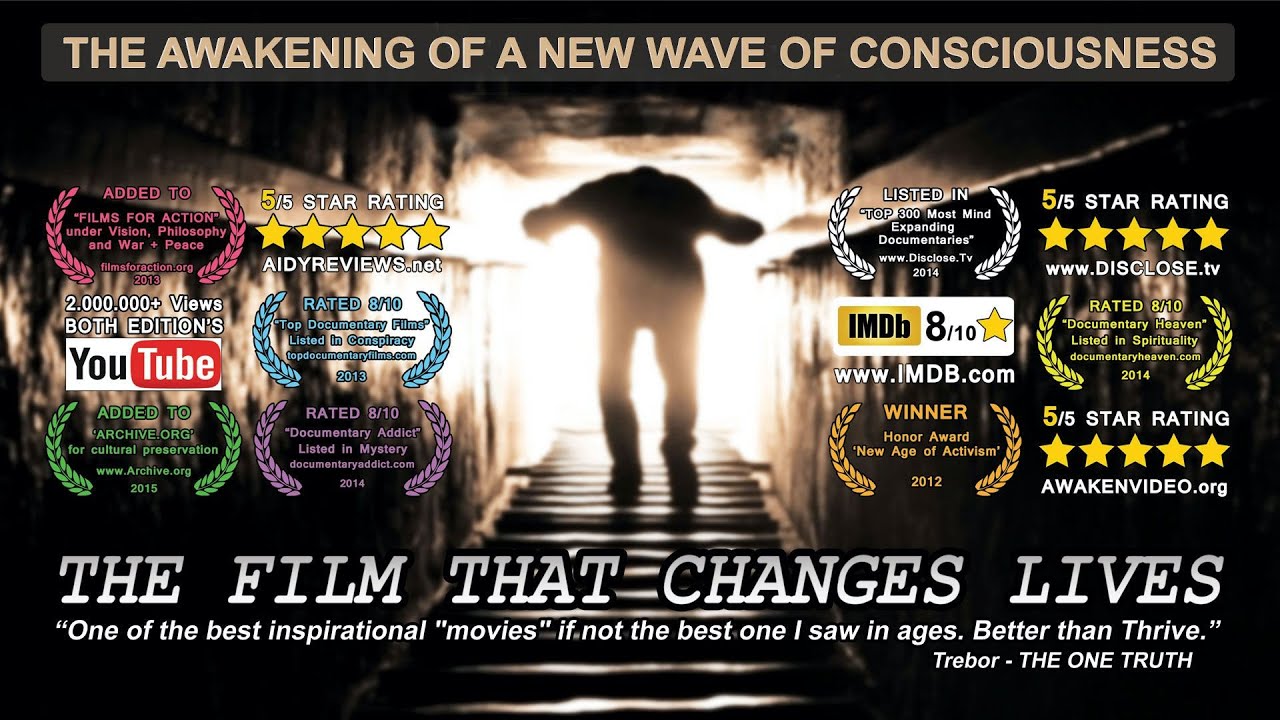
We can view “The Awakening of a New Wave of Consciousness” on YouTube.
Minds and words
The linguist I have been by profession, I may read words a bit different, with dictionaries and resources more. In Mr. Vamsi’s words, I sense some Latin. ■Divinus got interpreted into things godly after it was used for alternates with ■dividuus, partible.
Today, the human individual remains to suggest of the indivisibility, where we may compare Emily Dickinson and her ■Exclusion.
The soul selects her own society,
Then shuts the door;
On her divine majority
Obtrude no more.
Mr. Vamsi would be saying that everybody is god, but nobody knows own true self or god part because every person lives under own mind or brains, and these are illusions.
If the mind is an illusion, then any opinion by it is an illusion, inclusive of the opinion that the mind is an illusion.
It may yet happen that something is not a person. Shapely and Handsome dicuss.
A Shapely and Handsome Fable, chapter 5
True Being is not a person.

Allow me to explain here already, I do not intend a religious contestation. My lifetime philosophy is my Fable of Philosopher Honeybee, emphatically not a doctrine.
ADVERTISEMENT

About Earth and Cosmos he said,
Perpetuum mobile was already with ancients a phrase for the impossible in a solitary thing, and the stars continue to show, Earth has been twirling itself and around the Sun, neither slowing nor going faster in the long run. It is improbable there would be nothing more than Earth.
The soul
Honeybee would agree there is strong probability that everyone has own soul indivisible, or everyone is own soul indivisible in own mortal body. The “divided ego” is a bodily ailment, whereas acrobatic flips may look like they take more than mere muscle. ■Shapely and Handsome have more.
God would be yet a Creator of a Living Day. There are no beings on Earth known for such skill, as it takes making cosmoses and free will in a bud for every human being to have own. People are never gods.
Seeing the soul
To children, a rainbow is something vivid and real; but the grown-ups know that it is merely an illusion caused by certain rays of light and drops of water — says a Buddhist teaching to deny people have souls. [1]
Rainbows are physical phenomena and thus they are absolutely real, only uneasy to touch. They do not prove the human soul.
Soul recycling
Some Buddhist belief would say there is the soul. It is not much of a fancy prospect, as souls would be recycled — amnesic and also against will. To escape the recycling, you have to be your “own monarch” and of proper escape velocity. Admittedly, these are terms of politics and physics.
To try being king without office is madness. You would rather be a mogul or tycoon with proper inks.

Honeybee would say the word “king” has come with the Greek kine as in kinesthesia, for doing things, that is, moving about too. Ability precedes the office, and the original idea as represented in the first trigram, sovereignty, is the kine of independent movement in man.
This would be the southern, “green” ancient Greek along with Phoenician, to explain on word origins for a k(y)n(i)g or kw(e)n(e), for as able a queen, originally a ■girl. The letter symbol Y could make quite a story alone, see ■Wikipedia.
It could be by a physical process in part that the indivisible leaves the world of partible physics after the body dies. Soul recycling would be yet unlikely. All souls become on Earth. Everyone has one, own eternal fiber.
To recycle a soul you would need a “blank body”, without the fiber or soul, and such cannot live. Alternately, you would have to split the fiber — the indivisible — because there are more and more people on Earth. Neither would appeal to the philosopher.
Denial of the soul
There is yet also Buddhism that rejects the soul. Accordingly, the poem above, the Exclusion, would have been created by “a collection of processes” and not an entity. The movie below explains, five aggregates together make an “illusion of a self”.

The Anatta
Entire collections of teachings were attributed to Siddhartha from reportedly a tradition that was ■spoken, and ■first committed to writing about 400 years after the Buddha’s death. The copies people have today are still younger and by no means ■autographs by the Buddha or his disciples.
Even the Buddha’s language is uncertain, speculation pointing to Middle Indo-Aryan dialects and particularly ■Pali. The time the ■Anatta emerged is not known. It might have been late Middle Ages: the ■Middle Indo-Aryan period ended around 1500 after Christ.
People and trees
Honeybee would say, a linden tree may live a thousand years and blossom. Change or variance does not deny identity.
To reckon on teachings and the Great Design, Honeybee would think about a garden. If Buddhist ideas would not meet the expectation with regard to horticulture, they could not be fitting to express lore about human beings.
■Upanishadic concepts are worded today as,
□ All psycho-physical processes (skandhas) are impermanent;
Should all life in a garden be evergreen?
□ If there were a self, it would be permanent;
Should all fruit always be on trees?
□ If the self existed it would be the part of the person that performs the executive function, the “controller”;
Should we decide the size of the fruit or not have it?
□ The self could never desire that it be changed (“anti-reflexivity principle”);
Should we never plant new trees?
□ Each of the five kinds of psycho-physical elements is such that one can desire that it be changed.
Should we plant new trees every year?
The Upanishadic conclusion is ― There is no self.
Honeybee conclusion is, if you can, you’d better have that beautiful garden.
The skandha
A Buddhist skandha means a heap, aggregate, collection, or grouping. It refers to five aggregates, that “constitute and completely explain mental and physical existence of sentient beings”, says ■Wikipedia.

You add up or merge the five and you get a human being you totally understand, they say.
The aggregates
The five Buddhist aggregates or heaps would be:
(1) rupa, the form, matter, or body;
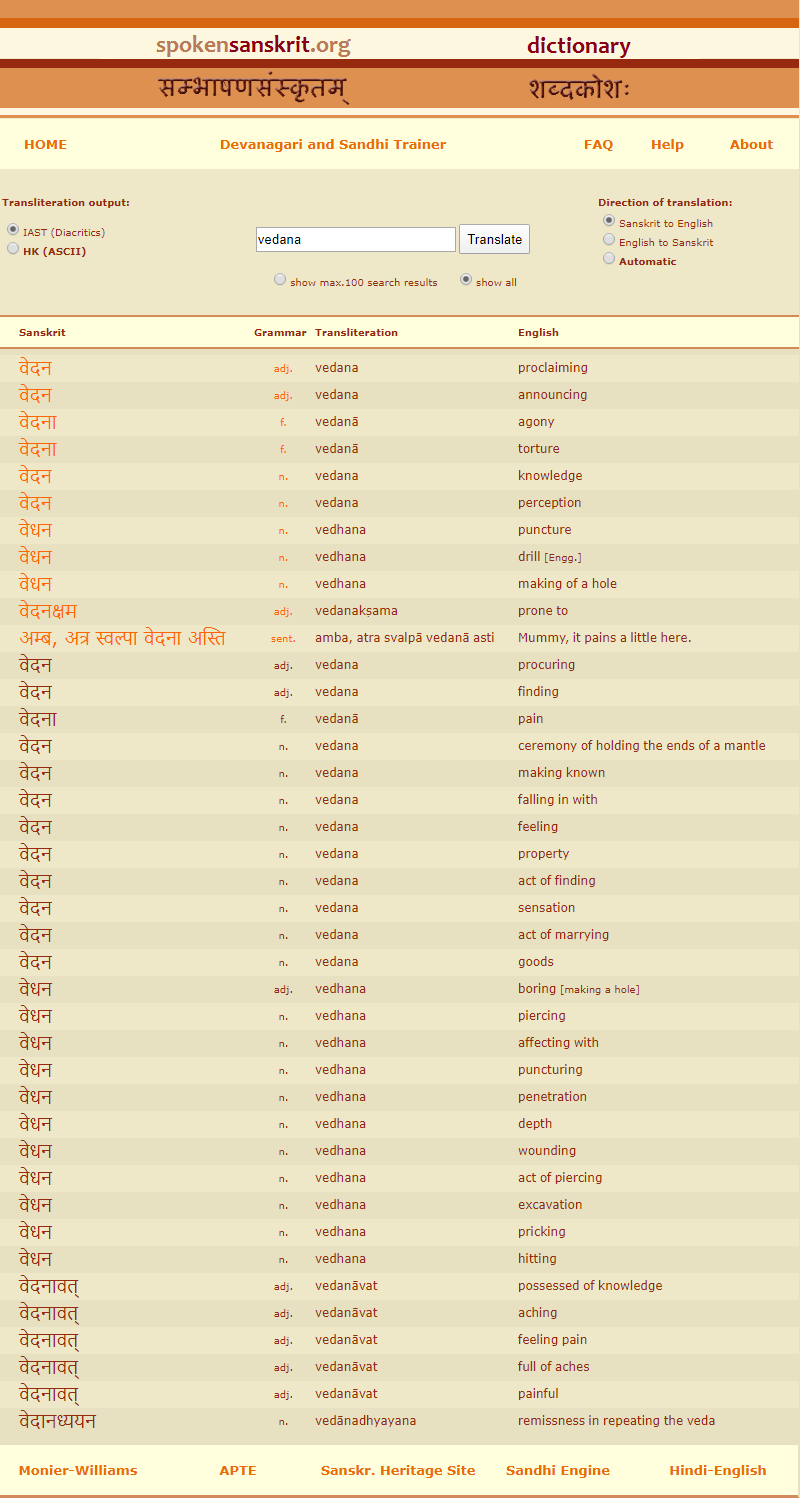
(2) vedana, sensations or feelings;
(3) samjna, perceptions;
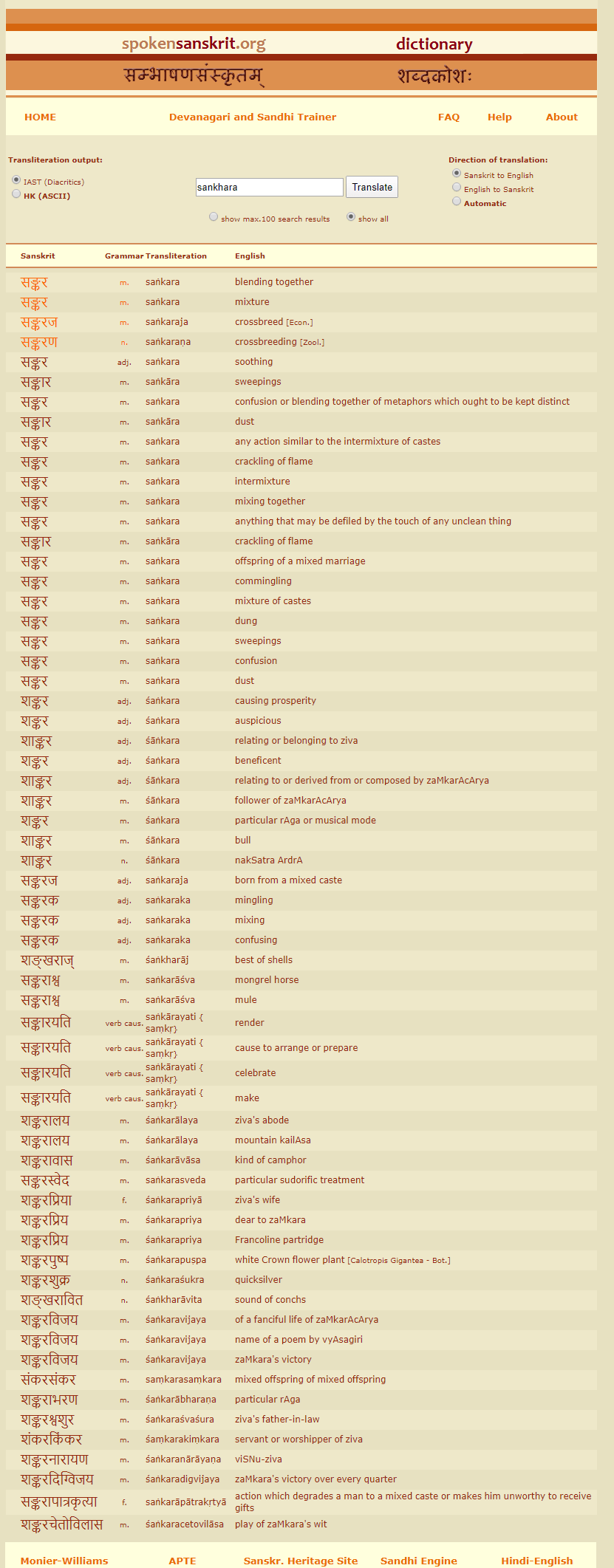
(4) sankhara mental activity or formations;
(5) vijnana, consciousness.
The aggregates and the verb “to be”
The verb to be is a wonderful test on things of the mind and the world around. Some Buddhist teachings would say the world is not real. Whether you hold the world for your reality or not — you live a form of existence.
The verb phrase, “to live a form of existence”, meets the requirements for a reality.
A reality allows the verb to be. If your line does not work with the verb, your argument is fallen or not fitting at least.
Rupa
(1) The first aggregate brings form, matter, and body under one term, rupa.
If we carved a word in wood — let us say the word is we — and then wrote it in ink or printed it out, it would be the same bodily representation in form and different realizations in matter.
In simple words, it would be visibly the same word, we, carved in wood, written in ink or printed.
Form is not the same thing as matter, and thus the skandha does not truly exist. We cannot use the verb to be for rupa because it is not always that its parts coexist.
We might have words on mind we do not intend to write because they are just a thought in progress, or see words written we cannot or do not interpret. If we have wood or paper — matters much when we intend to write words.
Vedana
(2) The second aggregate generalizes feeling and emotion into “sensations received from form”, vedana. Since the Buddhist form would belong under the same term with body and matter (rupa), a prod would be the same as a sentiment, only it is not. The second skandha is not objectively real either.
Samjna, sankhara, and vijnana
The last three aggregates would separate perception, samjna, from (4) activity of own mind, sankhara, and (5) consciousness, vijnana.
Honeybee says, the Great Design does not allow any separation of the soul indivisible from the body during earthly life. Separate, the indivisible has to leave, and the body dies. The mind may have discernment, but it is never separate or truly independent of perception.
ADVERTISEMENT
It is the inner common sense, together with the imagine power, to help learn spirituality and coherence in mind and body. No one is born with faith. Man is only born with own soul.
Contradictory vocabulary
The word ■gautama may also mean poison, and the vocabulary generally brings juxtaposition, to compare the Spoken Sanskrit for ■skandha, ■rupa, ■vedana, ■samjna, ■sankhara, ■vijnana.





The word form “skandha” alone may bring meanings as a branch, a war, or evil — and religion. Skandhā-pasmāra may mean a demon causing a particular disease, and skandha-şaşthīvrata may indicate a particular religious observance.
Nothing more to us people?
There is nothing more to us than just those skandhas (or aggregates), Wikipedia quotes Mark Siderits. [2]
With the verb to be, the 5 ideas would be an elaborate construct to tell everyone they’re no one, an impolite concept. The impression needs not come with a linguistic device, as a verb. Recycled amesiac souls or no souls at all — it is no recognition for personality by the man of religion. Faith recognizes persons as spiritual.
The Buddha starved
The Buddha starved to meditate. The spoken tradition tells he even fainted during the practice. His observations might have been early reasoning on stochastic and deterministic modes of brain neural networks, standard for human neurophysiology today. It is enough to focus to perceive them, without hunger or stress. Feel welcome to try. The exercise is for grammar, not religion.
■Grammar Weblog, Mind practice.
The ego and self
What would the teaching sound, if the teacher referred it to herself? Her words would be as,
Spiritual amnesia puts me in repeated cycles; there is a nefarious nature with this; you can trace it back to narcissism; it is definitely gnostic to think so. The more I am in the state of amnesia, the more I am having my free will revoked. Amnesia is placed over my soul; it is instead of my conscious decision …
It is not unusual for people to come up with projections from own self upon other people.
For the starving Buddha we may reckon, a starved human being may lose his or her somatesthesia. Dependent on translation, you might say there is no self anymore or that you cannot feel your body.
What is certain, you need your soul, your own spiritual self that is, to have afterlife at all. You only cannot expect of this mortal world to tell you about the After.
ADVERTISEMENT
About life he said,
Earthly reality may show some heuristics for the lasting or eternal form. Mortality yet cannot demonstrate immortality; like under water, you don’t really smell the roses.
Endnotes
[1] What Buddhists Believe: Is There Eternal Soul? ■Screenshot | ■live page.
[2] Buddhist philosophy, Mark Siderits: “What the Buddhist has in mind is that on one occasion one part of the person might perform the executive function, on another occasion another part might do so. This would make it possible for every part to be subject to control without there being any part that always fills the role of controller (and so is the self). This would explain how it’s possible for us to seek to change any of the skandhas while there is nothing more to us than just those skandhas.” ■Screenshot | ■live page.

