
I first published this article on HubPages in 2012, before I got more into blogging and decided to integrate my content.
Polish language does not have a phrase as the “home country”. It has a fatherland or motherland. It must have been that Rzeczpospolita never made much of a home.
Born in Poland — and nobody has choice on the time and place to be born — you cannot change your citizenship, unless the President grants permission. There is a regulation that says, the Presidential resolve is final; it cannot be appealed.
Constitutions have been worldwide to tell people what rights they do have. The Polish constitution is the exception. It says, “you can do it only if you are personally allowed”

European Union should require that all member countries allow citizen freedom of decision on renouncement of citizenship.
I have never loved Poland, and it is not my intention here “to say something unpleasant”. Such has been plainly the fact. I have never declared I would love Poland.
There was no time to get to love the country. I was born in 1970, when Polish Communists were making a show of their absurdities, and I was only 11 when the martial law began. Poland became ugly. September 1982, I went to school with biological tears rolling down my face, with tear gas from the day before. It felt unconditional, and it was detached from the circumstance. I liked school.
Winter 1981, Polish soldiers were allowed to carry weapons in city streets and to shoot people. You had to hand in your ID.
The civilian secret security continued the national hate that resumed with the end of the World War. ■Humer flogged private parts of “terrorists” and “spies”. One of his victims was a woman, member of the Home Army and the Freedom and Independence association (■AK & ■WiN).
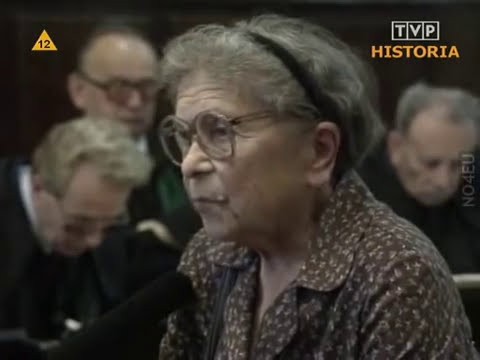
In the movie, the narrator encourages to give thought to nationality. I have done my thinking. I am emigrated permanently
Poland abroad
Abroad, the picture of Poland that comes mostly from the Polish people is that of heroic resistance against neighbors, nations vile and ruthless in their line of business.
For centuries, Poland was Europe’s marching ground — when it was not dismembered and wiped off the map by some combination of Germany, Austria and Russia. It battled the Teutonic knights in the Middle Ages, and Hitler’s blitzkrieg in September 1939 lives on, in the minds of the elderly and the imaginations of the young,
— we can read from far away as Australia and ■The Sidney Morning Herald.
Life in Poland
I remember Poland primarily for undue influence by Polish services, mostly military. I emigrated in year 2004, long enough after the ■Round Table to know it had not brought the change it promised. I am resolved to change my citizenship.
Here is some of my picture of Poland, of the Rzeczpospolita that never developed the phrase “home country”.
Years 1991-2006, in Poland democratic in promise, operatives of Polish Military Information Services, ■WSI, independently formed — and independently named — The Society for Utmost Irresponsibility “Roll-up”, Stowarzyszenie Najwyższej Nieodpowiedzialności “Rolowisko”.

They were seeking extra money for own personal pockets, and interfered with civilian businesses in a spirit of nonchalance as deep as showing in their emblem to imply a crowned capon for the Polish eagle.
■Antoni Macierewicz made a report on WSI and enclosed the usual already motif, that the “Roll-up” was a Russian influence. Polish operatives have yet always been chosen by long ancestry, “forefather and forebear”. The investigation turned up no conclusive Russian evidence.
■Gutenberg.org: Macierewicz report
Russians had been blamed as often and out of context, that I did not even notice that motif in Macierewicz at first. Purportedly Russians brought “ś” into the Polish wziąść (the verb to take), only Russians did not have the speech sound.
If the law did not forbid
WSI was a merger of the Communist ■Internal Military Service and ■Second Directorate of General Staff, who partook in death verdicts as well as executions on suspected opposition — inclusive of women.
Female citizens of Poland never have been subject to military service, and never belonged under Polish military authorities.
■Polish Wikipedia, Executions in the Main Directorate of Information Masovia:
Krystyna Mielczarek (1923 – 1946);
Barbara Niemczuk (1922 – 1946).
Arrested in the beginning of July 1946. Sentenced to death on July 31, 1946. The execution was carried out on August 27, 1946, in the Military Information Main Directorate, Warsaw.
The military sentiment, or so it looks, was the Polish “noble liberty”. If the law did not specifically ban or ordain, it “allowed”.
The present Constitution of Poland shows the sentiment for very strong.
Polish Constitution of 1997
No tripartite, no bill of rights, no supreme law of the land.

The “little meadow”
The Warsaw Little meadow (“Łączka”), was a secret burial site for people executed or tortured to death by Polish services. The law did not exactly predict on the secret mien in ■Powązki “Section Ł”. Officially, it was an unused part of the military cemetery.
Legal prediction did not make things better in Poland of the years 1945-89. Reference in years is better than description as “Communist Poland”. The country remains the same place on Earth where “Live and let live” is no motto. Wikipedia narrates on the Polish ■TKM.
The bill of January 31, 1959, granted anyone “who willfully took the task”, the right to bury a human body. Corpse transportation did not require any permit in built-up areas or their 30 kilometer perimeter. People of no medical training could pronounce a person dead.
■ The bill of January 31, 1959, on cemeteries and burial of the dead
Articles 10.1; 11.2; 14.1; 23.

In Warsaw alone, Polish services had secret burial sites in
♦ Służew, Wałbrzyska street old cemetery, Dolinka district and Saint Catherine parish, the horse races; ♦ Mokotów; ♦ Bródno; ♦ Praga, “Toledo” and November 11 street; ♦ Trojanowo.
■ Exhumations by the Polish Institute of National Remembrance
The picture of Warsaw may psychologically change, if to include the secret conduct. Poland never had public court of law proceedings for its former services, as Germany did. My ■Google Drive has the map.


In standard Polish language, ■łączka is a place for care-free leisure or beginner exercise, as the ■”donkey little meadow” is in English. Year 2016, Polish Institute of National Remembrance announced a meeting at “Łączka”, care-free to adopt the verbal behavior by former oppressors.
Polish national cruelty
Those were Polish people to be cruel on Polish people. ■Adam Humer acted for the Public Security Bureau. Later, his American birth was pointed out, and at the same time he was called a Stalinist, but his sadistic acts did not result from American or Russian command. Paradoxically, if to blame Russians (Americans were not in the territory at all), it could be only for their not having controlled Humer enough.
N-N, Name Unknown
Anything was better than people with the Polish military information service. They were — sadists by a big S, and murderers by a huge M — said Paweł Wieczorkiewicz, a historian; Wikipedia
“You are going to be an en-en”, was a phrase you could hear in Poland also many years after the Round Table. It was enough you were not inclined for Polish services. The acronym meant “name unknown”, in Polish nazwisko nieznane. It was used in Poland 45-89 for bodies difficult or impossible to identify.
Year 2009, the acronym “N-N” recurred for surveillance. Purportedly it was to mean telephone “number unknown” (Polish, numer nieznany). Polish services claimed they had no idea what phone number they wanted to monitor, but the judge granted a warrant.
The “dummy citizen”
In Poland 45-89, a Bureau B human target was nicknamed a “figurant: ― a dummy, poser, silly, someone who pretends. In colloquial Polish, a term to get along with thieves and their jargon. A surveillance task would be worded as,
Addresses, contacts, and lifestyle; observation to be continued also if the dummy departs.
Adresy i kontakty oraz tryb życia; w razie wyjazdu figuranta obserwację prowadzić dalej.

The facsimile shows a declassified document from 1969, with the words “secret” (Polish, tajne) and “dummy” (figurant) in red frames. It also says the person was taken under observation based on a photograph | na podstawie fotografii.
The operative toolkit
An operative toolkit of Poland 45-89 looks capable of influencing people as well as stone. Polish law did not have specific rules on use of objects as in the picture published by the Institute of Remembrance, whoever to explain such a choice of things.

Poland 89-and-later continues with the approach. There is no bill to regulate the services “intimate activity”, where it is reasonable to doubt if that would be attraction to make citizens helpless — a theory right next.
Microwave technologies
Modern toolbox repertoires may use microwave technologies. Barrie Trower talks about microwave uses on people. I have translated some of his account into Polish and subtitled an excerpt; I believe the fair use does not breach on copyright.

■Barrie Trower, The Dangers of Microwave Technology, YouTube
Source video, Interview with Barrie Trower.
According to his revelations, if microwaves were honestly that harmful we would, by now, have many cases of people becoming seriously ill from the dreaded fiend in disguise the sheeple know as Wi-Fi … Remember to buy a packet of tinfoil hats for the entire family, the man in the straitjacket said so!”
— This is supposedly the ■Rational Wiki.
Mr. Trower was with the Royal Navy. The real matter thus would be, do they take people in crazy — or, is the Royal Navy most certain to drive you mad?
It is reasonable to control transmitters also as for Internet, the same as electricity power lines; those have been found harmful, whereas microwaves can cause aberration in chromosomes, those ■”jackets” for the DNA.
I have never cooperated (techno or not) and I wouldn’t like it: there is too much of an area for abuse.
Life on Earth cannot be anyway forever, so it should be about living agreeably. Each and every country is a mortal habitat: do we expect a Polish afterlife, another for Russians, and yet another for Germans? There is not even a national blood type or DNA on Earth.
Afterlife, if there is, might be as a new continent a bit. We may remember Thomas Paine, ■Common Sense:
And by a just parity of reasoning, all Europeans meeting in America, or any other quarter of the globe, are countrymen; for England, Holland, Germany, or Sweden, when compared with the whole, stand in the same places on the larger scale, which the divisions of street, town and county, do on the smaller ones; distinctions too limited for Continental minds.
Bodily expectations
The balance between the individual and the society is layered in Poland as thin, that the individual may have no business with an expectation, yet the services would press or demand. Again, the law does not forbid demanding, though it does not prescribe an obligation or duty on the citizen either.
The form of government likely could be described as ■mobocracy, when the document named the constitution says,
… the nation is the supreme power, and the people can exercise that power directly.
The French founding document describes the nation as the source of sovereignty; the USA vests tripartite powers; the German constitutional resolve binds directly, that is, acts as the supreme law.
In Poland, potential factors microwave combined, the thing may render as “ladies and gents up for grabs”. I do absolutely acknowledge phrasings as “the cleaning lady”. The matter cannot be in typification of people; it has to be in the kind of grabs.
“The citizen has no defense”
Year 2009, ■Henryk Piecuch, a Polish border guard before 89, went public with his observations on the Polish new “intimate service”:
The citizen has no chance to defend oneself. Technology is at such high standards. The matter is only in matching the victim with a proper agent.
Obywatel nie ma szans na obronę. W dzisiejszych czasach technika jest na tak wysokim poziomie. To tylko kwestia doboru odpowiedniego agenta do ofiary.
Needless yet worth saying, there are no receptors devoted to radios, in human nervous systems. Any influence may be only imposed, whereas “bona fide” came to mean “uncertain” already in Antiquity. Otherwise, you knew and you did not bring in faith.
The high-level or advanced technologies to make everyone willing thus remain a “bona fide theory”, or in words more usual and without quotes, plain bunkum — taken how far theory can depart from reality.
I explain technika as technology, because nowadays Polish media would use words as savoir or art for anything with a closed circuit unless it is technology and thus nothing romantic.
Mr. Piecuch compared Polish practices of 45-89, where companions of both genders were provided for diplomats and generally VIPs, and evaluated service quality as “skies higher” than the Polish “tender Tom” affair of 2009.
■ Henryk Piecuch for Virtual Poland
He remembered, female companions at business talks operated in an obvious capacity also from under the table; yet Poland did not become a market success.
The picture here shows the strongest single factor for the 1989 Round Table: rationing coupons. Shops were mostly empty.

“Tender Tom”
Kaczmarek stated he was a patriot, which brought him support from the ■Law and Justice political party. “Tender Tom” joined Polish Sejm in 2011. He gave up as a parliamentary in 2015, in context of another scandal.

Phot. Sławomir Kamiński / Agencja Gazeta
■Gromosław Czempiński, a colonel with the Polish police 45-89, and later a general within secret security, praised Tomasz Kaczmarek, the “intimate special agent”:
… He (“tender Tom”) carried out his tasks excellently. He made two illustrious cases, and that certainly owing to his talent, skills, and service proper training.…
Świetnie wypełniał swoje zadania. Zrobił dwie głośne sprawy. Zapewne dzięki talentowi, umiejętnościom i odpowiedniemu przeszkoleniu.
The tender professional life had been that of a Polish policeman, before Kaczmarek joined the ■Central Anticorruption Bureau. I do not know if there is any other country to have “sex-agents”.
Intolerable evil
Intimate behavior for purposes other than consensually attained personal pleasure has a name that can be derived from Latin as laid out ■here. A government to subject citizens to ■defect deserves this quote.
Government even in its best state is but necessary evil; in its worst state, an intolerable one; for when we suffer, we are exposed to the same miseries by a government which we might expect in a country without government; our calamity is heightened by reflecting that we furnish the means by which we suffer.
— Thomas Paine, ■Common Sense.
Departure from language
Things do not look like Polish services would praise language. Intellect seems to be an idea made of math and systems, though these cannot do natural language at all. You can only ascribe a cipher to a letter of alphabet. Language has infinity; it is not a system.
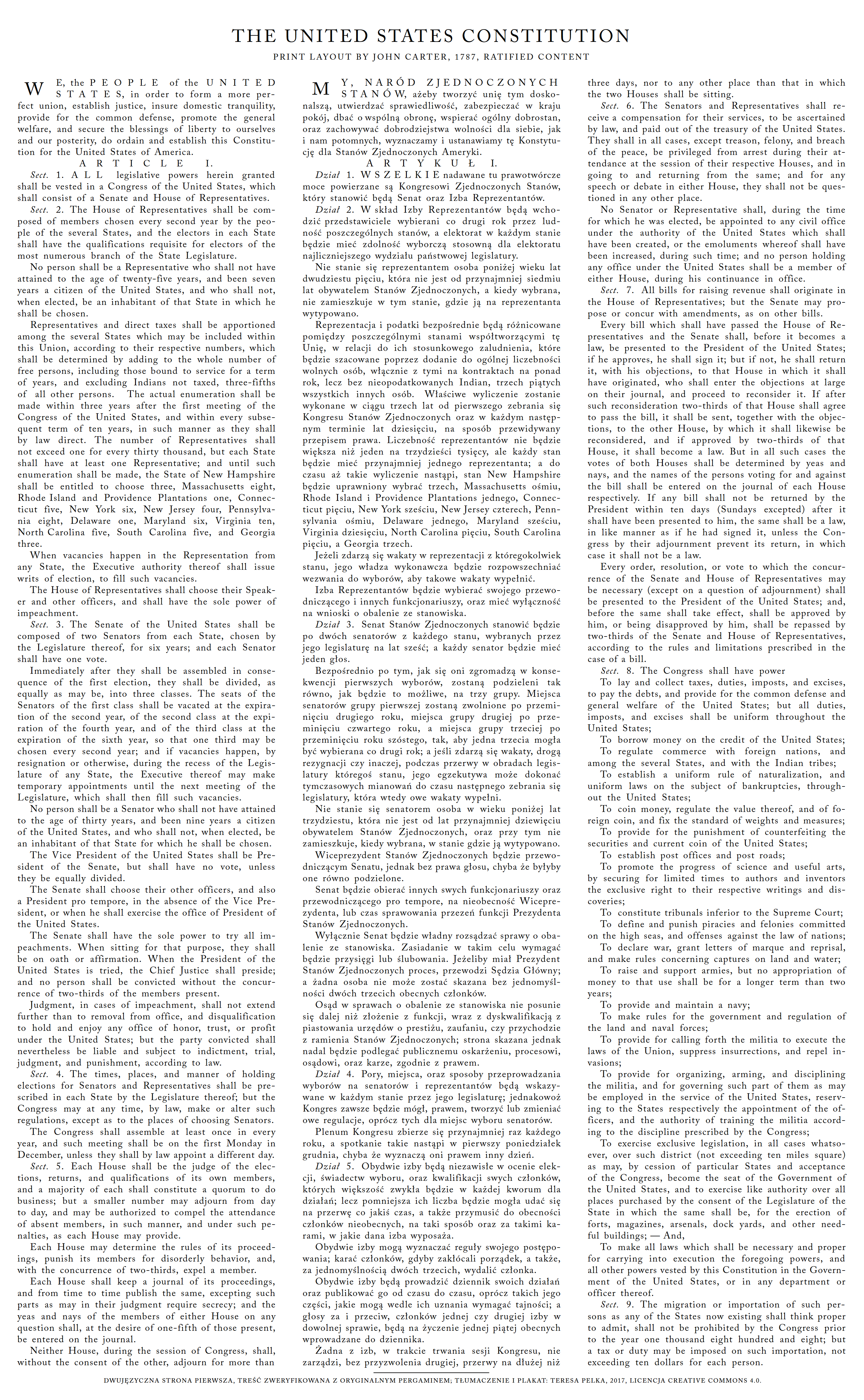
If “a” is bigger in mind than “e”, not even theoretical physics could describe. To compare line for line, two paragraphs of text in translation, we look at two types of physical form, where both have the same information, yet there are no zeros and ones to express it objectively — we could, again, only ascribe those — and yet the information is not something to exist in the head of the reader only.
■USA civics in English and Polish
The Polish practice is as if in the hope to write up a new Sanskrit and look down to people from some above. There is support for artificial, “proto” languages, and Polish is treated like a mute sheet of text.
The natural shape “wziąść” is attributed as “gross” and “abominable”, which is unpleasant about a natural language. For the recommended wziąć you get mnemonics, to memorize.
All language development involves phonology. We look how much time with any semi-vowel at least the tongue does have. ■The Polish Radio offers the shape “objąć” to justify “wziąć” without ś.
Very generally, tongue back and front.

Tongue back and front, “wziąść” is natural.

In natural phonology, speech sounds are of the matter, and objąć cannot deny wziąść.
Wziąść is natural. Without ś the tongue cannot make it between the palatals on the velum and all wziąć ends up some nasalized ońć. It is actually a flaw, for your ą to be oń in Polish.
There is some history too, if you like. The phonological process began in Renaissance, for j and ć as of wnijć to have the mediating ś. A bit later, yet still within the capacious Renaissance, Polish acquired ą from French, and ą is as a “nasal glide” if you prolong it. Voilà, the phonotactic wziąść.
“Powziąć” does not have the tactic “ś” because word stress is on “po”.
Despite everything, natural phonology is considered “colloquial error”, however of plentiful occurrence among people and of note in Polish belles lettres as standard.
Worse still, the advice for placing your comma is today as if not to tell a circle from a square.
■The commatoform disorder
The name of the country
The practiced translation for the Polish-Lithuanian Rzeczpospolita was Res Publica Poloniae, omitting Lithuania from the Latin, affirms ■Wikipedia.
In most countries where people got to know the phrase res publica, forms as the republic developed. Polish does have the word ■republika.
The name of the country is yet rzeczpospolita, verbatim, a commonplace thing. Let us use an acronym for it as RPL, because Polish authorities use RP as they parse, for rzecz, thing, and pospolita, commonplace. They would write and say ■III RP for example, and so the thing is in encyclopedias.
We could write and say the 3rd RPL, Res Polonica. Rzeczpospolita can be difficult to pronounce to people who do not speak Polish, whereas most rather decide if or when to say what, “commonplace” or another thing.
The First RPL
It was a kingdom, also called ■the Polish-Lithuanian Commonwealth sometimes. Both countries were feudal, and the Polish king was the head. Lithuania had a prince or duke.
The name rzecz-pospolita was coined by Polish nobility, when pospolita dziewka meant a woman of primitive manners and low conduct. It was not the word dziewka alone to bring the sense. It meant a girl, potentially also one of those Polish feudals. The adjective pospolita did it.
Today, the word dziewka would speak about low types — hardly ever used, and then offensive. A girl is dziewczyna. The noun ■rzecz and the adjective ■pospolity yet have not changed. “Panna zbyt pospolita na progi”, a maiden too commonplace for the house, is ■literature of 2025.
Pospolita stands for really low a quality, in that 2025; the expression is described as “delicate”, delikatne. Among herbs and other greens, of those named pospolity many are weeds; none would grow everywhere, and only some grow in Poland.
The name of the country comes from the people who partitioned it.
Where it looks like everyone has another business, Reytan illustrates Poland’s ■First Partition being decided by Polish nobility in 1772.
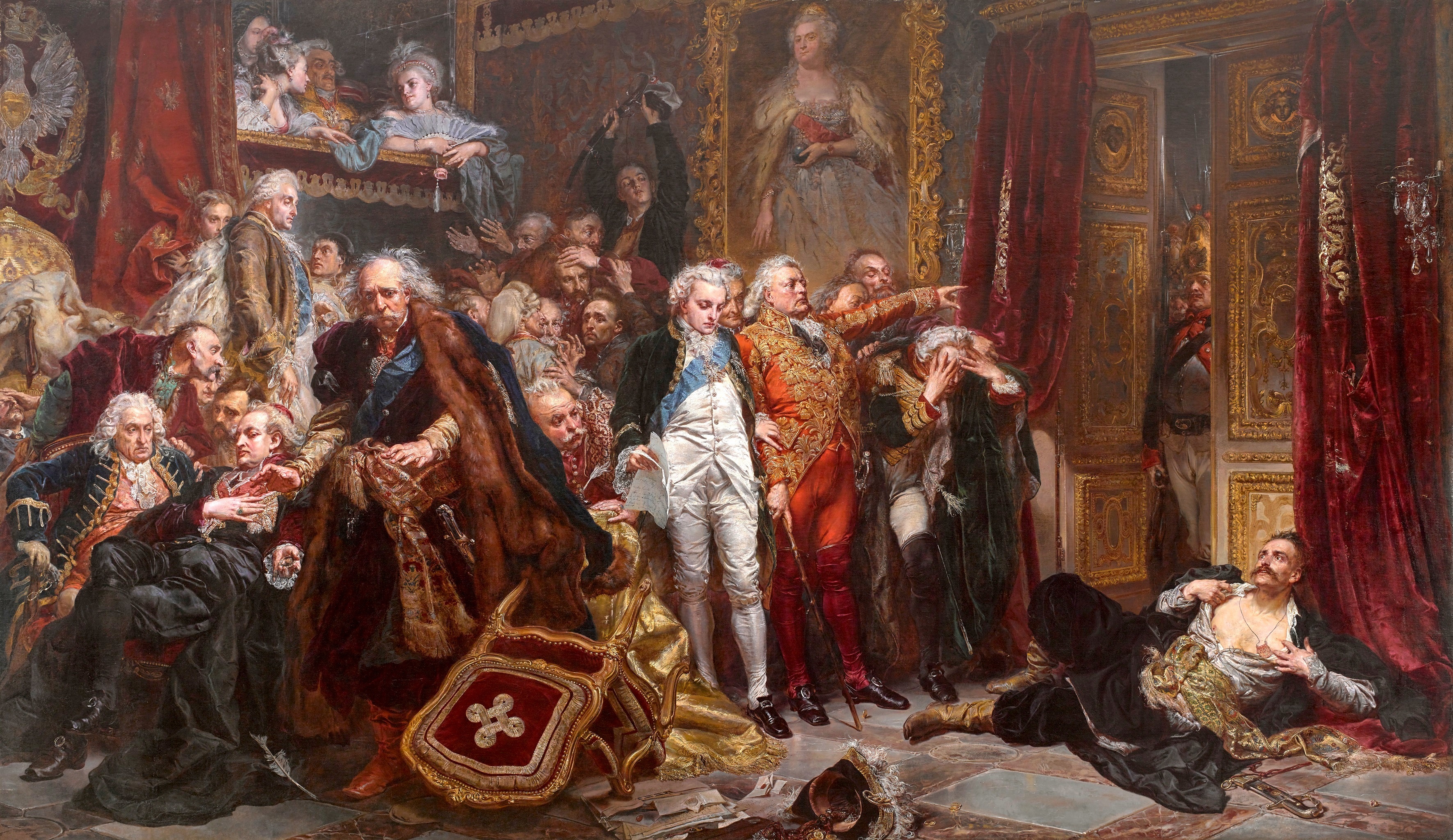
Was Polish monarchy a good thing?
Before 1772, Polish “parliament” was occasional meetings of Polish nobles, with no representation by the people and for the people, hence the quotes. ■Forays were a habit to raid and take hold of property, without even a shriveled slip of paper, for judiciary legality.
There were no human rights. For a Polish noble, to raid and burn a village was no crime, unless another noble objected. A Polish feudal landlord could kill a peasant, unless he or she was of worth to another landowner. Monarch interventions were rare, as kings and queens were elected by those very same nobles.
People at large had no citizen status. They were “souls”, many bonded to the land. If anybody noted on them, it was the church. The people had hardly any education or military capacity.
Polish victory over the ■Swedish Deluge is properly described as Pyrrhic:
Lesser Poland lost 23% of population;
Masovia 40% in villages and 70% in towns;
Greater Poland 50% in villages and 60% in towns;
Royal Prussia lost some 60% of its population.
Source: I. Ihnatowicz, Z. Landau, A. Mączak and B. Zientara; ■Wikipedia, Polish losses during the Deluge.
Altogether, the Polish noble “democracy” brought ■three partitions, and Poland vanished from world maps until World War I:
■The Duchy of Warsaw was not sovereign, and Poland was not its name;
■Congress Poland was actually just another partition; vassal to Russia and smaller even than the Duchy, the area politically was not even a freehold, under the Russian Alexander I, Nicholas I, Alexander II, Alexander III, and Nicholas II — until 1915.
I have never supported royalism, having read a book on Polish history in primary school. I do recommend the free resources here.

The Polish woman
Polish nobility times, a female human being was either a peasant workwoman up for grabs, or kind of a mistress; women who did not want sex could join convents. Discouraged from independence, women had to suffer decisions by whatever slipshod, but a male. No woman could vote.
The list of ■Polish female writers opens late as the 18th century. The women wrote poems, memoirs, and stories for children. ■Rosa Baily is an exception, as a teacher, activist, translator, journalist, history and travel writer, but she was actually French.
In the 19th century still, intellectual progress for Polish women was envisioned in erotica. Wrote ■Zofia Nałkowska,
Eroticism is not a private matter of the individual. It has its ramifications within all domains of human life and it is not possible to separate it from them by way of contemptuous disparagement in the name of morality, discretion, or yet by a demotion on the hierarchy of subjects worthy of intellectual attention: it cannot be isolated by prudery or relegated to science for its purely biological dimension.
Hundreds of years that reduced women to sex objects, and Nałkowska is considered a feminist in Poland today (!)
■Stanisław “Lucky” Potocki was couple with ■Zofia Witt née Clavone, when she was fanning the bedroom embers for servicemen of nationalities. Some of the Witt or Clavone children joined the tzar army.
■Maria Walewska was an offering. Pregnant by another, she married a man much older than herself, ■Anastazy Walewski. Her son was taken away “for upbringing” and later mentioned in notes that urged her to have the affair with Napoleon. She never got to see that son again, though she followed suit.
■Polityka encloses correspondence, reportedly from the ■Temporary Committee:
As long as passions drive people, you will be, Madam, a most formidable power. (…) Would you deem that Esther yielded to Ahasver out of love? (…) Are you not, a daughter, mother, and wife?
She reportedly did not have children after her first son. Rumor or fact would associate her with a boy by Napoleon, later.
In Warsaw it was reportedly ■Joseph Poniatowski to come visit herself and her husband, and hand in the note:
Mary, you must go to that man. It is not us, it is Poland entire to demand this of you! I am appealing to your patriotism!
■Polityka o Marii Walewskiej
God too, was invoked for the sake of the alcove:
Oh, what relief that would be to me, if you said that God’s Providence used me as a tool, indispensable for our beloved country to be revived.
■Wikipedia forwards Frederic Masson’s publication of Walewska’s memoir.
Providence did not let itself used. The Duchy was annulled in 1815, eight years from its beginning. Walewska’s relationship with Bonaparte lasted some 3 years.
■Wikipedia says the Polish Duchy gave Napoleon some 200 thousand people, mostly land force (Otto Pivka, Napoleon’s Polish Troops, ISBN ■9781780965499). Part were dispatched to fight the ■revolution in Haiti, and they did as they were told, though the revolution was for freedom and independence, just the same as the Polish cause.
Biblioteka Narodowa says about 100 thousand Polish joined Napoleon’s expedition to Russia alone. A winter expedition to Russia was an endeavor worth a madman, thus Poniatowski either did not get a message from Poland on that, or he ignored it completely.
■ Biblioteka Narodowa, Heritage France-Pologne
Year 2018, Polish armed forces were counted at 144 thousand 142 people, where you can take away the air force, as no army had it in Walewska times.
■ Wikipedia, Polish Armed Forces

The second RPL
President ■Gabriel Narutowicz was assassinated on his fifth day in office, 1922, by Eligiusz Niewiadomski, the Prus coat of arms of the Polish-Lithuanian Commonwealth.
■Józef Piłsudski overthrew the civilian government in the ■Coup of May 1926. He did not become President; he remained a dictator.
The “Chief” earned quite a renown with the ■“Vistula Miracle”: Russians were about to conquer Warsaw, when he resolved to attack from the south, an unexpected side then.
He yet never opened own school for strategies, and the Polish army continued to lag behind in weaponry and staffing, to compare Germans or Russians. The picture here shows the Pilsudski RPL military at Bzura, in World War II.

Suicide rather than strategy, Polish cavalry charged on horseback straight ahead, against German armored infantry, 4 years after Pilsudski’s death.
The ■Warsaw Uprising of 1944 had no chance to win, and it costed 200 thousand civilian lives. The ■Home Army knew about the Nazi policy of mass retaliation.
The sad act yet befitted the myth of Poland as the ■“Christ of Europe”. In giving the world the show, the rebels did not think if the world would have “bought the tickets”. ■Yalta definitely was no standing ovation.
■Wikipedia, Warsaw Uprising, the opposing forces:
3 thousand rebel guns, against enemy 10 thousand armed force to include Luftwaffe.
In primary school I wrote critically about the Uprising. My sentiment was that of an ordinary civilian. I am never going to change my mind: citizen lives were of no matter to those people. Selectively, a movie may illustrate it.
■Kanał by Andrzej Wajda shows two Home Army paramilitaries as they cater to their own fame: Future generations will worship us (ale będą nas czcić przyszłe pokolenia), 0:50 in the ■clip here, or some 0:07:18 in the ■source video on YouTube.

I’ve included my captions with the clip, because the source omits Mokotów and Warsaw city center from translation, and Nazis were already retaliating around, according to their method. ■The Wola slaughter began on the 5th day of the Uprising, which the rebels knew.
It’s a beautiful world, in part

I’ve been doing this since I don’t know when: with an unpleasant matter, I look for something pleasurable about this world, simply to balance on things.
The Third RPL
The national emblem of the Thrid RPL is wearing a crown owing to the ■Contract Sejm, after 1989. There was no general vote on the matter.

There are a few such eccentrics in Europe, to have presidents with royalist emblems, Bulgaria, the ■Czech republic, ■Finland, ■Georgia, Lithuania, ■Malta, ■Montenegro, ■Romania, ■Serbia, absolutely enigmatically Russia, and ■San Marino.
For the Czech people, there is this persistent opinion that they are so full of joy and good humor that they just cannot hold it within. If there was a fairy land, four lions could get you lost, because you would not know which to follow, and it is no problem if all goes in different directions. Four is more or less two times two.
If I were Czech I’d be yet envious of the Slovenian emblem and hankering after the symbol for Cyprus to the extent I’d have to see it time and again. Where I am I do not have an unconditional urge to download.
Bulgaria, Finland, or Lithuania look sentimental just like Poland, and taking Polish feudalism into account — as described above, it was not much of a Polish invention — I am never going to understand the sentiment.
The Polish colors remain the same, regular smokestack, roadside, or barber, that is, white and red. The feudal times, those were explained as hues of warning, against the purported military might. They remain little opportunity for lasting diplomacy, business and trade.
“Cursed soldiers”
After the Second War, part the Home Army formed anti-government partisan squads. Those mostly raided Polish border villages of ■Eastern Orthodoxy; murdered, robbed, and became the “cursed soldiers”.
There are testimonies. The Institute for National Remembrance has evidence. Activity by ■Romuald Rajs aka Bury qualifies for crimes against humanity.
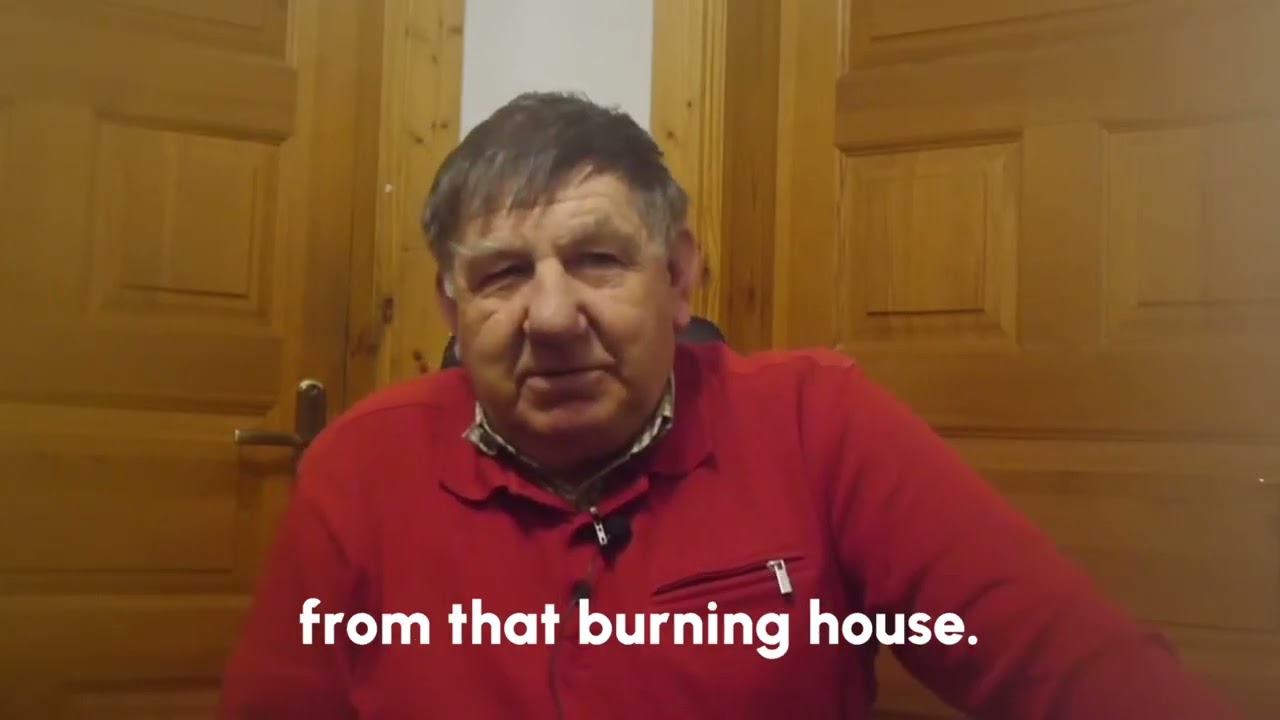
■Eyewitnesses accounts about Bury may shock. A man said he saw “the child inside”: he saw his unborn brother in his dying mother being burned. For Biblical associations, we can read ■here.
■Świadkowie zbrodni „Burego” — YouTube source video
Regardless, March 1st became the “Cursed Soldiers’ Day” in year 2017. A memorial run was organized through Hajnówka, an athletics occasion where the “Cursed” murdered and burned people. Some received distinctions from president Duda.
■Onet

Hajnówka is hometown to Katarzyna Bonda (her real surname), who also has gathered evidence against “Bury”, ■Dziennik PL.
Duda spoke about the “Cursed” as if feudalism never had been gone:
In Poland today, very many places of power are taken by people whose parents or grandparents actively fought the Cursed Soldiers, within the framework to establish Communism: in short, who were traitors, reported ■Onet.
The dispute over the Cursed Soldiers is a historical encounter, but it also is an encounter on the governance over souls in our country, if the governance over souls is to remain in post-Communist hands. I say — No.
Why try for such governance at all, again, I do not see any rationale. The Polish phrase is “rząd dusz”, yet syntax does not impress of becoming accepted among All the Souls as founded by Henry VI.
Belief in some soulpower solely in governing the country obviously is not an option, and politics remains visible.
Since syntax would not work the given way, you might go in your thought into cordless ■henrys; there would remain the number ■six to interpret, for the toolbox Poland? There is the Latin, but no rationale.
Another quote from Thomas Paine comes to mind, on the King’s Speech.
The speech was nothing better than a formal and pompous method of offering up human sacrifices to pride.
The quote is no exaggeration. Andrzej Duda wanted to be the first Polish president to wear the ■royal chain of the Order of the White Eagle. King ■Stanisław August Potocki wore it, and Russian ■Romanovs did, ruling over the Russian partition of Poland.
Virtual Poland 2019, ■The Senate began work.
Duda’s chosen place of residence was the Namiestnikovski palace, the former abode of the tzar-appointed ■Namiestnik.
“Blame on the USA”
It was in Poland 45-89 that services developed a line about WWII — there would not have been the War, had the USA intervened, so the USA should be blamed.
If there is anybody to be blamed, it is the USA more than Poland. Had our information been heard, they would have gotten involved early, to oppose Hitler. They are guilty more than us.

■Lech Wałęsa blames the USA for World War II
Jeśli ktokolwiek jest winien, to bardziej USA niż Polska. Gdyby słuchano naszych informacji, to by się włączyli i szybko przeciwstawili hitleryzmowi. To oni ponoszą winę większą niż my.
Poland had a defense agreement with England. Year 2017, the Polish Institute of National Remembrance stated that Mr. Wałęsa was a secret cooperative in early 1970s.
Third RPL legal standard
Year 2007, the Polish Constitution Tribunal revealed that law was an abstraction. The tribunal is supposed to act as the Supreme Court does in the USA.
The legislative authority consists in making binding norms for conduct that are abstract and general in character.
Władza ustawodawcza polega na stanowieniu wiążących norm postępowania o charakterze abstrakcyjnym i generalnym.
■Verdict K 55/2007
Year 2015, the Law and Justice party evidently took the law for abstract, making own appointments to that very same judicial body. The party argued, the previous appointments were wrong. The European Union did not agree.
■Constitutional Court crisis 2015 — Wikipedia
Fundamental human rights
To join the European Union, Poland agreed to follow the human charter. The country applied in 1994. Here is the ■Convention for the Protection of Human Rights and Fundamental Freedoms.
The right to live
Year 2002, ■Gazeta Wyborcza published a material on Łódź paramedics and doctors who terminated emergency patients with injections of Pancuronium, a curare mimetic, to get bribe money from a funeral company.
The court verdict resolved that “skin hunters” took 12-70 thousand PLN and murdered 5 people.
■Wikipedia about Łódź
■The “skin hunter” movie on YouTube

At that time, a funeral in Poland was about 5 thousand PLN. To get a picture on the Polish zloty in Łódź, a single bedroom flat of some 30 square meters was about 106-117 thousand PLN there.
An amount of up to 70 thousand PLN is too much money, to promote burial for 19 bodies, when the state throws money in for the cost of 5 thousand, and no law imposes the funeral home.
In business, money that would not calculate for investment, cannot calculate for bribes. The court gave verdicts for 5 murders and 14 cases of exposure to life threatening factors.
A Swedish documentary indicated there might have been even 20 thousand victims. Wyborcza estimated the corruption scale for potentially 4 million PLN.

Polish hospitals to use Pancuronium were legally required to record the substance supply and use. Pancuronium was not allowed for patient self-administration. There had to be a medic’s signature. Polish law required autopsies for bodies of people who died within 12 hours, in hospital or on the way to it.
Reportedly, all “skin hunter” victims were emergency patients injected on the way to hospital; therefore, dead within the 12 hours. The discovery of the dealings was yet described as a leak, as if the hospital had no monitoring for medical assets, procedures, or autopsies.
■ Wikipedia , Skin Hunters, Discovery
Despite inconsistencies as above, only four persons got sentenced. One paramedic got 25 years, another a life sentence, two physicians got 5 and 6 years, but both were to be allowed back in the medical profession after 10 years.
The right to property
Early February 2014, the Polish government decided to transfer about 51% of the Pension Open Fund (■OFE) into the social insurance fund ■ZUS, a government pocket. The authorities took over 153 billion PLN citizen cash, to reduce the public debt.
The ■European Charter of Fundamental Rights says,
Everyone has the right to own, use, dispose of and bequeath his or her lawfully acquired possessions. No one may be deprived of his or her possessions, except in the public interest and in the cases and under the conditions provided for by law, subject to fair compensation being paid in good time for their loss — European Union Fundamental Charter, Article 17.
The Open Fund allowed money sharing between spouses, or payout after death. ZUS terminated those financial entitlements.
Before they retire, Polish workers have to pay 18% income tax, 9% obligatory health insurance (even if never sick), and about 19.5% obligatory pension fund. All the pockets belong to the government, and the contributions are altogether 46.5% of the earnings.
The right to decide
Poland never ratified the 2002 European Convention on transplants. In 2005, the parliament passed a law that has everyone for a donor. Citizens may register their objections, yet the family have the final say. It is enough a family member states the person spoke with them on the matter.
In the fields of medicine and biology, the following must be respected in particular: the free and informed consent of the person concerned, according to the procedures laid down by law — Article 3, European Union Fundamental Charter.
The right to environmental protection
The Upper Silesia Industrial Area, especially its central part, is an area of advanced environmental degradation. Benzo(a)pyrene (BaP) is proven to be cytoxic, genotoxic, carcinogenic, teratogenic, and immunotoxic, says research published by the ■Polish Journal of Environmental Studies.
In simplest of words, Silesian air infringes on human form already before birth, poisons bodily cells, and plays havoc on immunity as long as you breathe it.
A high level of environmental protection and the improvement of the quality of the environment must be integrated into the policies of the Union and ensured in accordance with the principle of sustainable development — European Union Fundamental Charter, Article 37.
When I was leaving Poland in 2004, ■Kłodnica waters were black and thick with industrial waste. An air monitoring research showed abundant airborne pollutants already in 1994. Cumulative risk of malicious cancer was estimated for Silesia at about 20%, ■Bulletin 2010.

When I was leaving Poland in 2004, ■Kłodnica was black and thick with industrial waste. Air monitoring showed abundant airborne pollutants. ■Bulletin 2010 estimated the cumulative risk of malicious cancer at about 20%.
An ecology report for 2014 indicated pollution fatalities in Poland at 46 thousand and 20 people. Questions or notes from Brussels would be yet interpreted for averse to Poland.

When the European Parliament voted on cadmium limits for soil enrichment in 2017, Polish media would complain about European favoritism for Russian sources, yet without data that justify the phrase “prohibitive limitation”.
■ Onet PNG image, Resolves unfavorable to Polish chemistry
“It is unlawful, but it is good if Polish”?
Year 2017, twenty of European Union member states agreed to create the European Public Prosecutor’s Office (EPPO). Public prosecution would work without individual complainants bringing their legal matter to court.
Poland declined. Prime Minister Beata Szydło said the office would only duplicate other institutions in Poland, which was a lie. The Law and Justice Party voted against Polish participation.
“They must be joking”
It has happened a few times so far, that looking at the Polish reality I thought “they must be joking”. It happened in year 2015, when I saw a clip about the Polish leftist (■SLD) candidate for President, Magdalena Ogórek, a woman to have met all requirement for the colloquial Polish phrase, “a blonde with big eyes” (as different from a woman of wit).
Well, SLD derives from the Polish United Workers Party, PZPR, and there was the Central Committee. You did not have country Presidents. You had party first secretaries, who were all male. Here’s ■short clip about Ms. Ogórek.

Plain bunkum
Time and again, “national love” has happened to be invoked in Poland for the sake of adapting the individual, yet if there would ever be anything universal about the feeling known as love, it is that everyone in a way loves oneself. This can be a good idea, if considered wisely.
ADVERTISEMENT

About love he said,
If there is love universal, that is, love you can find anywhere there are people, it is the love that everyone has by nature for oneself. Any condemnation of this natural affect may come only with an erroneous attitude to the Great Design.
If the Polish culture results from the discord you can see between religious teaching and life, especially of Providence or destiny versus the Polish historic reality, where God wouldn’t have looked to many Poles on September the 1st, 1939; or if it is a backlash of practice for profit by the government, ■quangocracy to be another name then — the state treasury is clearly the limit on “national loving” any time and anywhere on Earth.
A republic
A republican form of government has been of proved merit, and Poland probably could become a republic, but I want to change my citizenship anyway, so I would not dwell on that.
Only briefly, if Poland gets to want or need a constitutional parity for cash, it might need a supreme law of the land, and not a “basic law” that could be altered by statutes except a non-specific “essence”, as written.
Language
I keep my affect for language. It is by no means guilty of the culture.
■Emily Dickinson’s poetry, my edition with a reasonable amount of dashes
■Emily Dickinson’s poetry in my translation to Polish


#/media/File:Logo_of_the_Wojskowe_S%C5%82u%C5%BCby_Informacyjne.png)