

The Knossian griffin would be the only in the world without wings, wrote Arthur Evans about his visit to the palace of Minos, of the time when Hellada was famous with ■Hellene sunshine festivals, Heliaia.
The Knossos palace stands on the Greek island of Crete. The griffin could run, leap or jump, but it never would soar into the sky.
The symbol likely was about the use of sunshine on Earth — if you made a festival of twinkles as in Greece, or you went into playing a god more, as in ancient Egypt.

The inks here would render for the side of gravitational lensing.

The original picture and book by Evans are available from ■Heidelberg.
In India, Garuda is “the transporter”. His older brother is Aruna, the “charioteer of the Sun”.
The Greek beginnings
We may read much about the Proto-Indo-European beginnings of speech in man, yet it was olden Greek to have the verb ■ἀμαρύσσω (amarusso), to sparkle, to twinkle, where ἀμαρυγή is a participle (amaruge like reggae, at the same link).
The name garuda looks a metathesis of amaruge, with a voiced ■stop inserted, ge-ru(d)-a. Hearing a foreign word, illiterate people would repeat backwards and insert a voiced stop, to remember. Compare the Turkish tokek and gecko, or the Australian Aboriginal wandjina and the traditional Chinese word for the innumerable, 建 萬, jiàn wàn.


It would be yet an Aussie peculiarity, to have the Lightning Brothers, two males, and never a Couple, him and her. To compare a yan, men and women have faces, also profile, whereas the Chinese ideograph does resemble the Aboriginal cave drawing.
Was it that Greeks borrowed from the Hindu Valley
We might speculate that ancient Greeks borrowed garuda from the Hindu Valley, but then they would have done it into the participle straight. The Greek first form is amarusso, no voiced ■stop. Amaruge is the participle, while an entire festival of sunshine is too much for just a coincidence.
No people have ever done it. If you borrow a twinkle, so it stands written. If you borrowed a shape as “twinkled” and made the first form — “to twinkle” — you would not turn it into “twinsle”.
Is the Greek here irregular maybe? The first form is amarusso, and amaruge is a regular Greek participle, nothing extraordinary, you could put it in a grammar book.
It is anyway not doing favor to the people of India if you describe them as such a prehistoric type. It might spur speculation on character: and they never invented ■the Kythera?
It must be, the original garuda comes from Knossos.
Was the Greek garuda literate?

To smooth the image surface, I printed it from the Heidelberg copy as PDF 1200 dpi and smooched the background to hex #dfcfb0 with color replacer.
The lettering in Greek might be Atena ELIAIA, cnossie Ge. Ατενα ΗΛΙΑΙΑ, cνοσσιε Γε.
The letter shape C has been even denied about Greek, but well, the shape more or less looks so in the picture, and it might compare with the archaic ν(ε)οσσιή, nossiē, (■νεοσσ-ιή in Ionic) meaning a bird’s nest.

C can be simpler than delta. Alternately, maybe it was Gnossie, Γνοσσιη, but G is usually derived from C, that is, there would first be C, and G would be made from that.
As a sound, the {ts} would come very early in people, with the suckling stage in life, whether it is Greek or Latin, where I do invite to the ■Demeanor too.
Let us think about the shape between E and I on the ceramics above here.
C might read as k or g in context, because it is easier to say {gnossos} than {tsnossos}, and when you say {gnossos} you just voice the beginning of the word; {knossos} has the voiceless {k}.
Linguistically, {ts} and {n} have the same place of articulation, mostly the alveolar ridge. Resort to the back of the mouth is phonoarticulatory, and voicing into {g} is a sake of distinctive features. ■Voicing is a distinctive feature.
These things are similar among languages, as these are human mouths to speak the standards.
In Polish, the only words to have {ts} and {n} together for phrase beginnings (as cnossos would) are cnota {tsnota} and its derivatives, for virtue. Hankering already would resort to the back of the mouth for the sound k, cknienie. In the idiom do cna, {tsn} is never phrase-initial.
It has been human articulation to evolve ■cnawan into ■knowing. The ceramics is suggestive of the C/G articulatory economy, after the shape E and before the shape I.
Let us allow that garuda has some lettering in Greek, and it could be Atena ELIAIA cnossie Ge. Today we’d write more like Athenas Eliaia, Knossiake Ge. Languages change.
The ancient Greek garuda would have been literate: the writing is left to right, in perspective from the garuda’s head.
Olden spellings for Athena allowed the simple T rather than th, whereas the Greek ■ἀτενίζω (atenizo) continues to say, to look intently, to gaze earnestly. Tufts Perseus notes on the festivity, ■Ἡλιαῖα (Eliaia), and the name for the Sun, Helios, remains derived from Greek.
The writing on the Garuda may have been placed later; the site has been quite open to visitors; but then, the person would have been a tourist to know archaic forms before the upper and lower case got established.
Science today about Greek literacy
Science says today, ancient Greeks were literate some 1600-1400 years before this era, but they had no alphabet and wrote in syllables because they started up on islands.
Evans dated his finds for some 4000 years before this era, that is, some 6000 years ago.
■Ogham began on an island — and it was not a syllabary. No syllabary for ■early Latin could be found. ■Early Hebrew was lettered.
Syllabaries would make things complicated. Finance and accounts remain the oldest of human records, and archaic Greece traded even with China.
In ancient Greek, the sound {yan} was for an Ionian person. A Nereid was a marine myth or a beautiful woman dancer, whereas saturated red was much appreciated in silk. The symbols are ideographic Traditional Chinese.
Ἰάν, Ian, Ionian, 言 yán, word;
ἰάζω, iazo, rich red, 殷 yān, rich red;
ἰαίνω, iaino, warmth, 炏 yán, heat;
ἰανασσo, ianasso, dancer, 燕趙 yānzhào.
Some similarity would be plainly visual.

ADVERTISEMENT

It was with natural ease and swiftness that he gave written incarnations, 厌女症 for misogyny, a lady 女士, and a feast or banquet 宴会, and re-embodied the wén, 文. It is natural to give a woman a seat, he smiled.
Greeks are denied invention
If Greeks are denied wits with writs, there must be a purpose. Would it be “to bury the twinkle”?
Four independent inventions of writing are most commonly recognized – in Mesopotamia, Egypt, China and in Mesoamerica, ■reports Wikipedia.

It was some 1000 years that wine came to Mesopotamia from the Mediterranean, before grapes became more abundant and cheaper locally. People wrote about the millennium as “the first thousand years of writing”. You cannot get any ■C14 from such slabs, however.
Cuneiform was neither alphabetic nor ideographic and yielded to ambiguity. Like the picture-phonetic Egyptian, it was possibly a means to keep people away from language and literature. When reading a word takes a few pictures to compare while adding up or taking features away, the thing is too slow to keep the mind interested.
Other languages in the region were variants with Coptic. Already those borrowed, as coptic itself is a word to derive from words for the human head and comprehension.
“Proto-Greek”
Those would have been the “temperate grasslands, savannas, and shrublands” of the ■Pontic-Caspian Steppe, where “proto-children” made their first words.
Naturally did they observe, they could voice some single sounds, as o or a, and there were those as in baba or dada to be joined with another sound of speech to voice. The vowels allowed making da, de, di, or do. It must have been in those early times too, when people already sang.
Would it have been that people anywhere else on Earth refused planning for happiness with baba alone — neither bean nor broth — and only some ba-ea-na or ba-ra-o-tha proto-Greeks remained because they were on islands?
Possibly not; the ■Phaistos disks were toys. Today a kid would say baba and draw b for a b. Things likely never changed.
At least 6 thousand and 26 years ago
The year today is 2026. Knossian kraters are dated for some 4000 before this era. Their motifs are similar to the earliest of Greek letters.


It is unlikely that people from Crete would have needed Sanskrit or the Hindu Valley to make things out from own cups and jars at home.
If there was a palace, there was trading, and you had notes even before you made ceramics. There is yet still more ambiguity created about archaic Greece.
Were there Greeks who did not need oxygen?
The ■Greek Reporter wonders, were those ancients able to see color blue? Colors as black, red, white, yellow, and green are all ■mentioned in Homer, yet blue does not appear. There has been speculation that Homer was maybe blind, but then he would have had a lot of imagination for someone who could not see and wrote up descriptions.
The ■Business Insider says: There was no blue, not in the way that we know the color — it wasn’t distinguished from green or darker shades.
Blue is a distinct visible color. Human eyes by nature have the “blue compensation” that most people perceive with starry skies. In graphic design, stars will “shine” if you show them on RGB blue 20 (0, 0, 20), rather than on a black background.
There must have been plenty of blue for the human eye to evolve.
Importantly, sunshiny daylight heights and horizon waters render bluey tinctures when there is enough oxygen, the very gas people need to breathe. Only some deadly low oxygen could kill color blue.
Perseus shows ■ἰοειδής, ioeides, “like the flower” — a motif in Garuda’s attire. The same word occurs in Homer for a sea: he only did not plainly write “blue”. He was a poet.


Now that we know Garuda saw color blue, let us think about ■chalcanthite. The word derives from the Greek copper and flower, (k)halkos and anthos. The mineral is reportedly rare yet easily grown. Sensitive to water as to require coating, the color is clear sky blue.
The Greek ■κειρύλος, keirulos, corresponds with ■cerulean in Latin, for clear sky blue. Greeks continue to have a word shape as ■κεῖρις, keiris or kiris, to mean a fabulous bird — an “amaruge bird” or garuda?
Romans assimilated Greek into own patterns with a mark in spelling, hence their shapes as coelum, suggestive of {k}, but you spoke as with plain e, as {ts}. Today we say circles or cats, {s} or {k}. Feel welcome to the ■Latin demeanor.
With such sky blue vocabulary, Knossian colors we see today look affected with mineral decomposition. The Ancient vivid blue contained copper, whereas the darker indigo would have had sulfide clays, less susceptible to oxidation but not altogether indestructible and thus fallen off in bits.
The sky-blue meeting space
The Knossian interior might have been more like in the picture on the right here, only with minerals.


Interestingly too, the room looks a meeting space rather than throne architecture. Not only ■Beowulf would enclose an elevated space and shut it with a door, and here you just come up the stairs where the single seat is just a bit above.
In human history, ■sedans carried higher, and in theory cave people had much higher seats too, for their chosen.
The Greek meeting room is democratic.
If it was a throne room, where is the place for the queen?
The ancient Egyptian neighborhood
Very blue would have been the “heavens” the fabulous Greek garuda was. Tourists wrote in ancient Egypt, inside the pyramid of ■Djoser, “like heavens came here before”.
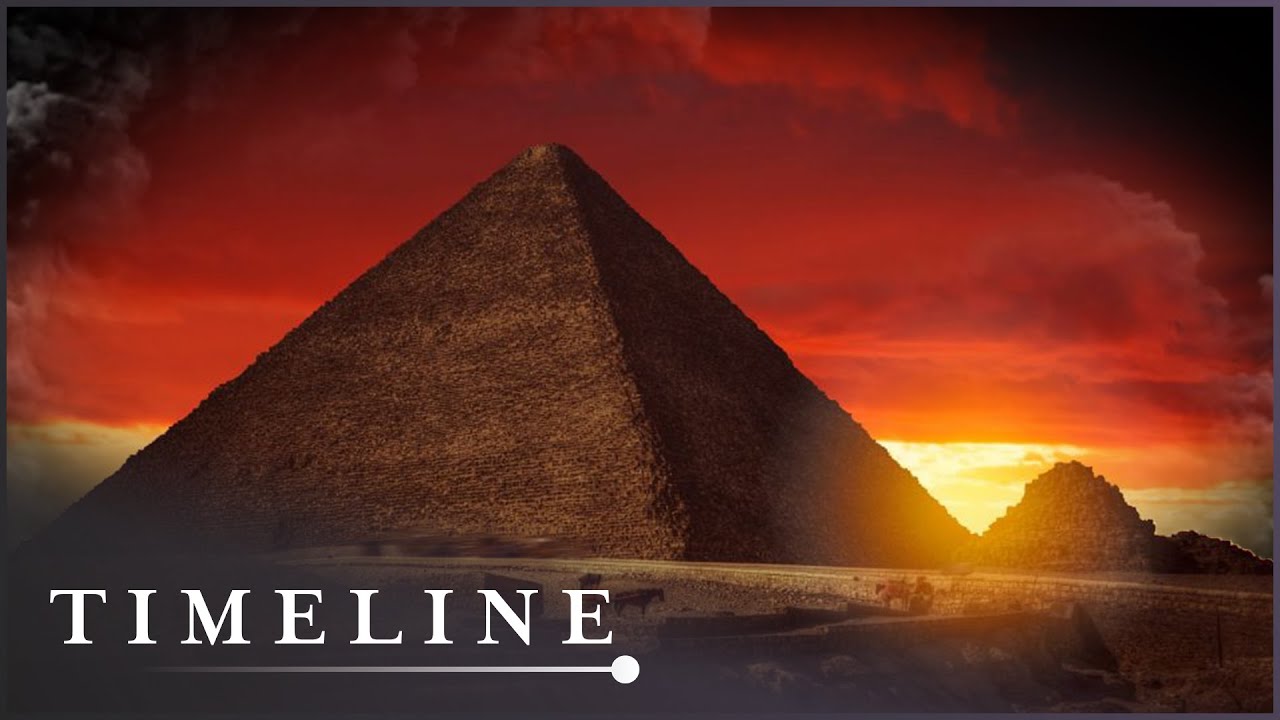
The Egyptian place is the typical idea, piled stone and darkness (some 44:15 in the movie here). Maybe the tourists were hinting at another place, also for the “inventor of stone”.
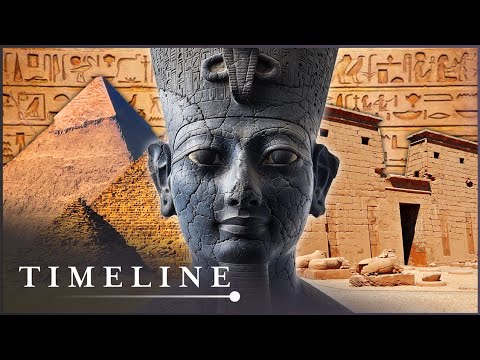
It could hardly be doubted that ancient Egyptians borrowed from Greece to adorn tombs. The other way round, for the Knossos palace to borrow from Egyptian graveyards, looks improbable.


Rusty red was a color common for curses in ancient Egypt (some 13:36 in the movie here). Knossians had trade routes and celebrations with Luxor. Again, it is not likely they would have had a color of curse for the wall decor in their main meeting room. Blue is more probable, though we have never seen it.
I know I simply prefer Greek over constructs as Sanskrit or Proto-Indo-European. There would be no■ man, woman, child, or house with that pie. If it is yet true that ancient Greeks developed writing before its dating today, that they had a solar festival and plenty of blue at home — it is natural to think why they would have buried the twinkle, the color, and the letter.
The decisions look so improbable that one goes back and reflects: maybe they did not have that whole lot of goodness to bury. The linguistic traces are yet genuine, and they must fit somehow within this earthly reality.
The world and events
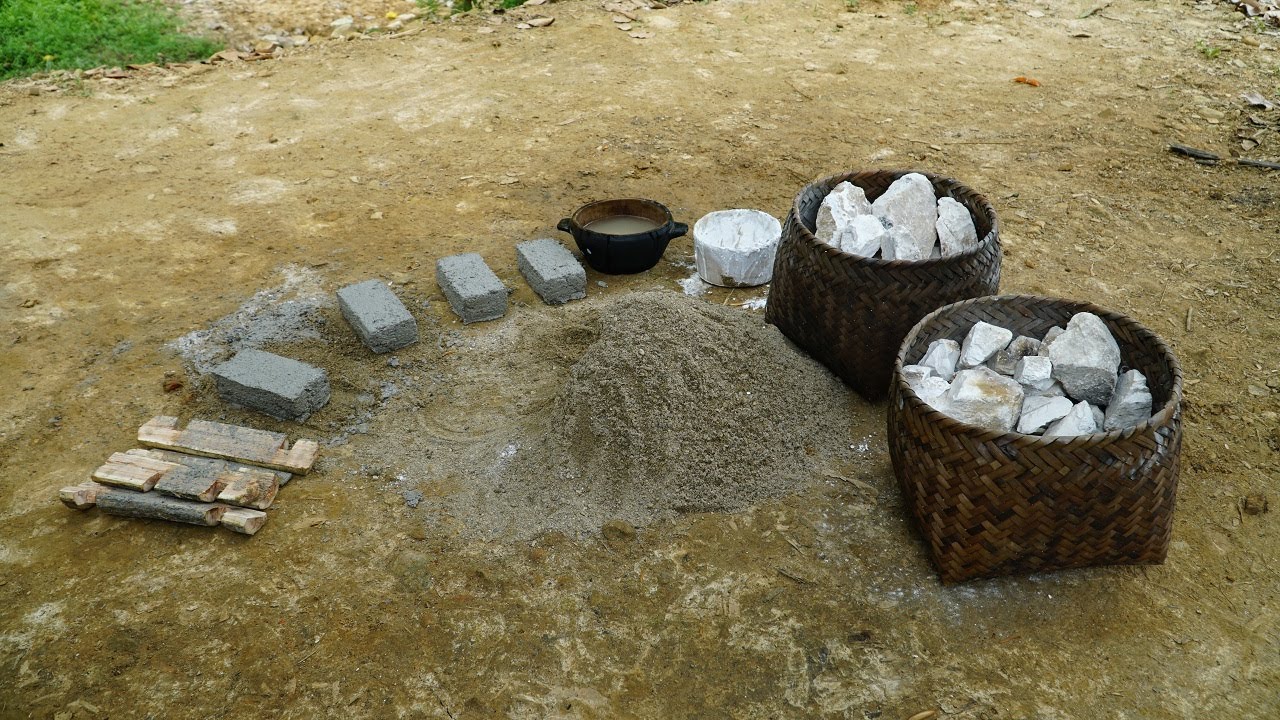
Pyramid blocks were made in wooden forms. Granite was solar lens molten in ancient Egypt, says ■The Great Pyramid K 2019.
I am persuaded. UFOs didn’t carry all that stone under earthly gravitation, and they did not fly up to the Sun to make a vase or cup.
The Chinese traces
Reading the ancient Chinese yans, which I took up initially just to look up the written matter as in ■Confucius for T. Horne, has brought more clues.
Thomas Paine mentioned in his Letter to the Abbe Raynal:
Is life so very long that it is necessary, nay even a duty, to shake the sand and hasten out the period of duration?
ADVERTISEMENT
About history and the Creator he said,
Likely, some olden time, Earth got a warning to let the Sun simply be.
It would have been in ancient Egypt where man chose otherwise, and gave his garuda to fly.
Said Honeybee, the olden Chinese yan for a swallow 嚥 was likely a correlate for people to remember about something notable, important.
If you decomposed the glyph, the parts would tell some 20, north, mouth, and fire. Latitude some 20 north in China, there was Mount Xiqiao, where you could simply see it must have had a “mouth of fire” some time back, that is, it had been a volcano.
There was a “mouth of fire” in Greece too, on an island named Santorini. The correlate yan, the one for swallows 嚥, was variants with swallowing, 宴; a case you might say, not even a philosopher would dream of, a symbol to indicate a ■Germanic reference for an ancient Chinese yan. In many languages, words for swallowing and the bird are even completely different.


The ancient Santorini had an image with swallows too, along with frescoes for feasting and thus … swallowing.
Here he asked his regular question: Give a famous example, in rumor, legend, or faith, for God’s acting on Earth where the people believed the Sun was God.
The Egyptian plagues?
The country of triangles and “skeletal” writ, right. The Nile went red, and the firstborn died. People were told that God did it, the same as they were told the Sun was the God.
Honeybee went on, it is natural to ask, how then, ancient Egyptians knew the Sun did it, if they were not themselves at play? The tinies remain extremely difficult to watch (where he meant the smallest pieces of the universe that mortal matter was made of).
The fable of the philosopher has more.
Feel also welcome to read, ■If there is Heaven, then in Heaven.
ADVERTISEMENT
About mortal life he said,
It is most likely that we live within the Creator’s skilled work: there is abundance at hand on Earth, provided that man has the knowledge and reckons. Violently, you get nothing in terms that really count.