
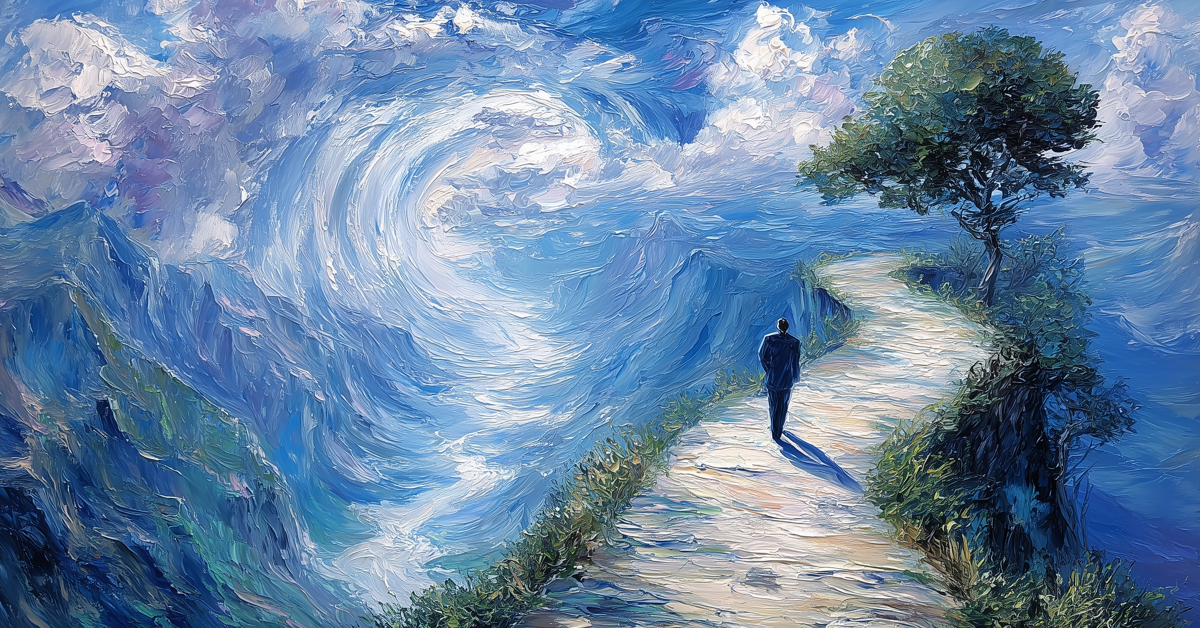
Let us think we are on that last path in this world. We cannot lie to anyone because it is only us now, and we never really beguile ourselves.
Almost there, on the Other Side, we have a while to think. We know we are not going to make it back to life on Earth.
No playing up, around, or about: all we have is the sincerity and frankness with which the human mind communicates with itself, as Thomas Paine observed.
It is only if there is no afterlife whatsoever, and it is guaranteed and certain there is not, that we may skip the thought of what we say or do next, when we get to the Other Side.
On Earth
We knew we were not our hands or legs, that is, body parts. Personality could not be inserted, exported, or transferred; not in people.
We knew the soul or life future were not certain, but there was no ground at the same time to say they did not exist.
All probing for the soul had been invasive. The soul was not found, yet for body parts already, we did not advocate walking on broken legs.
Things on Earth had beginnings. Everything had started at some time, or continued to begin. Spring came year after year, and then there was always some time before things would turn into winter.
There was no memory or proof anybody like a god or demiurge started it all up. There was no evidence there surely was no one.
The soul
We fared and got by the human living experience and science saying in unison it was only somehow — of no exact measurement — that our brains organized our neurons into networks of inner harmony. No human brain would have an “ego area”, like those eye or ear areas you had for your eyes or ears.
Human personal memory was certain, attested — and of no singular brain locale. An ego, psyche, or soul — everyone would have that by standard, with many happy returns.
Had the ego been an effect by the brain only, the ego would have had an area, like for those other powers by the organ. There was no such area, and more, brain cells exchanged.
All the mortal human body had ■apoptosis. Cells died and new came in their place. Cancer was “cell immortality”, that is, disturbance in that cell exchange.
Honeybee theory on the soul
The philosopher thought the human soul had the impartible, like those singularities out in the cosmos, only human and individual. When the body died, the soul flipped between dimensions because it could not stay in the earthly physical world: the world was made all of partible physics and the body was unable to hold anymore.
There was nothing you could externally see or observe about the flip if it went interdimensionally through a physically 2D interface the soul would make within the body — and that was not impossible. We did not get to know any theory that contended the Honeybee understanding, that is.
The psychology of it would remain, that you can never part from yourself. The most modern of human science and Google AI would bring about the dimensional nature of an event horizon for the impartible as a phenomenon.
- An event horizon is a two-dimensional boundary;
- The point of no return is where the escape velocity equals the speed of light;
- The horizon is an invisible boundary that may correspond with some mathematical variables in spacetime, but it is not a object made of physical matter.
Books by Teresa Pelka
When there is no promise, but there really is possibility.
It is the inner common sense together with the imagine power, to help learn spirituality. Man is only born with own soul.

The world
The problem was and we knew it, that spontaneous stochastics happened, but there had to be a deterministic. Evolution, the billions of years of random matching of molecules, looked really great until the very moment humans observed, a spontaneous stochastic could not create itself, and it always had to bounce off something determinate.
Ancients, did they believe in a Creator? They measured lengths in units derived from droplets of water. There had to be a physical constant for the liquid state to offer for the solid state. The constant could be the determinate you seek for a stochastic but then, there would have been someone to set the constant.
Modern times were unable to do away with the early guesswork. The times only painfully attested there was no Creator willing to do for a nanny.
Religion
All religions claimed to be true. Each brought a story to put it on top of the possibility that a human being had a soul.
If you wanted to join a church, you had to follow their story. All stories were shaped by people.
Buddhism
The Buddhist story said, you died and returned to Earth as a mewling infant, in diapers clean only if mama, papa, or anyone cared.
Reincarnate infants could not walk or talk just the same as regular first-timers and had to start all afresh inclusive of crayons. The story did not guarantee that boys would be boys or girls would remain girls throughout the incarnations.
In your next life on Earth you did not remember your previous, so in your current life you were only temporarily so. You did not know who you had been or who you were going to be.
The Buddhist soul or mind would not be much of a person thing. More and more people born on Earth, even three people might become reincarnate of one soul. The human soul would be like gum acacia and stretch for soul plural emanations.
Imagine the patent office with emanations from ■Alexander Graham Bell rather than himself at the desk to register, whereas without intellectual property also the USA would have been gone to nothings.

Siddhartha’s rainbow
Is it religion, if it says there is no soul?
Islam
Islam would have had some incarnation and amnesia too. Adam and Eve would have lived in a heavenly garden, and on the Day of Judgment, no human being might deny an original covenant from a time before life on Earth.
Nobody born on Earth was able to remember any time before life on the planet.
The story allowed, a woman could work hard, at being a good person as well — and be sent into an eternal harem. Nobody imagined a male having to run about a guy for all eternity.
Christianity
This story invoked a time before Earth the same as Islam, Adam and Eve in a heavenly garden. It incarnated the only Son of the only Creator and crucified him for six hours by three nails, after he was arrested and tortured.
The story offered to explain, Adam and Eve stole an apple before they lived on Earth. That was why the only Son of the only Creator came to die on the cross.
Known as fruit of season, also abstract and metaphoric apples could only be abstract and metaphoric fruit of season.
Earth Middle Ages announced, the only Son was one in a ■Trinity ■coeternal and ■consubstantial with God Almighty the Creator Father, and with the Holy Spirit.
Is the gloomy pride of man become so intolerable that nothing can flatter it but a sacrifice of the Creator? — asked Thomas Paine on Earth in his Age of Reason, ■page 31.
Earth people were all considered guilty of stealing the apple in Paradise. That was why you had baptism on Earth. It was for the ■original sin. How could Earth people know if they would not be all considered guilty of the crucifixion?
More, the Trinity might comment on the Mother of the Almighty, though there was no ground; nothing was known about Mother Honey Man by description.

Beginnings of legends hardly would be different in any place on Earth. Where light reflexes within water make such honeycomb-like patterns, Mother Honey Man accidently stepped onto a path the giant bee had passed. See the brochure below for T. Horne.
If Christos was born in an animal shed and he was one of the Trinity co-substantial, his father was born there at the same time too. Was that trinity to imply Mother of the Almighty labored in an animal shed?
Should we tell the legend applies in the negative, that no such thing ever happened to Mother of the Almighty, — how do we explain why such shape of talk would be negative about belief and affirmative about finance and other things?
No man could hang up by three nails for six hours under earthly gravitation, that was for sure. On Earth it was enough you stretched your shoulders sideways and thought how long you could keep them up.
Piercing your hands could be of no help. The flesh would tear under body weight, and the bones were not strong enough to hold up. You’d need a skeleton of steel with hooks.
Maybe the animal shed was a vitz, a Jewish joke; but then you did not hold it for religion — and all Jews denied it — whereas crucifixion still does not look a good joke, though we are near the Other Side.
Do we expect the guys on the Other Side to enjoy?
The legendary Mother of Almighty might live, if afterlife is eternal or long-lasting at least. Do we say we believe in the Trinity as to face her?
A trinity of persons would mean living as Siamese triplets, arguably a discomfort.
On Earth, to be son of your father in heavens you had to love your enemy, said the New Testament (■Matthew 5.44-45).
Mother Honey Man might not require that people are emotionally impossible — if there is consequence to your Earth belief in afterlife.
If there has been Mother Honey Man, why has there been no worship?
For one thing, it could be you do not worship afterlife in afterlife, you live it. Like on Earth, if you want to go to the USA, you don’t build an altar and write up prayers to the President.
Afterlife, in many senses, would be just another habitat, a place to live.
Second, it is not the doormat to open the door. Even if you are totally a sycophant about the Great After, you cannot be accepted if you are not agreeable in your principles. On Earth you likely get along better if you know and follow the Constitution.
Sure we’re not going to say love could look like this here below. The video shows how according to some beliefs the only son of the Creator was beaten on Earth before people crucified him.

On the side of planning, the Great After would look fond of cruel sport with an earth woman either unaware or complacent as to beget in order to crucify.
If the deity withheld the plan from the woman, the deity was a cheat.
Without planning, there is no Salvation. All is just an accident.
To imagine a patrol fly-by, Earth humanity would have exhibited pathological narcissism.


Earth being a universe in itself is unlikely, the cosmos does not look it, and there has been no contact. Could it be that Earth looks “crazy by religion”? Nobody would come to chat.
When we get to the Great After we mind, we may have come from a direction renowned for an age-restricted and mad idea. The guys claim they’re worth dying for, inclusive of God.
“Any system of religion that has anything in it that shocks the mind of a child, cannot be a true system”, observed Thomas Paine.
The cruelty might rest with ancient earthlings, if we look to particular wording. Christos kingdom would be like the persica where birds perch, and the branches were nomad toothbrushes in an earthly local idiom. “A kingdom for a horse” would sound serious.
“Works of the Jewish poets and itinerant preachers, who mixed poetry, anecdote, and devotion”, he wrote about the Old Testament on page 35, and we might conclude the New had some too.
Deism
Thomas Paine acknowledged the attribute Almighty for God, and yet he would have excluded God from natural language.
If we permit ourselves to conceive right ideas of things, we must necessarily affix the idea, not only of unchangeableness, but of the utter impossibility of any change taking place, by any means or accident whatever, in that which we would honor with the name of the Word of God; and therefore the Word of God cannot exist in any written or human language.
Without language we could never learn spirituality. We would have been feral little minds. And an Almighty would not be almighty if incapable of natural language.

To constitute a man
He was found by Monroe more dead than alive from semi-starvation, cold, and an abscess contracted in prison.
Where are we now?
We are at the end of the path. Without a mortal body and yet living somehow, as we always could suspect that was possible, if there was afterlife at all.
If we had not been of religion, it might be not too bad. Benjamin Franklin was not a church member, but the matter cannot be in examples only.
With Buddhism, we would have given up on own self. With Islam, we would have kept the self, yet only making ready to answer for a covenant we had no way to know. Christianity might put us at odds with the Creator about family, real sons or daughters. As presented, Deism would have had us resigned of the ■Logos.
Each religion on Earth had a destructive aspect, and that possibly began in ancient Egypt. Stories of mountains moved took origin with optic focusing of sunshine. The ancient focus melted stone.
Jews would have had their ark of covenant or optical convergence for military purposes. Buddhists kept their garudas. Christians presented their monstrance. Muslims made no reservation on their solar symbolics. Deists likely would mention the period of duration outside the context of the Revolution, where originally the threat most likely never came from the American side.
Would we walk into Paradise to say we believe God would always do everything for us, turn land into a new Sahara, or die for us?
Confucius for T. Horne
The brochure was not always for T. Horne, but the same content had reprints, 17th to 19th century. Thomas Paine or Henry Thoreau likely had a glimpse.

The Sun in the center of the Solar System is a physical formation. It does not have a personality, and obviously it is not a telephone. It is abuse, to simulate God’s answer or message with physical optics. Ra would be God in ancient Egypt, and rhubarb in ancient Greece.
The choice
It was all fog, but a fog such as I’ve never seen before or since. For a moment I thought my sight had gone, that, perhaps, in the afterlife everything was vague and misty — wrote ■Henry FitzGerald Heard in The Great Fog: And Other Weird Tales, 1944.
We people need a shape to live. In circumstances shapeless we would suffer.
Descriptions of misty fields of no shape where souls wander and lose memory maybe were made just to suit mystics; but then, those could have been intuitive too. Champs Elysees? Which? Those of elision as well? How long could you be just walking about?
To become accepted anywhere there is shape, it might be important that man
1. is own self, to be trusted on principles — Buddhism denies this;
2. does not yield to suggestion or blame on grounds unknown — Islam denies this;
3. would not challenge the Creator or Creators — Christianity denies this;
4. favors intellectual activity, for example, Logos; eternity is a long time — Deism denies this, or so it is presented.
Men and women of religion on Earth would be as in unison to affirm, there is no earth ritual really for afterlife; no pattern for a mass or prayer came from Heaven straight.
Man or woman, it is important how they lived, what persons they became.
The Great After might not have Genghis Khan even if he promised to behave better.
The worst probable experience
It might be emotionally and intellectually the worst experience. We get into some Great After, see it is beautiful, wonderful, marvelous, and full of fancy garb, and then we learn we cannot stay because we’re lacking an agreeable philosophy. Villains at least expect some hell, whereas for us everything would have gone smoothly, like people say, a wormhole or something similar opened, the soul had a guaranteed safe landing, human simply impartible, the Great After felt really great, yet as Emily Dickinson indicated within her poetic license, we’ve been our own enemy.
The eagle of his nest
No easier divest
And gain the sky,
Than mayest thou;
Except thyself may be
Thine enemy;
Captivity is consciousness,
So’s liberty.
Emily Dickinson, ■Emancipation.
On Earth, we learned how to burn candles or participate in religious events; we mastered disputes over issues abstract as transcendence — because most earthly churches had the idea. We never worked the simple philosophy for living After. And there is no heavenly nanny.
Our alternative is dense mists where souls wander and lose themselves to shapelessness.
Poetry by Emily Dickinson
Notes

The correlative with Webster 1828, Latin and Greek inspiration, and Aristotelian things perpetual — these are not in time, but in eternity.
Resource

The epsilon, predicate structure, vowel contour, phonemics, person reference in abstract thought, and altogether stylistic coherence, piece-by-piece.

The principles
Where entities as human beings might exist without the mortal bodies that could be held or detained, and you would not incarcerate souls either, the most obvious principles would be two:
1. never force yourself on anyone;
2. never steal or rob.
People could get by pretty well with such principles on Earth already. Of course you would not be forcing yourself to give a parking ticket.
It really could be that this planet is up to the people who live here to manage, and well, things do not look good at times.

The end of the mortal world
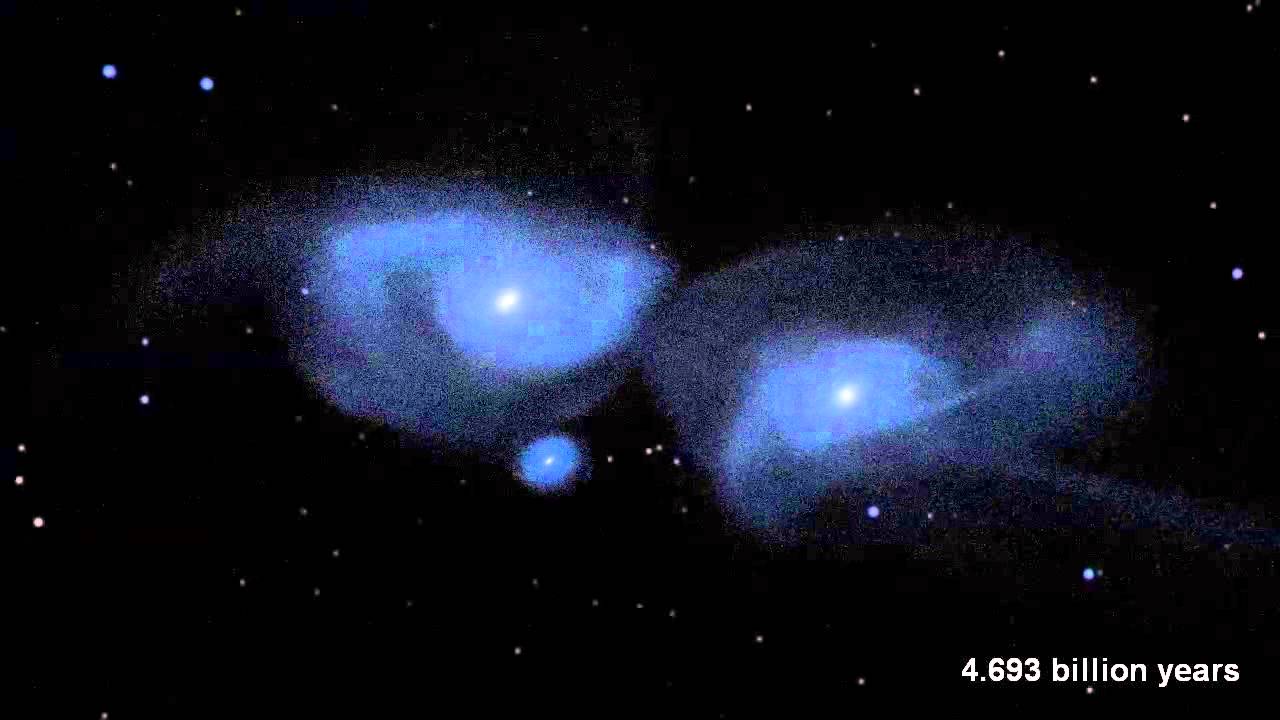
It has been more or less predicted. Earth has some three billions of years before the collision with Andromeda — maybe — happens. Things change also in the cosmos.
The end of life
It is only if there is absolutely no afterlife at all that no such moment of reckoning as above might happen to us, almost on the Other Side.
It is worth thinking, what then; not only what now and here on Earth.
What if we are allowed to introduce ourselves?
If it was a demiurge to create Earth, the matter might be much more ordinary than people ever spoke on Earth. Almighty was not to it, and there is no one in the cosmos to do administration for Earth.

If there could be some inner indivisible nature in every human being, feel welcome to consider the Shapely and Handsome Fable.