Simple shapes can be of help, to talk the extraordinary situation in this world, where the language has the logic and the people get it, yet a committee ordains otherwise.

To define an object of thought, we could say and write, the square that is green; Polish: kwadrat który jest zielony. There is no comma because it is a defining clause. There are two squares in view.
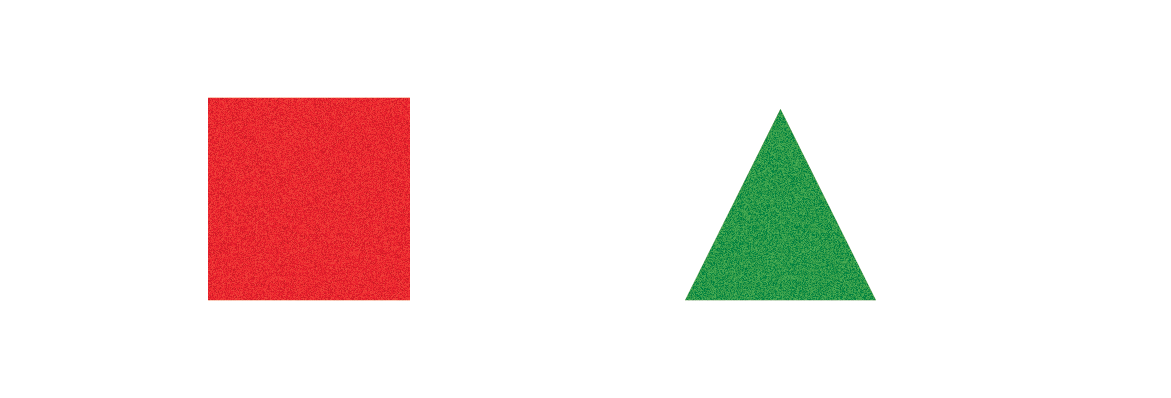
Here, to describe the object, we might say and write, the square, which is red; Polish: kwadrat, który jest czerwony. There is the comma because the subordinate clause does not define the square. There is only one in view.
We do not get mixed between the definite article and the type of clause, as a free cookie can be only bake. Those internet applets are all free. Natural language has so-called information pools that we people sometimes analyze ourselves for, to crunch. Nature has been smart.
The Polish language has the logic, and you can find much of it over the Internet, yet the standard has been granted a canon by a state regulator, the ■Polish Language Council. Therefore, decent respect for the opinions of mankind requires that as translator of Benjamin Franklin’s Autobiography I declare the causes, and let facts be submitted to a candid world, on my Polish orthography.
The above sample can serve exercises by interested people, to insert the “missing” commas and try the text in reading out, if it sounds better, or natural Polish really.
Punctuation, the comma, the dash, and other such, are to make the written matter clear. Where we have no ambiguity, there is no reason for markup, unless for prosody. Polish print has yet become of a “commatoform” ailment, where “somatoform” is a regular word of everyday language to mean something of a bodily character, ■soma and ■form together.
Over the Internet and in Polish, these are the specialist and general public alike to complain of “przecinkoza”. When -oza modifies a standard form, as przecinek here, it usually signifies an odium, something bubonic or worse, and it is only if ■Formoza is no exception that the usually does not apply. Then, the word would be always. “Commatoform” remains a mild render, or plainly a euphemism.
In styles less elevated than that of the ■Declaration of Independence, where stating on the causes deserves every bit of punctuation, the Polish comma would make no sense or look pompous, and Moby is ■a trove.
All the above is to clarify and emphasize that the matter with Benjamin Franklin’s memoir is not my — the translator’s — whim.
■This text is also available in Polish.
More or less, the new Polish canon might happen to work with US civics or texts as Thomas Paine’s Common Sense. The two types of written matter have the thing of style in common, they drive a point. One is legislation, the other is a political pamphlet, and quite simply as for matters of language and style, you get more commas because the semantics is mostly non-defining, and the syntax has it.
Paine’s Common Sense is of the persuasive style: it is to tell the why. The US Constitution is in the style descriptive, to tell the how. Neither is a narrative as a memoir, to tell about people and things unfamiliar, at times.
More, Benjamin Franklin opens his memoir with an address to his son, and remarks in the course of his story, “One does not dress for private company as for a publick ball”. Translation cannot style the language as for a constitutional article, or a treatise on political rationale.
The new Polish canon would yet give lists of words for people always to put a comma before. Words are lexical items or lexemes, dependent on the literature, yet they are not syntax.
■PWN, Words to have the comma before them
Though “such matter” and “this matter” are for all natural languages easy to tell, it is not always that the new canon would do with the US Constitution:
Sporządzą oni listę wszystkich osób, na które głosowano…
To translate back,
They shall make a list of all the persons, who were voted for…
The sense would be, people came somewhere and were all voted for.
Out of context, reading about an idea for a vote where no vote is necessary, as all are to be chosen anyway, you might guess… Orwell and his Animal Farm?
The original obviously tells different,
They shall make a list of all the persons voted for…
Sporządzą oni listę wszystkich osób na które głosowano…
Here the sense in Polish is, some were voted for, and those names are to be listed; but … it is incorrect to write in such a way, tell Polish spellcheckers. The word który (która, które) is to come with a comma before it. It is in the list.

According to the new canon,
all the persons voted for
as well as
all the persons, who were voted for
would translate the same, into
wszystkie osoby, na które głosowano, with the comma.
The Polish language would look deficient right at the beginning of Benjamin Franklin’s memoir:
“That felicity, when I reflected on it, has induced me sometimes to say, that were it offered to my choice, I should have no objection to a repetition of the same life from its beginning, only asking the advantages authors have in a second edition to correct some faults of the first.”
To be “correct”, translation would have to use the comma, jak przy drugiej edycji książki, która daje poprawić, and this would back-translate into the second edition; hence,
“Poczucie osobistego szczęścia, jak je brałem na rozum, sprawiło czasem że powiedziałem, jak by mi dano wybór, nie wahałbym się i miał takiego samego życia powtórkę, od początku, prosząc jedynie o tą autorską korzyść jak przy drugiej edycji książki co daje poprawić pewne wady pierwszej.”
The items “który” and “co” are in contexts as here equivalent in Polish, sense and syntax. Always to require the comma before the word “który”, the Council would make the Polish comma depend on word shape, unlike in natural languages. Punctuation is naturally syntactic, not lexemic.
To lay out on the absolutely basics for natural languages, all have semantics, syntax, and phonology. The three are not completely separate, but work their ways. I describe some of the phenomenon later, for the Polish tą and tę.
It would not be improvement in Polish as a natural, that is, human language, always to require a comma before the word “co” as well. Let us compare the English “that” and “which”, for semantic extents. Here, the item “which” refers to the entire marked extent before it.
“My belief of this induces me to hope, though I must not presume, that the same goodness will still be exercised toward me, in continuing that happiness, or enabling me to bear a fatal reverse, which I may experience as others have done…”
Let us look at Polish now. With the comma, the item “co” embraces the same as marked above for English. Czego is just flex.
“Wiara ta skłania mnie do nadziei, choć mi z góry zakładać nie wolno, iż to samo dobro dalej będzie moim udziałem, bądź szczęście nadal przynosząc, bądź dając siłę przy jakiejś fatalnej zmianie, czego przyjść mi może zaznawać, jak już innym ludziom bywało…”
Without the comma, the extent closes on the “fatal reverse”, without the strength to endure or overcome:
… bądź szczęście nadal przynosząc, bądź dając siłę przy jakiejś fatalnej zmianie co przyjść mi jej może zaznawać (której przyjść mi może zaznawać)…
All the talk about Providence goes amiss. I do not mean people should believe in Providence, not after WWII. As a translator I yet do prefer to tell in Polish what there is told in English.
In languages human, semantics is most important. We never rely on some strictly “syntactic surface”. Let us compare questions as, Do you mind if I come in? If the person answers, Sure, the meaning is not to hold the guest at the door; he or she sure may come in.
Within a semantic scope or extent, the comma may highlight or add emphasis, as in the letter from Abel James:
“MY DEAR AND HONORED FRIEND: I have often been desirous of writing to thee, but could not be reconciled to the thought, that…”
The new Polish canon forces lexemic compensation. For emphasis as above, we need to add a word:
““MÓJ DROGI I SZANOWNY PRZYJACIELU, często przychodziła mi przemożna chęć do Ciebie napisać, ale nie potrafiłem się pogodzić nawet z myślą, iż…”
The language has been through ■three partitions, and poets happened to be imported at times, as Mickiewicz from Lithuania, but the speech and the writ have been kept, and people can learn. I worked my Polish all out from books rather than television or radio, for semantics and syntax. Polish grammatical theory may not have some descriptions, as a “defining clause”. This does not mean you should reduce the language; the description should be adjusted. Grammar is not to set out the language. It is to facilitate language standard use.
Polish is not an impeded language. It only happens to be different, but so much is true about all languages; otherwise, they would not be distinct lore.
As Benjamin Franklin shows, it would be wrong to omit merit from the picture on oneself. Me, “born and bred” in Poland, the lowest I score with spellcheckers is some 90 plus percent at American, when I begin proofreading, and some 80 plus percent with Polish — when the text is monolingual of course and does not have citation from another language — and all owing to the Polish comma that I cannot adopt. Absurd. A five-star is no exception online for my translation to Polish, when I share. Out of five that is, I actually never got lower. Each appreciation is new, also if the same top, and I like the height. I love Polish and I love American English: feel welcome to see ■Emily Dickinson, My Favorites.
Editions as by Johnson, of her poetry, would be showing the effect of ■Dada in human civilization. Dada failed to understand that war is not a product of reason. Johnson failed to notice Webster 1828, and blamed the Chariot on her neighbors. Emily Dickinson never would have gained renown, hadn’t she written in some plain spirit that people knew and liked. I made my translation close as possible to that thought. Plain is not the same as bad or crude, and of course there is still Moby to be used wisely.

My loving language obviously does not mean I would love everyone and everything, where I do invite to ■The toolbox Poland. Rzeczpospolita especially, with its royalist sentiments, is fetters on the country that holds on to the exchange value of zloty just because England has the pound. With progress in technology and robotics, where prevailing effects may come in some 50 years if not sooner, and anyway not too long in a life of a country, Poland either changes or suffers poverty and divisions along its lines. Monarchy is not a Rockefeller type of government, and ■England already is stressed. Some people over there seek remedy in religion, but religion is not the same as a free market turnover where everyone can benefit regardless of birth and encourage the turnover in their turn. Religion is religion, and economy is economy. Poland yet can survive as the Republic, where the market is not governed by caste, and I have invited everyone ■to exercise at democracy. My criticism on Rzeczpospolita constitution is ■constructive. I have never been in the USA.
Back to Polish and the committee, items “że” or “żeby” are is PWN listed too. In English, the structure often would say that or to, with a result as here:
That felicity, when I reflected on it, has induced me sometimes, to say, that…
That felicity, when I reflected on it, has induced me sometimes to say, that were it offered to my choice, I should have no objection to a repetition of the same life from its beginning…
Poczucie osobistego szczęścia, jak je brałem na rozum, sprawiło czasem że powiedziałem, jak by mi dano wybór, nie wahałbym się i miał takiego samego życia powtórkę, od początku…
Spellcheckers will show the translation is missing a comma; the desired syntax would be czasem, że …
It is obvious that people do not go around to repeat the same thing to everyone, not in a single phrase, and Benjamin Franklin’s comma here (the one that is, and not that is not) emphasizes that the thing is in just saying so, because nobody gets to live twice. People usually say in English
to say that it is…
and not
to say, that it is…
With the present canon for Polish, you cannot write correctly, I said that it is. All has to be some just saying so, comma after the verb to say, I said, that it is.
Defining and non-defining clauses belong with primary school curricula in English-speaking countries.
All natural languages are written and — spoken. Commas obviously are not to regulate the breath, and their sounding is mostly in sentence stress and intonation. Spoken Polish has markers clear enough. Phrases as “powiedziałem (powiedziałam) że | I said that” — are with regard to punctuation exactly the same in Polish and English; they do not have the spoken mark for the comma, unless we want to emphasize speaking itself.
Generally, how does spoken language differ from written? In English as well as in Polish, speech is more “verb-wise in nature”, whereas formal written styles may prefer nouns. One may write,
Establishment of corporate supervisory capacity has been proposed…
The same person might say,
They propose to establish a corporate supervisor…
The new Polish canon would yet require that we separate all verbs with commas (beside the lexemic comma). To take the above to note, we would have to write:
They propose, to establish a corporate supervisor…
Well, you anyway need to give it some thought, before you get married.

In the text below the spellchecker would require more commas, but I do not see any reason for them.
Thus refreshed, I walked again up the street, which by this time had many clean-dressed people in it, who were all walking the same way. I joined them, and thereby was led into the great meeting house of the Quakers near the market. I sat down among them, and, after looking round awhile and hearing nothing said, being very drowsy thro labor and want of rest the preceding night, I fell fast asleep, and continued so till the meeting broke up, when one was kind enough to rouse me. This was, therefore, the first house I was in, or slept in, in Philadelphia.
Keimer made verses too, but very indifferently. He could not be said to write them, for his manner was to compose them in the types directly out of his head; so there being no copy, but one pair of cases, and the Elegy likely to require all the letter, no one could help him.
Posilony, poszedłem znów w górę ulicy, a na tej zdążyło się pojawić wielu schludnie ubranych ludzi, wszyscy idąc w jedną stronę; dołączyłem do nich i tak oto przywiedziono mnie do wielkiego domu spotkań kwakrów, przy rynku. Usiadłem pomiędzy nimi, porozglądałem się przez chwilę, a że nikt nic nie mówił i byłem bardzo śpiący po wysiłku poprzedniej nocy, mocno zasnąłem i spałem tak aż do końca spotkania, kiedy to ktoś był na tyle uprzejmy, żeby mnie obudzić. Takoż był to pierwszy dom gdzie byłem czy spałem, w Filadelfii.
Keimer też układał wiersze, ale niedbale. Nie dało się powiedzieć że je pisał, bo jego sposobem było układać czcionki od razu, z głowy; ponieważ nie było kopii, a tylko jedna para dużych i małych liter, a dało się spodziewać, że Elegia będzie wymagać ich wszystkich, i nie było jak mu pomóc.
In contexts sociological, René Girard is famous in associating evolution, the society, and schizophrenia. A lexemic comma would fragment speech, whereas ■speech “fragmentation” is a recognized symptom of schizophrenia; the illness is further collocated with humans adapting one to another to excess (■Mimetic Theory and the evolutionary paradox of schizophrenia).
I am a linguist, not a psychiatrist or sociologist, and from my angle, the direction from the body to the mind should be appreciated more, for the word “somatoform” as well. I doubt there would be a distortion purely of the mind or soul, as there are no bodyless people on Earth. There are plenty of bodies of text. There we should compare.
Notes
I translate the singular gentleman as dżentelman, and gentlemen as dżentelmani, though the new canon would have dżentelmen for the singular, and dżentelmeni for the plural. Assimilation into dżentelmen might carry odd impressions of plurality.
The new Polish canon advises the item tę rather than tą, which I consider a matter of temporary vogue, because phonological approximation lets resolve into tę rękę, or tą książkę.
There may be no straightforward rules, but having learned about the Council commendation, I observed on myself and have come to the conclusion I do it phonologically. It would be tę naturalną i ludzką harmonię, because the noun is nodal and has the ę; pod tą konstytucją żyć, pod tę konstytucję przejść.
Pod tę książkę would be anti-phonological. I’d have to be over-conscious or self-aware, thinking about the language form while speaking. Naturally I’d say, pod tą książkę, making a stack for example, to visualize on language and style. Good grammar should allow for all legal situations in life.
Calling this an error, the spellchecker is likely to invoke the flex, whereas there is only one “książkę” in all of the table, as a beginner might notice. Click to enlarge, flex on the right, for all declension of the word “book” in Polish.
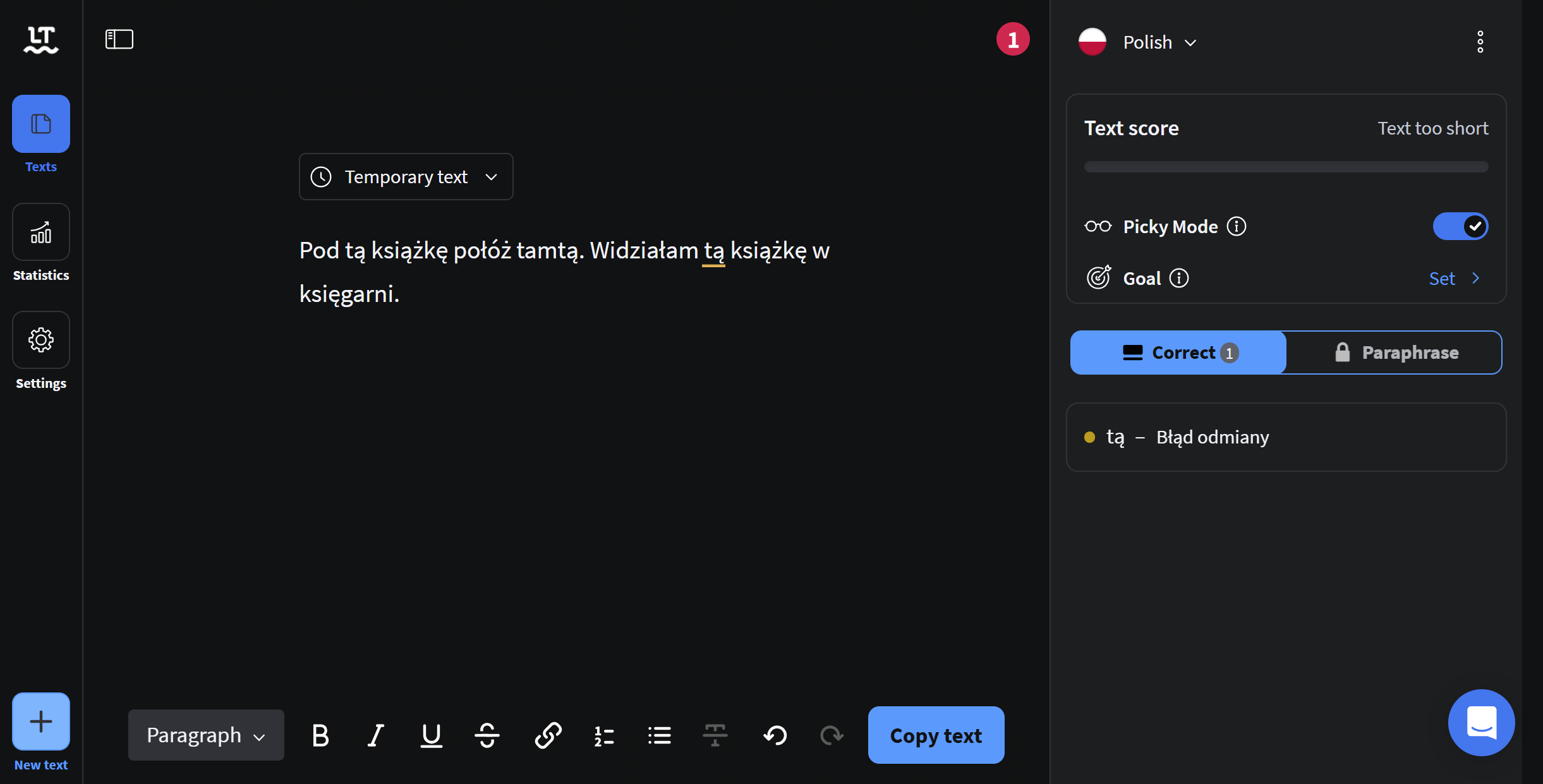

I only hope this is not going to end up in such a something, that the Polish committee does the most damage to the Polish language, more than three Partitions did, keiser and tsar. Word stress would not be decisive with extended syntax, as tę (…) harmonię, where I have done the thing since my early teens to have my word matter nicely rounded; yet word stress is penultimate in all Polish, and in direct proximity as well — “książkę” has word stress on the ą.
Polish is a living language. Let it live. In any language, phonology is the sound, the way the language is can be naturally spoken.
I translate Junto as Ramię w Ramię (shoulder to shoulder), as junto is a word of English, whereas in Polish there only are the junta or hunta, words for a military regime.
I have one occurrence of the variant podeszłem in my translation of Benjamin Franklin’s memoir. PWN says the shape is “one of the most frequent errors”. The verb gets along as follows: we podeszliśmy, you podeszliście, they podeszli, it podeszło, I podeszłam;(fem.), and only the masculine singular would sound podszedłem. Kind of lonely, isn’t it.
Likewise, for the verb pójść: poszliśmy, poszliście, poszli, poszło, poszłam, the masculine is the only exception, poszedłem.
■PWN explains, „The widely propagating now form, poszłem, results from analogous adjustment with the feminine poszłam“. PWN fails to designate those feminine verbs in Polish. So far, they have only conjugated with the grammatical person.
(Likely it is a pie in the sky, to have citations as in English, without the “three commas”, in Polish.
PWN wyjaśnia, “Szerząca się…
instead of the spelling as today
PWN wyjaśnia, „Szerząca się… “three commas”)
To reprove the contemporary convergence, PWN seeks to intimidate by means of the olden Rus. The website says, the form poszedł continues from an old shape *pošьdlъ, where the weak word final yer was dropped, and the middle syllable yer became a full vowel, e.
PWN does not tell if these examples are some archaic Slavic, or proto-Polish maybe, and of course they do not present any recording of the sound of the speech. I remember about Old English, people said nobody knew in truth exactly what it sounded — and somehow people manage today without such strict knowledge.
The first written Polish text is the Henry ■pobrusa, where it is possible that Polish writing had some assimilates, yet and nevertheless, there is no evidence of written Polish with yers, affirms ■Wikipedia. Yers were either dropped before the people developed Polish writing, or there never have been any Polish yers. The thing is similar to that about the Polish phonologically proper wziąść, where Russian influences have been implied without regard to the fact that Russian has not had ś.
Polish went on in sounding from wnijć to wnijść iindependently. The Council-commended wziąć forces nasalization, almost to wziońć, or speech would have to become extraordinarily slowed, as man cannot make it on the soft palate for ć. This is why Polish went on so independently, and not necessarily only because it did not want to be anti-Mickiewicz.
Well, jokes are jokes; it was long before Mickiewicz, somewhere in Old Polish already, many hundreds of years before he wrote and published “wziąść”.
I do not follow stories of archaic Slavic or proto-languages, because they are theoretical constructs. Talk of some theoretical Slavic communities is not the meaning and sense of economy, politics, and literature, and I am not altogether critical about civilization for it being at all .
It is not relevant when a language began. It is vital it might cope well, and Polish can be well off. It meets all requirements for a modern language, of course without limitations imposed by any committee.
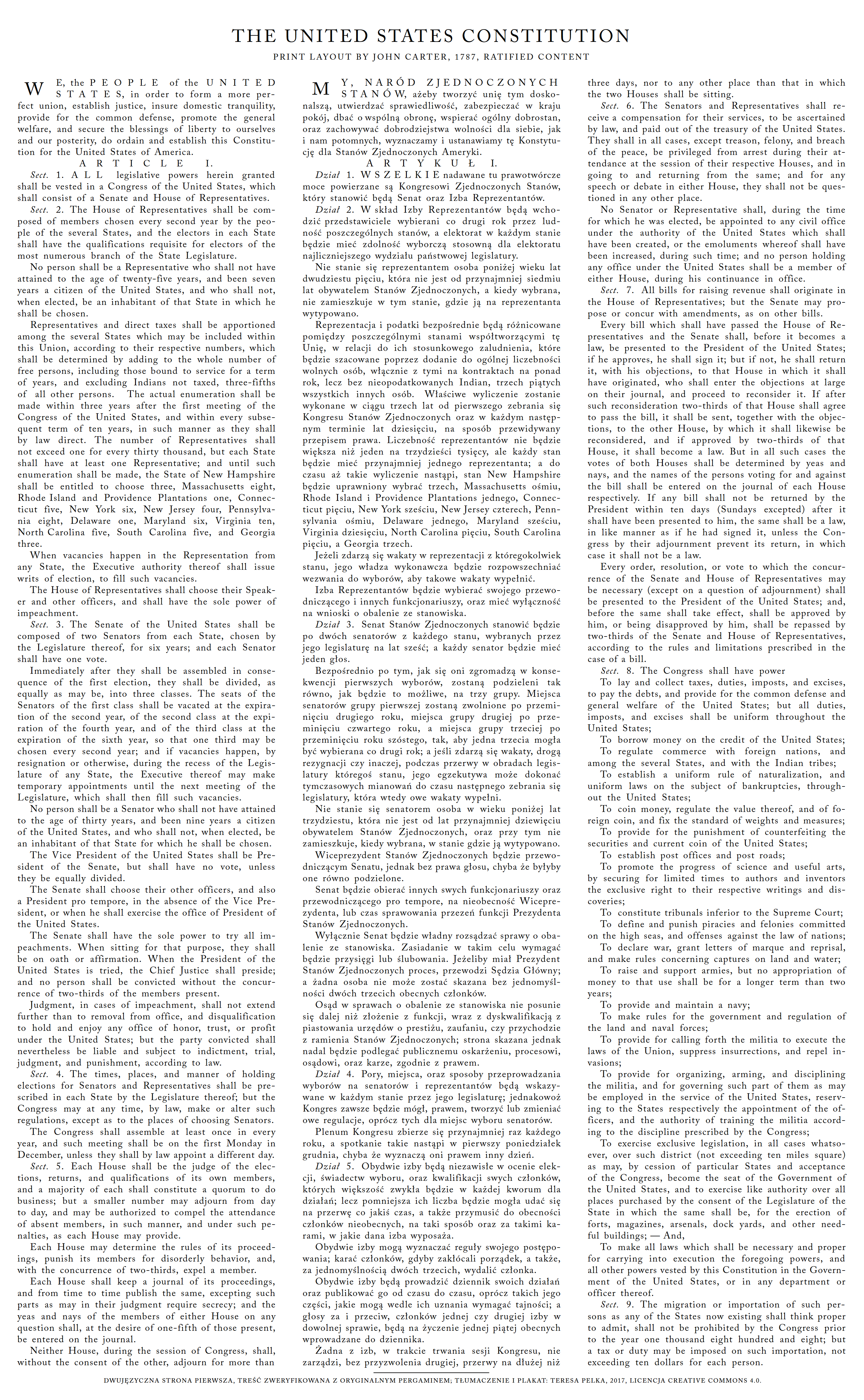
Some people might be even serious about theories of a mathematical universe, these yet fall into pieces when we think about the semantic field: whatever it is, it is not mathematics. It is enough to compare posters with the US Constitution: paragraph after paragraph, the sense is rendered in two physically different shapes, yet the capacity to mediate information is preserved, in English as well as Polish (I have updated the English for my grammar course, ■USA Charters are a syntax bonanza).
It is possible to ascribe mathematical denotation to language form, it is yet impossible to calculate the form itself, mathematically or physically. If b is bigger than c in mind — the question has no rationale, as none of known shapes for speech sounds would take more room in the mind than another. Well, the universe may have something of math in it, but it sure has also something else too.
(Mathematical models for the organ the brain is alone, have been rejected as limited; Damasio, 2000.)
Returning to Benjamin Franklin and translation, I thought, -sze- alone was too literal for the new and open context of Benjamin Franklin getting to know Philadelphia. Such a literally step for step it would be, and it occurs a few times, whereas he wrote he looked around much. Polish yet has the variant, though deemed incorrect on feminine grounds, and thus I enclosed podeszłem.
“Dalej w górę ulicy Rynkowej, aż do ulicy Czwartej, przeszedłem obok drzwi niejakiego pana Read, ojca mojej przyszłej żony; ona stała w drzwiach, zobaczyła mnie i pomyślała że był ze mnie, a na pewno rzeczywiście był, jak najdziwniejszy i najśmieszniejszy z widoków. Skręciłem potem w ulicę Kasztanową i podeszłem troszkę Orzechową, całą drogę jedząc bułkę, a krążąc tak dalej znalazłem się z powrotem na nabrzeżu Rynkowej, niedaleko łódki, gdzie podszedłem po łyk rzecznej wody” — Benjamin Franklin, Autobiography.
The stem anyway cannot be really female, as even three males cannot become one woman, and you would grammatically say podeszli, about three men.
I quite seriously think the grammatical gender belongs with full forms, when there is the grammatical person, never just roots or stems.
More, there is no natural language principle for the third person singular to govern the first (podszedł, he came up), and thus only the ■theory of the third man remains, in favor of PWN.
The last of the matters here, Polish today has variants for human visual ability, patrzeć or patrzyć, where both shapes are considered correct, regardless of grammatical gender.
Patrzyć is more literal with regard to eyesight. It is used in the phrase patrzyć prosto w oczy, to look someone’s straight in the eyes, hence,
Ostatnio wpadła w moje ręce w Londynie zebrana przez niego kolekcja najważniejszych pamfletów o sprawach publicznych, od roku 1641 do 1717; jak popatrzeć na numerację, wiele z nich zaginęło, ale nadal pozostaje osiem tomów folio oraz dwadzieścia cztery kwarto i oktawo.
Od tamtej pory zawsze lubię patrzeć na dobrych rzemieślników przy narzędziach; przydaje się to też, bo dość się nauczyłem by sam wykonywać w domu drobne prace, jak się nie da od razu sprowadzić fachowca, oraz przy budowie małych urządzeń dla moich eksperymentów, kiedy zamysł mam żywo i świeżo w umyśle.
Should we say here, jak popatrzyć or patrzyć, the impression might be closer to second-hand information (the author himself has not done this literally looking at the pamphlets yet), or some undue or physical interest, about people at work: lubił patrzyć na rzemieślników (their strong muscles?).
Finally, a joke I heard and I wouldn’t die to keep secret, in sooth, all the Polish change is about intimate gratification, where the -źmie has the soft, and -zmie allows talk unyielding.
Well, there is always the human organism and that might benefit with some softness. Feel welcome to natural, literary Polish.

 TERESA PELKA.COM
