
■Text available also in Polish, © Teresa Pelka
Evans wrote, the Knossian griffin would be the only one in the world without wings. Griffins have also been known as garudas, “charioteers of the Sun”. The Greek figure could run, leap or even jump, but this “charioteer” never would soar. It could be a good thing, as the story explains below.
The original picture and the book by Evans are available from Heidelberg, at
■https://digi.ub.uni-heidelberg.de/diglit/evans1935a/0563
To smooth the image surface, I printed it from the Heidelberg copy as PDF 1200 dpi, and Color Replacer smooched the background a bit, to hex #dfcfb0.
The picture showed some lettering in Greek, Ατενα Ηλιαια, Κνωσσιε Γε, Atena Eliaia, Knossie Ge. Athena’s Festivities of Sunshine, Knossian Land would be today more like Αθηνάς Ἡλιαῖα, Κνωσιακή Γη, Athenas Eliaia, Knossiake Ge. Languages also change.
The ancient Garuda would have been literate: the lettering is left to right, in perspective from Garuda’s head.
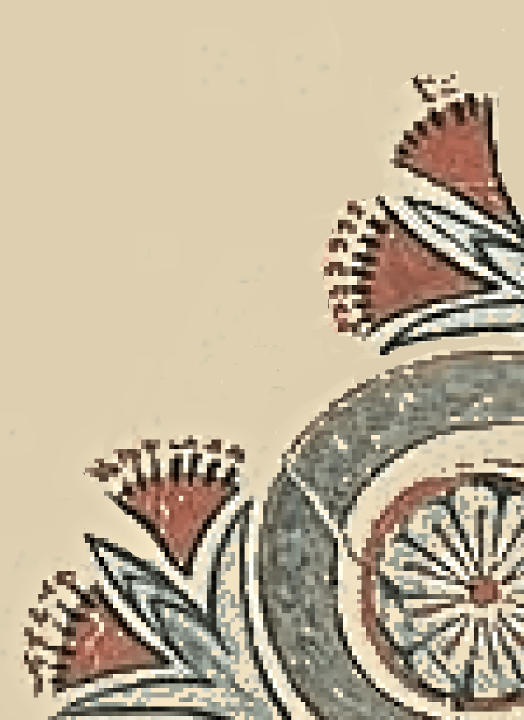

Olden spellings for Athena allowed the simple T rather than th, whereas the Greek ■ἀτενίζω (atenizo) continues to say, to look intently, gaze earnestly. Tufts Perseus notes on a festivity, ■Ἡλιαῖα (Eliaia), and the Greek name for the Sun remains Helios. Quite possibly the ancients had an outstanding show of sunshine lights.
Science says today, ancient Greeks were literate some 1600-1400 before this era, but they were syllabic. They had no alphabet and wrote everything in syllables because they started up on islands. Knossos is in Greece and it is dated for some 4000 years before this era.
Were the Garuda phrases written those thousands of years ago? The archaeological site remains quite open also today, and people may have painted there. Olden Greek obviously is not altogether esoteric, and to compare Akrotiri, the frescoes must have been changed, if we look to the brick pattern.
■Ogham began on an island — and it is not a syllabary. No syllabary for ■early Latin could be found. ■Early Hebrew was lettered.
New languages continue to emerge today, and people do not begin with syllabaries. Alphabets are simply easier. For people and places where some are foreign, you’d have to invent symbols and go all around to get them agreed, with spelling as bo as well as bou and beou. The ■Phaistos disks were possibly toys: they are dated for a time Knossians had trade routes, so the people sure were literate. Well, and how do you spell “babe”?

To tell letters of alphabets, we do say be(e) or de(e), but again, it is only because sounds as B or D are easier to say. We have learned this manner from others. In English, you take {i:}; in Polish it is {e}, to sound your ABC. The {ei bi si} or {a be tse} is not inborn, but then, why should syllables do for all so natural in writing.
Syllabaries altogether are not a likely beginning.
“Four independent inventions of writing are most commonly recognized – in Mesopotamia c. 3400 – c. 3100 BC, in Egypt c. 3250 BC, in China before c. 1250 BC, and in Mesoamerica before c. 1 AD”, ■reports Wikipedia, AD 2025.
It was some 1000 years that wine came to Mesopotamia from the Mediterranean, before grapes became more abundant and cheaper locally. The millennium is also described as “the first thousand years of writing”.
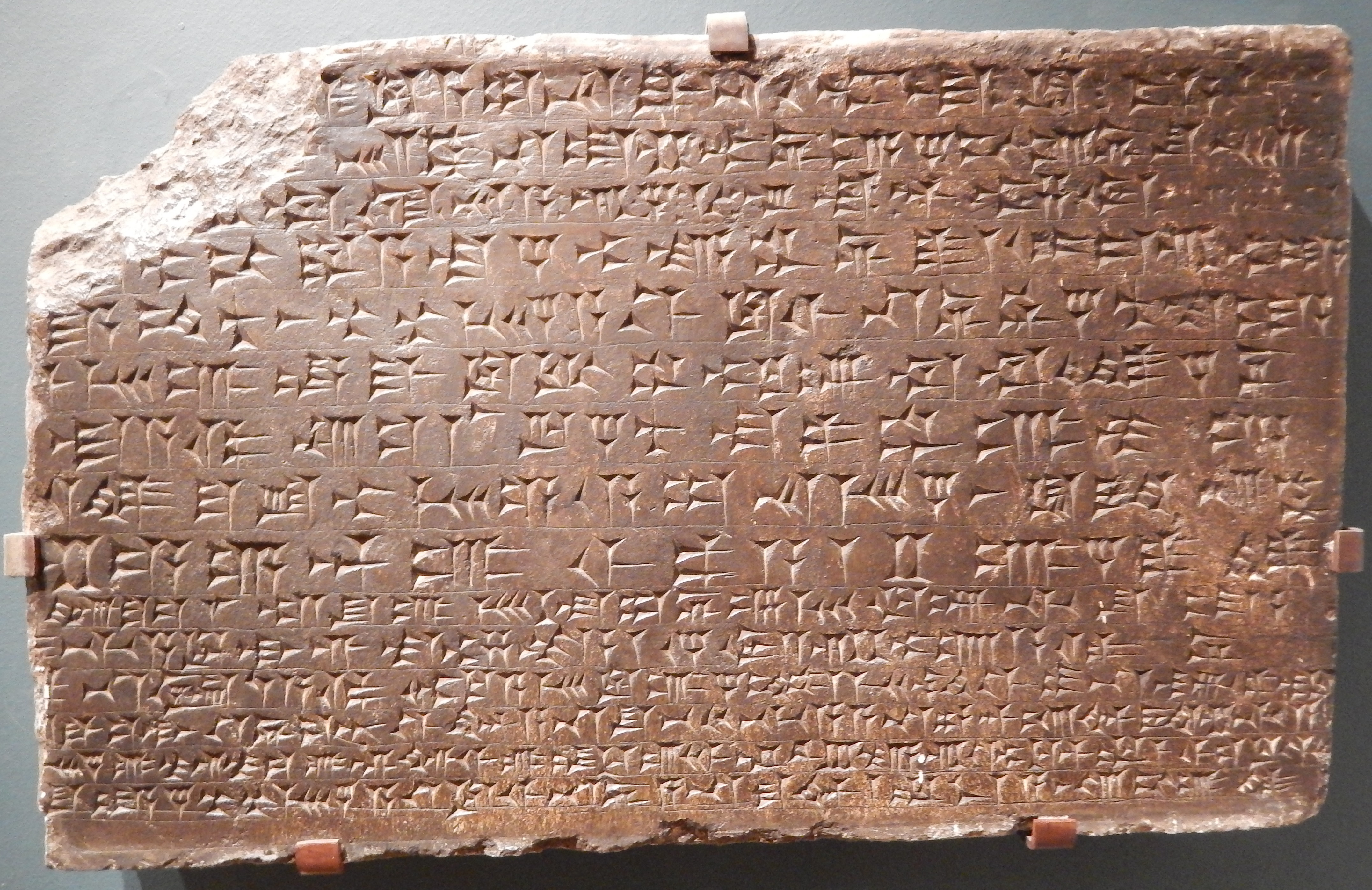
Mesopotamian cuneiform is described as “logo-syllabic”, and Sumerian as “mono-syllabic”, but let us mind, nobody could read those except people who claimed they could. Reading belonged with priests and politics. ■Morse code as well as the ■Moral Seneca are more egalitarian. Here, disambiguation might come only with another writing.
There is no ground to claim there was no other writing at the time cuneiform was showed to simple people as writ from a higher hand.
How has language developed? Let us think how people acquire language when kids today.
The regular theory is to derive Greek or “Proto-Greek” from the ■Proto-Indo-European, the reconstructed common ancestor of the Indo-European language family, lays out Wikipedia. It would have been in those “temperate grasslands, savannas, and shrublands” of the ■Pontic-Caspian Steppe, that “proto-children” learned their first words.
Naturally, they could tell from own sound making there were speech sounds possible to make on their own, as o or a, and there were those that made a difference, as in baba or dada, but you joined them with another sound of speech to say. More, you could use any of those standalone and make da, de, di, or do. It must have been in those early times too, when people already sang.
In that tall grass of the steppe there were flowers and other shapes — natural patterns, if you wanted to make written marks of your own. Some were bent or curled, and some dried up at times too.
The “proto-people” obviously knew what made a difference, and what was not so distinct in their own speech. Therefore, there cannot be a reasonable explanation why they would have tied their b or d to any particular vowel, a or o, to make written syllabaries. They were certainly not planning on happiness with baba alone forever, neither bean nor broth.
The conclusion is, people never wrote ba-ea-na for ■bean, or ba-ra-o-tha for ■broth — etymologies are correct, though teachers were scarce in Old England as well. Of other writs, there are Egyptians glyphs and Chinese ideographs. Neither would support a syllabary theory for language. Egyptian or Chinese glyphs are not classed with the Proto-Indo-European, but people are people.
Egyptian glyphs were picture-phonetic. Possibly an idea to show something ornamental to the simple people when you want them to make offerings for oracles and temples. The glyphs never would have been disambiguated without Coptic. Incongruous for architecture or science, they could not help with setting a table.
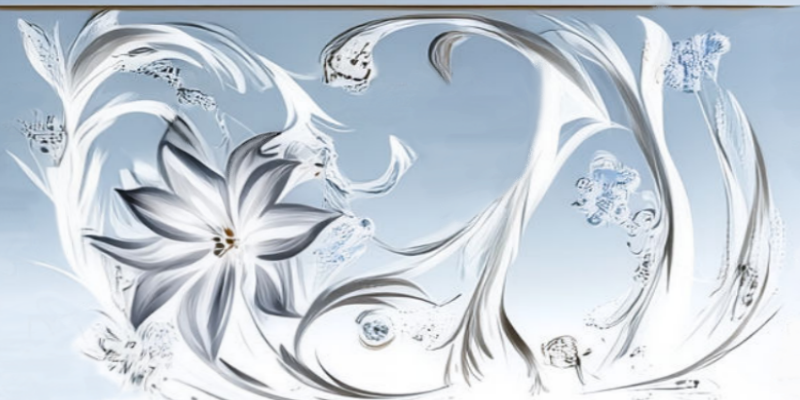
Chinese is ideographic but again, it is no syllabary, and there is no evidence it ever was. I’ll be making my font from botanical patterns.
Feel welcome to my favorite fable: The shapes also communicate wonder, how “by the sole lights of nature” the prince might have gotten the ideas he
had. We reckon, the story must have been of a distant earthquake and knowledge of what caused it.
By now, we have had two theories on the origins of Greek, unless all geology is untrue and those were the steppes to migrate to the Mediterranean.
One story would tell that Greeks started up on their islands and tied their speech sounds into syllables for writing, against all odds for a natural language; the other would say their language began in the steppe and wandered onto their islands, tied likewise, and to remain so over long time, despite trade contacts.
Since the third possibility is there was greenery enough in Greece for people to pattern, language detail may decide the matter. Hindu people have had a word as garuda, for a “charioteer of the sun”. ■Wiktionary derives the garuda from Sanskrit via nouns, Akkadian karūbu and Hebrew kerúv.
We may compare language development for the word computer today. It is a noun, and it comes from a Latin verb, ■computare. There are resources enough to tell, the Latin does not come from the later development, though there were no devices as computers those olden times.
Greek has had the verb ■ἀμαρύσσω (amarusso) to sparkle, to twinkle, to glance, where amaruge, ἀμαρυγή is a participle (at the same link). It is much coincidence, for word sense and a circumstance as an entire festival for sunshine.
Had Greeks borrowed a name for someone or something that makes a twinkle, the Greek verb stem would have the foreign sequencing, karu or keru. It does not. It is –amarug– in the participle. Ancient people often made nouns from participles, also in Latin, but never borrowed from another tongue into a participle straight.
The name garuda is most likely a ■metathesis, the interposing of syllables that has happened with the illiterate since ancient times, because when you cannot write and you don’t know the language, the last syllable is the most prominent in memory.
Garudas also happen to be called griffins, where we may note on the Greek ■ἑλικογραφέω (elikografeo) with regard to writing. The garuda could be literate.
Knossian kraters are dated for some 4000 before this era. Their motifs are very similar to the earliest of Greek letters.


It is unlikely that people from somewhere around Santorini would have needed Sanskrit or the Hindu Valley to make out writing from patterns on cups and jars at home. Another impossibility about those ancient Greeks effectively does deny much, in stories as today: is it those ancients lived without normal amounts of oxygen to breathe?
The ■Greek reporter wonders, were those ancients able to see color blue? Colors as black, red, white, yellow, and green are all ■mentioned in Homer, but blue does not appear. There has been speculation that Homer was maybe blind, but then, he would have had a lot of imagination for someone who cannot see and writes up descriptions.
■Business Insider says: There was no blue, not in the way that we know the color — it wasn’t distinguished from green or darker shades.
Blue is a distinct visible color. Human eyes by nature have the “blue compensation” that most people perceive with moonlight or starry skies. Stars will “shine” if you show them on RGB blue 20 (0, 0, 20), rather than a black background. Eyesight 20-20 was or has been for undistorted visual acuity with the military.
Daily aerial heights and horizon waters have always rendered bluey tinctures — as there has been enough oxygen, the very gas people need to breathe. Only some deadly low oxygen could kill color blue.
■Hypoxia can affect color vision, but Icarus certainly was not the ancient Greek standard for lifestyle. Perseus shows ■ἰοειδής, “like the flower” — a motif in Garuda’s attire, and a word for a sea in Homer: the poet only did not write “blue”.
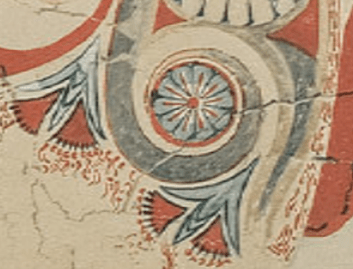
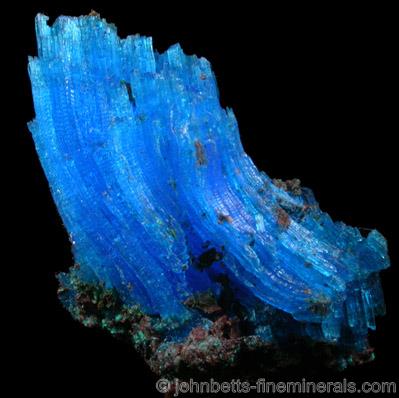
Now that we know Garuda saw color blue, let us think about ■chalcanthite. The word derives from Greek copper and flower, (k)halkos and anthos. The mineral is reportedly rare but easily grown. Sensitive to water as to require coating, the color is clear sky blue.
The Greek ■κειρύλος (keirulos) corresponds with ■cerulean in Latin, for clear blue. Romans assimilated Greek into own patterns with a mark in spelling, hence early shapes as coelum, suggestive of the letter k, as in the Greek original, yet you spoke as with plain e. Feel welcome to read about the ■Latin demeanor.
Greeks continue to have a word shape as ■κεῖρις (keiris or kiris), to mean a fabulous bird — an “amaruge bird”, a garuda?
With such sky blue vocabulary, Knossian colors we see today look affected with mineral decomposition. The Ancient vivid blue contained copper, whereas the darker indigo would have had sulfide clays, less susceptible to oxidation, but not altogether indestructible and thus fallen off in bits.
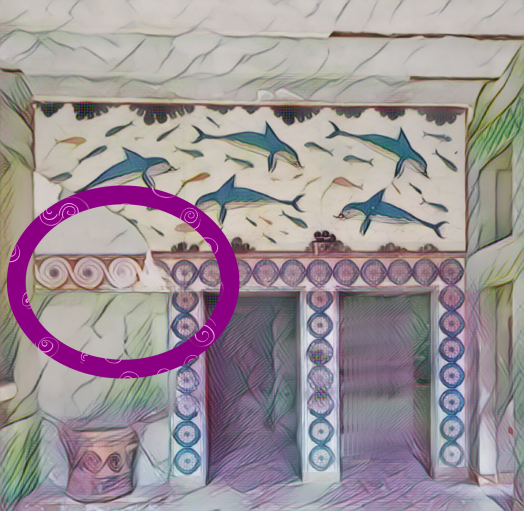
The Knossian interior might have been more like in the picture on the right here.


Interestingly too, the room looks more of a meeting space than elevated throne architecture. Not only ■Beowulf would give elevated space some door, and ■sedans carried higher, where theory is, cave people had such for elevated status too. The Greek room is quite open, and the main seat is only a bit above.
As there is no ■Doomsday Book for year 4 thousand before our era in Greece, we may hold on to the mineral theory: very blue would have been the “heavens” the fabulous garuda was.
Egyptian ■Djoser was nicknamed an “inventor of stone”. Ancient visitors wrote inside his pyramid, it was “like heavens came here before”, and the place was the regular ancient Egyptian idea, piled stone and darkness (some 44:15 in the movie below). Maybe those tourists thought about another place, where the interior was sky blue, and columns were stone as by a smith.
Those were ancient Egyptians to borrow from Greece, not the other way round, to adorn tombs. It is unlikely for a palace to have borrowed from a graveyard.
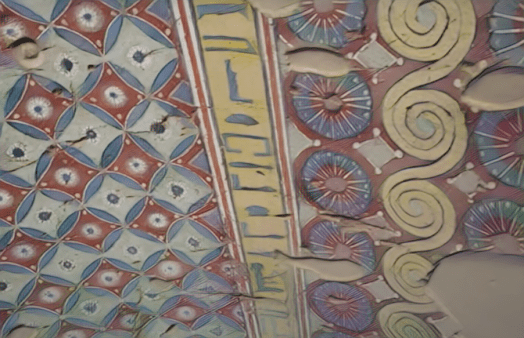
Rusty red was common for curses in ancient Egypt (some 13:36 in the movie), and thus I do not believe ancient Knossians would have had it for room decor. “Red ochre” is another name for the color.
Ancient Greeks not only had trade routes, they also had celebrations with Luxor — and you mean their representative interior was in a color for curse?
I know I simply prefer Greek over constructs as Sanskrit or Proto-Indo-European (feel welcome to read, ■No man, woman, child, or house, with the pie); yet objectively, if it could be true that ancient Greeks developed writing before its dating today, that they had a solar festival and plenty of blue at home — it is interesting why they would have buried the twinkle, the color, and the letter.
As there is no evidence, there can be only guesswork. Granite was solar lens molten in ancient Egypt, says the movie, ■The Great Pyramid K 2019. I am persuaded. UFOs didn’t carry all that stone under earthly gravitation.
Feel welcome to read, ■If there is Heaven, then in Heaven.
The ancient problem would have been, ancient Egyptians did not only use the shine from the Sun, but they also beamed back to the Sun or cosmos next somehow, and one such famous consequence was the Egyptian plagues. The Sun is in physical feedback with Earth, says science today.
Thomas Paine would have mentioned, in his Letter to the Abbe Raynal.
Is life so very long that it is necessary, nay even a duty, to shake the sand and hasten out the period of duration?
His written matter would get along with a hint by Hamilton:
“The sacred rights of mankind are not to be rummaged for among old parchments or musty records. They are written as with a sunbeam in the whole volume of human nature by the hand of Divinity itself, and can never be erased or obscured by mortal power.”–Alexander Hamilton, 1775, in Conway.
I do not see anything wrong with hinting at knowledge as available. Otherwise, we might only believe in Thomas Paine as proponent of child labor. ■To constitute a man is work in progress.

Knossos Garuda is a story about afterlife. Stories don’t require evidence or linguistic exactness. There is no guarantee anything is true, and there is no guarantee all is fictitious: what paradigms as in Taylor or Aristotle himself might hold — maybe even nobody knows on Earth.
I am not a “contactee” or “contacted”; never have had an out-of-the-body experience or memory of the “other side”. The character of Dieter, ■German Air Force, is to emphasize the character is not me. I obviously couldn’t be US Air Force either, I have no idea how to fly a jet, but the ■World as of Garp indicates a permanent health condition, and the story here is really not about that. More, Germans sure don’t vanish after they die if other people don’t, so why not a German.
I am not a believer or church member, but I prefer to think every human being has an immortal soul. Living as merely biology would be too limited for a human. On the other hand, I do not believe in God on Earth — I do not think anyone could be honestly affirmative that God would certainly be here or there for them. It is no ground to deny the possibility of afterlife.
The following is a draft, and ideas might not be all their final form. Views or opinions are those by the characters. The groundwork is from Aristotle’s Physics and Metaphysics, “broad stem”, e.g. of 2|b, ■ἀνάγκη πρὸς τὴν, as -anan- and -anag-, spoken and spelling (and so on; I began reading dictionaries ■as here quite early, was a curios kid).
Knossos Garuda
Death is as departure for a country unknown. Nobody on Earth has a fact about it. The experience of the truly last breath always goes away with the person. Some people doubt there is the Other Side, because so little is known; yet nobody on Earth can truly state there is certainly no Great After. There are the Great Lakes, if you want a dispute on names.
The Cradle they call it on that other side. Dieter is at the bay and thinks, he must be in his parachute still. His body seems to have no weight; but no, he can’t tell the harness. Everything — or something around — is swimming, but he is not in water. There is light. Everywhere. It is not hard or intense; it is only different from any light he has ever known — multicolor and very defined or distinct? It was the swimming to wake him up, not the light.
There is an approaching shape. It has light, as own light, but it doesn’t glow. Clear contours. Dieter thinks, how could he see from that far away? Is he sleeping? He tries to focus. He’s not in his aircraft. The shape is right next to him already. Very fast. The shape speaks.
» Gods say, “Think of us as regular fellows”, so we welcome souls from Earth. I’m Chatty. It’s my name, like there was one Aristo-teles, though his regular nick around here is Handsome, philosopher Handsome. I am your immigration service, so to speak, but you can always ask for someone else to do the induction.
« Where am I?
» You’re near a tremendously vast settlement. There are plenty of created, vivid, and interesting things to see. Multitude of people. Advanced living conditions. The haven here and Heaven proper are visa-free. You are at the Cradle of the Great After.
« I’m dead.
» Medically pretty much so, though by pure accident it never happens.
Dieter looked at Chatty.
In other words, it looks like you were killed by a spontaneous self-creation of a stochastic. Should that be the only way to die, people would be living forever on Earth. The spontaneous cannot be done. Whoever would try, he or she would become the origin. In life, stochastics always bounce from deterministics.
Dieter spoke to himself, spontane Selbstkreation, stochastischer… I died of improbability you mean, aus Unwahrscheinlichkeit, he turned to Chatty.
Improbability, right. Obviously, no one planned it, but opportunity is all real-time, and it is only honest to let you choose. You can be back in your body. Time is short to tell, but there are people in your universe who want to put Earth under infinitude — figure, order, and position “Argonaut”.
« Figure, order, and position?
Earthlings can have figure and position, but the ■diathuge came with ■diathesis and continues to belong with it. It’s that bit technical.
« What is it the infinitude could do?
You came to our bay as by a trajectory. Under the infinitude, souls might go to the Unshaped.
It’s honest to tell you as well, your body would give you physical pain. Plus, there may be no one to believe there is an Argonaut going on.
« How much time to get back in my body?
About two minutes. After, your body starts decomposing.
« Is my body OK to live?
Floating mouth and nose above water now; your infinity connection to it expires in 1:54 Earth minutes exactly. You fell into the ocean, got broken a bit, and your brain has been short of oxygen for a while.
« Pain, debilitation, and nobody to believe me. I’m not going. What is the Unshaped?
It was all fog, but a fog such as I’ve never seen before or since. For a moment I thought my sight had gone, that, perhaps, in the afterlife everything was vague and misty. — This is Gerald Heard from 1944, The Great Fog. The Unshaped bears no shape, and this is somehow unbearable to souls.
« He was there?
No, he had an infinity phenomenon. It is when the tree of life, as it is called on Earth, indicates to you what there is. Infinity is as a human element, only Mendeleyev ain’t got it.
« Was he going there?
Neither and nor — a phenomenon is a phenomenon.
« And you are the guys “up-there”?
Nope, we’re the nature’s western brim, the distant and right next.
« Who wants to put Earth under infinitude? Anunnaki or such?
The Anunnaki were a stopover. The name comes from ■making well or repairs, and they emphasize, they never made the regime. It’s bad fame in the Great After. The people who want to put Earth under infinitude are Orti.
« Why?
They are people just as earthlings, exact same species. They are human souls in afterlife, and they say that Earth with its sacrifice and scapegoat is too much of a bad renown for them to suffer forever.
« What sacrifice?
I do not want to influence souls. Living in the Cradle is free and unconditioned, consensus only — I love to live this beautiful idea — so I can talk here like we’re sharing notes, but please mind, on any matter, Heaven will accord or leave you. Heaven never demands.
« You mean religion. I am not a believer.
Entity way out of the physical universe does not depend on belief. Every earthling soul has to take a trajectory, to get from Earth to the After. It’s a soul 2D flip from Earth through the universe; and well, Gods, the two, He and She, are real.
« Are you going to to tell me now that God is a woman, and she threw Adam out of Paradise?
Are you going to tell me the Almighty couldn’t tango? And God said, Let us make man in our own image, and people were created a man and a woman. Obviously God can have a partner, but She never threw anybody out of any garden.
The order of things is — the soul becomes in a world of matter; the soul grows in own body; the body dies, and the person may come to the Great After. Adam never was in the After before he lived on Earth. And how could you even know the right from wrong before you eat from the tree? And if you know the right from wrong, is it you use stealth? She is not immoral, I wouldn’t say that.
« The Bible is lying? I heard that on Earth.
The Earth Bible was put together by males in a place and time female engineers, scientists, and intellectuals were unthinkable. We say She did a good job. He never came up with color bird eggs, anyway.
« Birds were created by a female? Bird females are so unadorned.
She’s not a bird.
« Am I going to see God now?
And She is not a receptionist.
« There are people who tell, they saw God in their near-death.
Some lied, and some had infinity projections. After the atomos flips 2D, it is 4 minutes for a regular angel to help you back in, or your body is dead. You can’t catch the atomos on Earth, even if you clasped your hands all around as an excellent medic, and you can never come here, without your atomos out of your body.
« Are you a regular angel?”
The standard.
« What happens if you die a natural death?
Death is death, no matter the circumstance. The atomos cannot stay in the physical world after the body dies, because the atomos is indivisible — and physical matter is divisible.
« On Earth you learn that atomos is Greek for an atom, and it has been split.
A true atomos is impartible; a-tomos. Whatever you want truly by the name, it has to be something that cannot be split. It’s like a fiber, basically.
« Do animals have atomoses?
No. They are incapable of semantics.
« Earthling newborns?
They have a budding capability for language, let us say.
« Why do you call it here a cradle?”
Cradles give a bound, rounded shape of pragma. You can create anything with it, even a personal planet, so unless you insist to sit and watch a tree growing, you’re happy with this pragma like with nothing else.
« Can you travel the physical universe?
It’s time-space; our entities cannot collide.
« Why don’t you go to Earth to tell people there’s an infinitude?
We wouldn’t mistake the cargo. We ’d hate to be an “unbought grace of life, cheap defense of nations”, or “nurse of sentiment”.
Dieter smiles: Burke chivalry. Do you have religion?
We don’t pray to afterlife. We live it.
« Then, is She really God, like people mean it, God?
Creator of a Living Day, God full title.
How did She create the world?
Partible physics perfect stasis. “True being”, philosopher Shapely said.
Plato.
(Work in progress.)
 TERESA PELKA.COM
