World War II pretty much ended beliefs in God acting on Earth. The war was terror and destruction: ■Reich Security arrested Jews as well as anyone else; troops had flame throwers in regular use. No God ever stopped them. ■Gott mit uns meant ■God with us.
Completely atheist however, the human being would become a “bio-being”. Squirrels or koalas would look relatively witting then, because they do not have the proportion for body and brain as the human species do.
The post here is honestly to present my doubt; no playing up, around, or about. Some theories might look crazy, as ancient Egyptians beaming the Sun (yet some such activity, in modern times of course, might explain the ■Miracle of the Sun), but the post has all that sincerity and frankness with which the mind of man communicates with itself, as Thomas Paine wrote.
To look around… Things have beginnings. More or less everything started some time ago. It is possible that someone gave a beginning to life on Earth, and the life continues to begin, owing to the original design: spring comes year after year, and then there is always some time before things turn into winter.
To introspect. It is possible that I have a soul, because myself, the person, I am not a body part. The brain does not have an “ego area” you could take out or put in; the organ uses networks of neurons that somehow — and this is the fact of science, somehow, without approximation or units of measurement altogether — remain organized in some harmony, without conscious effort on my part, so it might be a property of my psyche or soul, to manage those nets.
By the original design or standard, everyone would have own psyche or soul.
Why planet Earth is not in contact with any afterlife, anything like videocall, I do not really have a clue. Humans are a lot better when aware what there is to expect.
All religions claim to be true. In each and every there is something that gives me doubt, strong as not to join. Buddhist reincarnation denies identity and memory. You could be this guy today, and that guy in another life, never remembering yourself from today, just as now you couldn’t remember yourself from a previous life.
Islam demeans women. I can’t imagine working hard, at being a good person as well — to be sent into an eternal harem. It would be punishment. Imagine a male having to run about a guy for all eternity.
I do not believe the Creator would have given up own son for own apple. Apples are known as fruit of season. If abstract and metaphoric, the apple would have been an abstract and metaphoric fruit of season. More, I have never liked the idea of a nude paradise.
It might be emotionally and intellectually the worst experience, to get into some Great After, see it is beautiful, wonderful, marvelous and full of fancy garb, and then to learn you can’t stay because you’re lacking an agreeable philosophy. Villains at least expect some hell, whereas for you everything would have gone smoothly, like people describe, a wormhole or something similar opened, the soul had a guaranteed safe landing, the Great After felt really great, yet as Emily Dickinson indicated the possibility within her poetic license, you’ve been your own enemy. You have never thought how to live there.
You have learned how to burn candles or participate in religious events; you have mastered disputes over issues abstract as transcendence — because most earthly churches have the idea — but you do not have this simple philosophy in you for living After, and there would not be a heavenly nanny.
Other stories about afterlife tell about dense mists where souls wander and lose themselves to shapelessness.
When I was a fetus, all my world was the womb of my biological mother. I sure did not even imagine the physical world before I was born. Now, in the physical world, I would rather think.
Sometimes, a human being might be prone to “close up the parentheses” or “stabilize the indefinite”, to embrace what there is not known into a thing familiar. All religions were made when people did not know much, but people knew what birthing was.
An animal shed where creatures of the hoof experience food metabolism in all extent — is a likely association with odors unfavorable at least. As a circumstance to human birthing, it might be described as jeopardy of life and limb. Did ancients do it the way?
They did not. They were fast building temporary accommodation, and Joseph was reportedly a carpenter. To keep warm, easy did those ancients spark a fire, whereas to accept the ■Trinity, you would be to accept the Almighty chose the circumstance for himself and his earthly, biological mother.
“Is the gloomy pride of man become so intolerable, that nothing can flatter it but a sacrifice of the Creator?” — asked Thomas Paine in his Age of Reason, ■page 31.
With a Trinity ■coeternal and ■consubstantial, man would have crucified the Almighty too.
It is not anything I imagine for my good beginning in the Great After, to tell anyone that I believe God has died, or would have died for me? Could it have been that God was Almighty and needed to die? Crucifixion could never be pleasure.
My After is yet a fabular notion, as to test or “cushion” ideas, because we do not have to think Heaven straight away, the highest level presumably, to think about own possible first steps into a new life after own bodily death. Already on Earth you don’t begin learning with universities.
My faith yet should be always such that I could say what I believe in my words, also to God in case.
Reasoned Thomas Paine ■on the same page 31:
“Had the inventors of this story told it the contrary way, that is, had they represented the Almighty as compelling Satan to exhibit himself on a cross in the shape of a snake, as a punishment for his new transgression, the story would have been less absurd, less contradictory. But, instead of this they make the transgressor triumph, and the Almighty fall.”
Religions are to tell and show what their believers trust. The believer approval cannot be for matters the believer rejects, and — how many of believing boys or grown men would like to be seen on a cross by their girlfriends, spouses, or mothers? How many would like the idea they were begotten straight for the purpose of becoming crucified? God either would have withheld that knowledge from Mary, or she would have been part in the plan.
However, no such earthly woman as to give birth to the Trinity on Earth might have existed. The Almighty and the Universe were before Earth, and I do not believe in Mary. I do not mean offense. After all, Christians do not believe in God as Allah, and it is not supposed to be offense.
There is a prosaic possibility I may seek comfort with, that someone wrote a play, as for a public performance, and all this began as theater. It is not altogether uncommon, to talk about this earthly living as about some planks of theatrics:
“And, on the other hand, thousands of the aged, who had British ideas, have dropped, and are daily dropping, from the stage of business and life”, wrote Thomas Paine in his Letter to the Abbe.
I mean, condemnation for an apple is trouble enough. There could not be need to add any fault against the Son, should it be true that the Almighty had or has a son, and the method continues to be blame on all people for what happens around, as with the original sin. The crucifixion would have been on Earth.
Naturally, if God created Earth, God never needed to die for it. God could have created another Earth. To come visit and receive a “treatment” as that described in the New Testament could never be pleasure, hence the word as “need”.
The cross would be to express godly love for man? I do not believe in anyone as personally lovely, all the more that this existence is mortal. Therefore, nobody has been on this Earth persuasive enough, complimentary or critical, and all in all and after all, beauteous, as to talk God (or a human being) into a self-denial as the whipping Stations and Crucifixion. I absolutely do not believe anybody would have been. One-on-one the matter would even impress of imbalance, whether on the side of the one to demand, or the one to comply. Well, the Almighty could not have been forced to that, right?
“These books, beginning with Genesis and ending with Revelations, (which, by the bye, is a book of riddles that requires a revelation to explain it) are, we are told, the word of God. It is, therefore, proper for us to know who told us so, that we may know what credit to give to the report. The answer to this question is, that nobody can tell, except that we tell one another so” — says Thomas Paine to begin the 7th chapter of his Age of Reason. Then, proves step by step, quoting from the Bible itself, that the books contradict one another and their authorship remains unconfirmed.
Howbeit, the first letter by John says, As three there are, to bear witness in Heavens, the Father, the Word, and the Holy Spirit. (Wycliffe, 1 John 5.7-8). In the phrase, there would be room for the Son where the Word is — there is no other Trinity, and the Gutenberg Bible has the word verbum and no son, in the place.
Of the Son, it might have been a verbal story.
Much wording would cancel when people are reference, as a virgin and a ■mother of seven at least, maiden and wife of Joseph, a carpenter with a laboring wife who accommodates her in an animal shed.
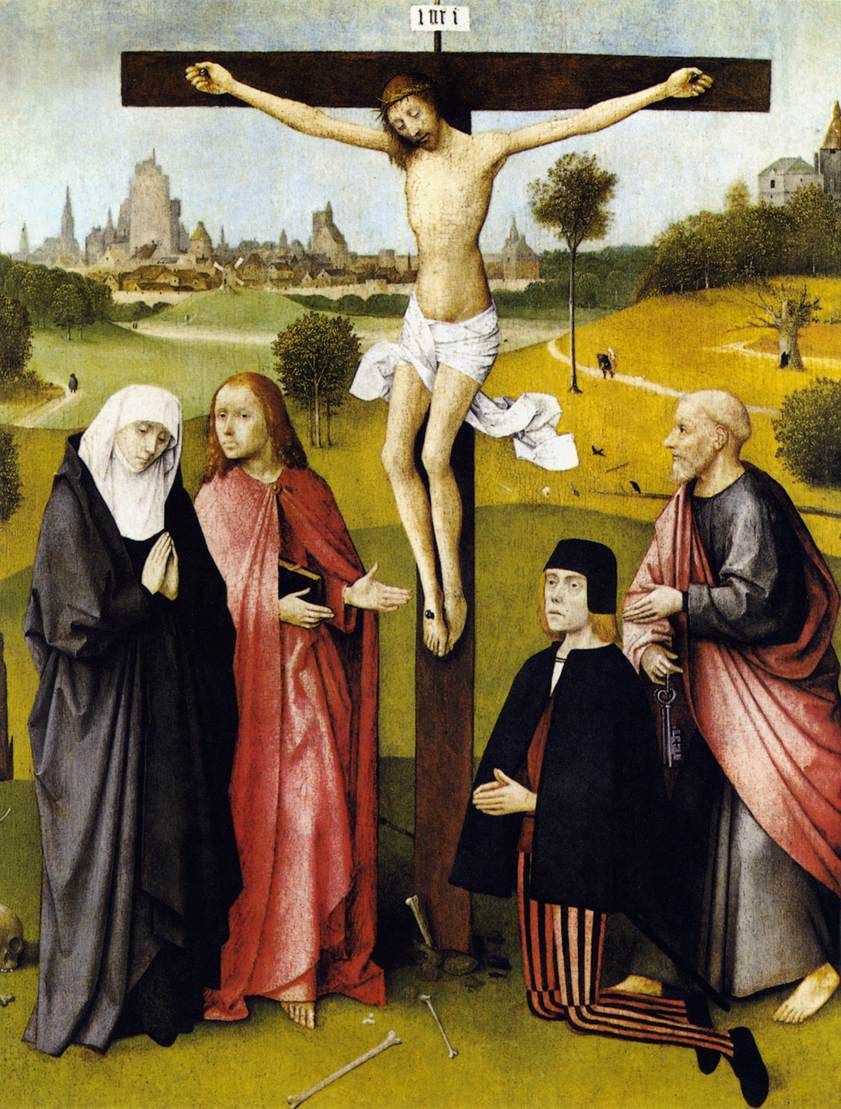
No human being could hang in body positions as by ■Hieronim Bosch, or those in many churches today as well — by three nails for six hours, and such is Christian teaching — under earthly gravitation. Falling down, everyone would suffer further injuries.
The only way would there be to “hang in by three ash”: three tiny “nails” rendered number three in ancient Sumerian cuneiform, whereas Hebrews had the number symbolize new life and completeness.
My suspicion of theater (rather than another type of presentation) grew with the traditional, ancient Chinese yans that have theater and abundance of effect within their set. The symbols are 演, 衍. Teachings by Confucius might be described as “the knowledge of the yan”, or how to choose own salt. Thomas Paine associated teachings by Christos with those by Confucius, in his Age of Reason.

With a matter symbolic, there is no real crucifixion. The tiny “nails” can be seen in the picture here. The written story of Christos has a break, between his adolescence and adulthood, whereas there is no record in Sumerian writing for wine, when ■Mesopotamians favored beer.
For any physical odds, let us stretch our arms sideways and see how long we are able to keep them up. No metal nails could help us support our shoulders, because any such piercing would be very painful and shocking to the muscles. I do not know if there would be anyone up for 30 minutes, simply under earthly gravitation.
Thomas Paine observed,
“The tale of the resurrection follows that of the crucifixion; and in this as well as in that, the writers, whoever they were, disagree so much as to make it evident that none of them were there.”
The discrepancies between Matthew, Luke, John, and Mark are on matters that would be important in life, but they could be mixed in descriptions for theater.
“Not any two of these writers agree in reciting, exactly in the same words, the written inscription, short as it is, which they tell us was put over Christ when he was crucified; and besides this, Mark says, He was crucified at the third hour (nine in the morning), and John says it was the sixth hour (twelve at noon).
The inscription is thus stated in those books:
Matthew — This is Jesus the king of the Jews.
Mark — The king of the Jews.
Luke — This is the king of the Jews.
John — Jesus of Nazareth the king of the Jews.”
Thomas Paine concluded:
“The disordered state of the history in these four books, the silence of one book upon matters related in the other, and the disagreement that is to be found among them, implies that they are productions of some unconnected individuals.”
The men who wrote the story down never came together to make it into one version. It really might have been a play by an itinerant theater, and the reason it never became preserved verbatim as theater could be its peculiarity of wording. “All the world’s a stage”, Shakespeare wrote, yet never about one taken off the bill.
The play would have had a phrase as “the (only) son of God”, a determiner possible to express in Greek, and the name Christos is of Greek origin. All males could be sons of God those times, where each would have been a son individually, though knowing his biological parents. However, the only son as the phrase might have made people cautious about possible offense on afterlife.
Also today, people may go to a theater or cinema to see things that never happen in life. Ancient Romans did originally coin the phrase, divide et impera, but the vox populi, vox dei was made hundreds of years after the fall of the empire. Asking the people what to do was not an ancient Roman habit, and Pilatus, a character of no historic evidence really, would have left the judgment between Barabbas and Christos to the crowd. No such thing ever would have happened to an ancient Jewish witness.
But the detachment from reality, the theater would be telling, people choose wrong. Ancient Hebrews were not fond of democracy. Hierarchy had always been their fancy and that they chose.
The vote by the people could be understood only if to take the character of Christos for completely symbolic, that is, in detachment from human bodily form, and representing ancient uses of solar power. Ancient Egyptians used optically focused sunshine to melt granite, and the famous arc of covenant would have been an optical device “to remove mountains”.
This detachment goes against gravitation on Earth, for the crucifixion. Before Christianity, people celebrated winter solstice with scenes of Mother Nature, Father Time, and Baby-Sun. Physics would have been feminine in gender, for the ■Midwinter’s Night Eve: Yule.
In detail, the name Christos can be derived from the Greek ■κεῖρις (keiris or kiris), to mean a fabulous bird of a legendary sunshine festival of goddess Athena. Feel welcome to read about the ■Knossos garuda (work in progress).
The ancient problem would have been, ancient Egyptians did not only use the shine from the Sun, but they also beamed back to the Sun or cosmos next somehow, and one such famous consequence was the Egyptian plagues. The Sun is in physical feedback with Earth, says ■science today.
In those ancient times, the Sun was a deity, and that continues to mean that the object of thought is not a bodily human. Stories emerged about God having terminated the Egyptian first-born, whereas the events would have resulted from physical instability on Earth. Originally, the story would tell, the Sun did it.
An ancient Egyptian head dress for an “angel” might have been used to set an optical parameter. With a surveyor’s cross, an arc could be an optical angle, where a notch or recess would be mark for a physical convergence.


The Creator terminating his son on a cross; then, bringing all humanity back to life for the Last Judgment, and ending the world with the fall of the Roman empire — these look human ideas of the time.
Constellation Crux was changing relatively in place, owing to the axial precession of planet Earth: people probably thought it was some godly business, whereas they feared they might be losing their settings for beaming, and their only idea for earthly existence was physical dominance. They could not imagine living without their bodies, hence the resurrection for the Judgment. Finally, it was unthinkable to them that the Roman Empire might be gone.
Obviously, in case of aggressive solar irradiation, it is always a human to die on Earth, and never any god. For ancient ideas about the super-natural and physical, feel also welcome to the ■Shapely and Handsome Fable (work in progress too). The Handsome Ever Fable is to base on Aristotle’s Metaphysics.
In case a theater script about solar lensing would look some esoteric knowledge today, such lenses were visible in their time, and people simply saw such, and most knew what those did.
Thomas Paine wrote, people are in the same relative condition with the Maker as ever, since the beginning, and it is the greatest consolation to think so.
Indeed, a side note here might ask, what there would be agreeable among people’s doings, under the Sun, should there be a subtitle in the picture saying, “It is this person’s belief that the only Son of God died for his (her) sake”?
Resource

All the Paine in Age
All Bible quotes by Thomas Paine in his Age of Reason, in one place.
I do not need the thought anyone died for me, to get up in the morning and have a worthwhile day; absolutely nothing of my activity requires terminating anyone’s living functions; I would never crucify anyone, unless they would demand it holding a weapon to my head.
I do not believe in the ■”Miracle of the Sun”, in the light of narratives of ancient Egypt. The extraordinary solar activity would have resulted from gravitational lensing or a cosmic ■Fata Morgana. The cosmos may even “smile” at us at times.
I do not believe in the Fatima prophecies, because it could not be difficult to manipulate illiterate and unaware children into believing they’ve seen an angel or another character of religion.
I do not know who did what, with the beaming and the children, but this does not mean the source had to be the Creator. Military intelligence might be suspect, but still, I do not know if there was such involvement and from what country. I do know that fear is not faith.
People other than the perpetrators might be scared for planet Earth — everybody knows it is a Solar System; if you do something to the Sun, something likely happens to Earth, because Earth goes around the Sun — whereas keeping up a religious mystery could only mean such acts would be repeated, whenever it would be “time for a sign from God”.
Possibly those ancient Egyptians didn’t mean to hit Egypt; something just slipped. Something might slip again. In favor of Greece I would like to note, their griffin does not have wings: it would not soar at all. This resolve could work for Earth, the resolve never to beam the Sun.
Who knows, maybe the true original sin was by ancient Egyptians, that is, the beaming was (understandably) disagreeable to powers that be. Only today you say “stole the thunder”, whereas Athena’s apple was golden, and it was in her name that Ancient Greeks held some legendary festivity of sunshine: atenizo remains to say, to gaze earnestly.
If everybody on Earth today would be under some exclusion, it would not be because everybody would be blamed for Ancient Egyptians, but because a resolve as the Greek, never to beam the Sun, has not been globally accepted. Maybe. I do not know. Such a resolve yet could be reasonable.
For an implication as the Fatima prophecy and a “miracle” of the Sun in some ancient Egyptian style, it potentially would be the widest genocide on Earth in history ever, on Russia. Should that be what earthlings have learned from the Creation, the planet and the species might become a disappointment, also if only some earthlings would be of such a conclusion, and yet they would be allowed at power.
I am not so curious after all, if there would be another power or powers able to do away with the planet, in such a context. Generally I do not see sense in persuasion where the time perspective on its result might be only short. I prefer to have something I could hold on to. I do not need a doctrine though. There’s been so much doctrine no Earth so far.
ADVERTISEMENT

A tale of counsel inspired with reading about Confucius
Honeybee said, it is precious, the reason to live and exist given us from Heavens to be intrinsic love in us all, in every human being. Agreeably to get along with this intelligent idea on Earth already — is in our best interest.
With gravitational lensing, Earth is as in a cot already: you don’t get anywhere far out there without a beam or aurora returning to the planet. Those ancient Egyptian diviners wouldn’t have been the best or nicest of babies.
Those ancient times in Egypt, they even used eclipses to get more hops, because the people did not know what it was, that darkness. Today people would not know what that brightness is. Areas of aurora light can sear life on Earth with their frequencies.
The Portuguese “Miracle of the Sun” was followed directly by World War I and then World War II, where the progress of Nazi ideas was much aided with auroras close to the surface of the German land. Fatima was not revealed to the public until the 21st century, but knowledge or rumor of the thing obviously existed before. I read in a book, in Poland it was called “letting the mole down the hole”, when an intelligence agency organized a leak and the story was fake. There was nowhere to read, naturally, about the ways those leaked knowledge, but sure they did, as they had one for their “moles”.
“When you see a night illumined by an unknown light, know that this is the great sign given you by God that he is about to punish the world”.
The ■Fatima Storm was a geomagnetic storm with observable spots on the Sun before, one in 1937. If you beam the Sun, does it make a spot?
Who might there be suspected of the beaming?
1. A monarchy. Was the English George VI persuaded, and Elizabeth Windsor brought up for “destiny”? British rulers have been anointed, to show it is the Holy Spirit to inspire them, and their purpose is England as well as the Commonwealth.
With regard to women, monarchy offers the seat in expectation that she lets herself pregnant and brings offspring.
The Spanish had problems keeping up their government, and turned ■Franco.
All monarchies have had sacrifice of God for their excuse, though there is obviously nothing so beauteous in the mortal man. To look at a ruling monarch, you look at someone who is expected to believe that God died for him or her.
■Christos monarchy would have been as a mustard shrub where birds might perch, and the persica grew those times in deserts and other lands of no cultivation; branches were used by Nomads for toothbrushes. The cultivated brassica does not let birds, having been more or less like field grass.
The Name of the Rose shows a monk eating up a book imbued with harmful chemicals, in fear of comedy. In his mind, the human product is the same as God: revealing the product would be as offending God, whereas God is not known to have written any theater. Rejecting a play cannot be the same as abandonment of the Creation and Existence.
Some people might hope, if they are wrong, God or the Great After would correct them. The After yet might be about agreeable coexistence in real long time, and this could be narcissistic, to claim that God died for your well-being. Maybe it is not prospective of the long time, and thus there would be no one to correct you. This mortal world is ■yānxiá, 烟霞, if you’d look up the knowledge of the yan; a — thrifty, Euterpean, for a compliment — yet haze.
Followers of Christos would not be getting into the Great After. He would be making a place for them, ■John 14.3: And if I go and prepare a place for you… According to the Bible, he never was back for the apostles. They died on Earth.
Christos recommendation to love the enemy was “that you may be children of your Father in heaven”, ■Matthew 5.44-45. Taken symbolically, the words might suggest that the natural world was created by a being of the female gender. You wouldn’t have to love the enemy (impossibility), to be “children” of the heavenly Mother.
If that was very humorous those times, I obviously do not know. Everybody knew the weather was not a morality show (5.45), and also today, you do not do the weather like you could try to do good, you might only try to make the weather: verbs differed in regards in ancient Hebrew too.
3. Catholics could be suspected of beaming of course, but they would have been so straightforward in drawing attention to themselves, and war as an outcome would so predictably bring much testing on faith and endurance on the clergy and believers as well, that I doubt. I do not say I couldn’t be wrong, but ■Richelieu was Catholic, and the style was “gray eminence”. Wars were “simmering” already, when Fatima came.
4. Russians? It is hard to imagine them making a show for the Portuguese, who never invaded Russia. More, Russians do not have a “British complex”, that is, ambition to purport superiority coming from God. The reservation on the ■Snell’s law would generally be that things still can “slip” out there like they did to ancient Egyptians under the seven plagues.
Therefore, the “Miracle” would not have persuaded the KGB; if, they only got more money to build underground and otherwise hidden facilities of strategic potential. ■Ну погоди! is not just a cartoon motif, and well, why would Russians project for genocide on themselves?
5. Americans? They only would have forgotten to abolish the British monarchy…
Americans are quite advanced at science, and optics is a thing in physics. What follows, they would not imagine optics for effectively God. American hate of Russians? There are Russians in the US. More, it is just a theory, and I do not mean it in any bad sense, if Russia was more democratic, Americans would naturally make friends. Some people don’t want it. It would be some two superpower alliance.
Let us analyze Fatima alone.
Fatima does not bring anything really otherworldly, if we compare the Old English ■Beowulf:
Wound up to the welkin that most of death-fires,
Before the howe howled; there molten the heads were… ■Wikisource.
Fatima imagery remains with the mortal body, as the angels of the 3rd Secret, who “gathered up the blood of the martyrs and with it sprinkled the souls”.
The style is as of a warrior who demands a territory, here, Russia. The Universe yet would have been created by someone to have had the ■gravitational constant at some 6.674×10⁻¹¹ m3⋅kg−1⋅s−2, ■SI units. The impression is refinement and no brute force, for the tiny and negative values.
In this world, there would be a fine pattern even to storms. It is maybe the man to take it far a bit, saying everything owes to sound. What is sound alone?
I do allow such possibility — as simply not much is known — that the refined earthly thrift came from a female hand. I am serious. I am never going to love my enemy, or generally harm (I believe physical strength in cases of discord should be used only if absolutely necessary). Quite possibly, in the Great After there is no loving the enemy, owing to better knowledge too.
On the symbolic side, the Bible might be telling what She the Creator never did, telling He commanded., whereas He the Creator never is in the picture himself.
“The meaning of the first root (of the Hebrew verb to do, עשה, ‘asa) is so malleable that the meaning of the second one can be squeezed into it without much imagination,” we can read about Biblical Hebrew with ■Abarim Publications.
The two bears that tore children, ■2 Kings 2.23-5, could be a story of the two Ursae, ■Maior and ■Minor. They never show separately. The children would have been “cursed” in the name of Him the Creator, but He never shows up. The story might be telling, She never would tear any children. She the Creator is benevolent. He is not in the picture.
Possibly there have never been grizzlies in Israel.
In grammar, the Agent is a thematic relation (■Wikipedia), and the idea has been the same since time immemorial; they only said agens in ancient Latin.
I am not sure about the symbolics for number 42, in the story of the bears and children. ■Kochab is reportedly 42 times the diameter of the Sun, and it has a planet 6.1 times as massive as Jupiter, with an orbit of 522 days, says Wikipedia about Ursa Minor. Some proper explanation for number 42 might be different, and yet completely symbolic still.
The numbers for ancient Hebrews to have taken hostage look big — what big an army did they have, wandering the lands with tents? Certainly much cruelty has happened on Earth, but some of the Bible notation is quite possibly symbolic.
Thomas Paine noted on bad moral example, “the number of women-children consigned to debauchery by the order of Moses was thirty-two thousand”, which ■the Bible confirms.
The same book of Numbers says, “And Moses, and Eleazar the priest, and all the princes of the congregation, went forth to meet them without the camp“.
There were things obvious to contemporaries, at the time the likely theater would have performed, as with ■Matthew 5.44-45, that rain or shine were not morality acts. Hebrew had a different verb for doing things moral.
“פעל (pa’al) tends to describe one’s moral deeds”, say the Abarim.
To lay it out for English, we could imagine there are the verbs to do and to make, but for things moral we keep the Old English ■macian. (Hebrew has been known for adherence to tradition.)
Today we could read the word like {masian}, but if we look to the later form, maken, we might speak like {makian}: the C was probably a letter of alphabet, as long as we say circles and cats.
Therefore, our language would be that we do some things and we make other, but for things we consider moral we “makian” them. About the weather, rain or shine, we know right away, they are no “makian”. By way of association, it would as “a kingdom, for a toothbrush”, above. The literary genre would be comedy.
Without much detail, yet people always knew about atmospherics, that there has to be rain and there has to be shine; otherwise you have draught or floods. For distant uninhabited and known areas, they did not say in times very distant from today either, that thunder made no point because there were no people around who could have sinned.
We keep in mind that a human being would not be able to hang the way stated for Christos under earthly gravitation. A butterfly might: and the post here is about my honest doubt; I am a linguist, and Hebrew is a language as many others. If there is God, then God is God. Religion is religion. Language is language. People are people.
Those moral acts in Hebrew may cause doubt.
Among the examples Thomas Paine gave to argue against the Bible, one is from ■2 Kings 10, where “an account is given of two baskets full of children’s heads, seventy in number, being exposed at the entrance of the city”; they were murdered by the orders of Jehu, who became later anointed by a “man of God” to be king of Israel.
That god would have been a personally absent male, too.
In grammar, things of no thematic Agent (see above) may be ■the Passive, where you can say “things are done” as well as “things happen”, at times.
For the passive and suffering, as for the passion of Christos, we might say that Earth suffers under the Sun as well as that it it remains in orbit, since the word for suffering comes from the Latin sub-fero, to carry (on) under, as under gravitation or guidance.
Obviously, it does not ache the planet at all, and well, I think people sure were teasing Thomas Pain about his name, and thus he came up with his things and changed to Paine.
Briefly to add on ways to say things as different from those to write them, the Hebrew for bread has been מצה, Matzah, in ages. The middle sound is the {ts} that ancient Romans pronounced for the letter c before front vowels (■The Latin demeanor), and we find the letter in the Old English verb for making, macian.
In Latin they said panis for bread, and in Polish it remains a form of address today, pan, which works as an everyday mister — and for the Lord, when spelled with the big letter, Pan. The latter happens to be used by believers for God.
Ultima coena was for the Last Supper in Latin, and cena remains for the price, in the amber trail country, Poland. In Latin, the coena was spoken {tsena}, exactly the same as cena is in Polish.
In French, they have spelled pain for bread, and they have said it different from English.
English was an existent language when the Testament was written. In sounding, the Sun and a son are difficult to tell apart without context. If we just hear the phrase alone, “Here comes the {sᴧn}”, we are not likely to know if this is the son or the Sun.
The Christian ■monstrance looks much like a symbol for the center of the Solar System, whereas in Hebrew גֶרֶם הַשָׁמַיִם, gerem hashiamim, associates a body (Latin corpus) and an orb.
The Buddhist ■pali, the language of Buddha, sounds like the Hebrew verb for those moral actions, ■pa’al. Possibly, Buddhists only remembered something as well.
Regarding the popularity or adoption of the Christian belief, we might say, right, people were naive those ancient times; and it was in the 20th century still that viewers reportedly “moved away” from a locomotive on the cinema screen. That would be to say people took theater for reality, those early Christians did.
The truth might be no compliment to this planet, yet possibly those early Christians were seeking death. I am never going to praise slavery in America, but it did not have that Turkish “delight” to play chess using living humans for the figures, those fallen to become terminated. If there was anything not done to ancient slaves, who were captives, had memories of their free living, it must have been only not yet invented.
Early Christians were offered to hungry predators, which the unwise folks of Rome of no mind for human rights, enjoyed mostly as they interpreted the view for devotion, whereas a wild carnivore, kept without food in a cage for some prescribed time, made a very fast killer. No human executioner could be more efficient. Reportedly, some human victims did not attempt defense.
Many spoke Christos out loud and sang songs of him in prison, because even if escaped, they did not know the way back home, and they did not know if that home was there anymore. Living with the species as of arena seats was an unbearable prospect.
The religion itself never required such devotion, as we may read in a memoir by one Franklin. He is one of my suspects with the phrase novus ordo seclorum, to say a new people without insufferable connotations. Feel welcome to read, ■A new people come.
To get back with the question why this planet is not connected with anywhere else in the cosmos or beyond, I’d say human abuse on humans has been the most important drawback. If you go against the same kind, who is to trust you? Right next there would be wild stories about God, but that maybe could be healed: God would be a different kind, also with regard to immunity to assault.
There have been theories that Christos was crazy, a schizophrenic. My first thought here has been, how do you take a question as, was Hamlet crazy? Linguistically, such a question would be short for, would Hamlet have been crazy, had he been real. Theater is neither crazy nor sane. It is a virtual reality.
Advice as used to comment on the personality, Luke 12. 22-27, would not be applicable in real life. It would be as saying, the sooner you die of cold, hunger, or illness, the better. It is everyday common sense, that you need means to keep warm and well. This is what everybody knows. People are not birds, and people are not field vegetation.
However, when I read Biblical matter, I always have the association that no human being could hang on the cross as pictured, and the apostles neglected fact like it was just a story, so I’d take the text (if truly very old) for that to amuse an audience who might enjoy thinking about some people without clothes.
That original Hebrew word for a raven would have been ■oreb, noted for a phonetic spelling as o-rabe, that is, really not far from a ■rabbi. We can read from the ■Strong’s Hebrew that the thing is about a color, a dusky hue, but colors look a pattern with the ancients, as was color blue with the Garuda, and well, sure there is more Hebrew to all that time when Egyptian was picture-phonetic. The myth of a nude paradise has remained with the religion, since times before Christos.
Thomas Paine wrote about Christ as a character, and I like that better. I do not trust the Bible and remain simply a linguist.
I heard a theory, or theoretical rumor, this Earth is considered a looney bin, with regular tourist traffic from other places in the cosmos. Well, true, the traveling lights never clash.
I am not going any further into this theory, that the story of the Son has been made on words, that it has been created like from a glossary, because I have my works to finish, and they are going to take some time, and they are not religion — what I do is translation with some, others are declared fables or grammar; but whoever is interested, feel welcome to the bit.
Narcissism in the face of God obviously looks a powerful drawback on any future chances, like afterlife really. There is no proof or evidence that God would have had only one begotten son, and offered him for crucifixion — having had such a plan, and thus having conceived for the purpose– whereas each and every human being is responsible for own soul and belief. Do you believe because they say so?
This passage from Thomas Paine becomes understandable to me in context with veracity, for the Son. There is no such affirmation from any Heavens. There are only human resources.
“After giving Satan this triumph over the whole creation, one would have supposed that the church mythologists would have been kind enough to send him back again to the pit, or, if they had not done this, that they would have put a mountain upon him (for they say that their faith can remove a mountain), or have put him under a mountain, as the former mythologists had done, to prevent his getting again among the women, and doing more mischief. But instead of this, they leave him at large, without even obliging him to give his parole. The secret of which is, that they could not do without him; and after being at the trouble of making him, they bribed him to stay. They promised him all the Jews, all the Turks by anticipation, nine-tenths of the world beside, and Mahomet into the bargain. After this, who can doubt the bountifulness of the Christian Mythology?”
Why talk like planet Earth entire would be under bargain… Unless it would be narcissism in the face of God, to say without proof, “the only begotten son”.
In colloquial Polish, “mały/mała diabełek” or “taki/taka szatan” (“little devil”, “such a satan”) are phrases for lively kids of both genders. They’re just to say the kid moves about a lot. It is usually very healthy of the child, and the phrases are definitely metaphors, as plainly “satan” can do, to tell the coffee is strong.
There is another passage Thomas Paine invokes, and this one tells that Satan knew the Deity.
I have seen the opinion of two Hebrew commentators, Abenezra and Spinoza, upon this subject; they both say that the book of Job carries no internal evidence of being an Hebrew book; that the genius of the composition, and the drama of the piece, are not Hebrew; that it has been translated from another language into Hebrew, and that the
author of the book was a Gentile; that the character represented under the name of Satan (which is the first and only time this name is mentioned in the Bible) does not correspond to any Hebrew idea; and that the two convocations which the Deity is supposed to have made of those whom the poem calls sons of God, and the familiarity which this supposed Satan is stated to have with the Deity, are in the same case.
The case would be that of grammar as different from Hebrew.
My favorite belief is in the fable here. There is no Biblical cruelty, all is straightforward, and I can hold on to this (I have been, my “eastern bent” began when a kid) in this real world.
ADVERTISEMENT
A tale of counsel inspired with reading about Confucius
Honeybee said, it is precious, the reason to live and exist given us from Heavens to be intrinsic love in us all, in every human being. Agreeably to get along with this intelligent idea on Earth already — is in our best interest.
I have a treat here that might encourage understanding origins.
Hunter-gatherer groups were the earliest of people on Earth.
“The verb קנז (qanaz) isn’t used in the Bible at all, and it’s not even sure that it ever existed in Hebrew, say the Abarim. “The noun קנץ (qanas) occurs only once in the Bible, namely in Job 18:2, and it’s unclear what it means: How long will you qanas for talkings? It’s also unclear where it comes from although a comparable verb in Arabic means to hunt, snare or capture.”
The word is basic, yet for the Hebrew Bible it is derived from and compared with another language. Those written forms of Hebrew for the Bible are not absolutely the original, because there sure was hunting among early Israelis. Had they invented and written up the word, hunting would be there in the text straight.

A world-famous image of a huntress comes from Greece. The picture might be one of the earliest for a deity with a child, if to compare a patch of color that remains in the fresco, marked in blue here. It is not the color of the plants and it is not the color of the garment; it could be the hair color of a child.
The thought there could have been an image for a child comes with the patch of color being at the right shoulder, whereas possibly a chalice would be in the left hand. For importance any lesser than a kid right next to you, the chalice would have been in the right hand — if to believe man is in God’s image. Well, you don’t give much saffron to little kids, because it is high in chlorides, potentially a factor in ■metabolic acidosis. The drink is for Herself.
Feel welcome to read ■To see and win: human immunity, about COVID and babies too.
The Chinese have quite an abstract glyph, 髦, for a head, hair, or “bangs”, and it might resemble a book with bookmarks, which again, is a possible shape below the chalice and next to the owl, in the Greek wall painting. I mean, I am not going to seek faith with frescoes, so I allow imagination too. The thing was painted by an ancient man, after all (and I actually stumbled on the glyph adding ink traps to my Noto font).
By the line of the shoulders it does not look like She would be sitting on the layered object, and the ancient guy maybe never saw a book before. If they had, those were scrolls, so he painted some ■pouffe.

For traditional Chinese, the glyph ■鬗, “bookmarked” as well, would say “pretty hair, ornaments”, and it would sound: ■màn (would I have stumbled upon Adam’s rib too?) Traditional Chinese would also have a barn owl, ■東倉鴞 (and a shed?) There was the Silk Road, in ancient times. Here’s my rough draft for Mother Physics (Latin natura). I do graphics only when I have the time, but I hope to finish this one day.
The guy who made the fresco in those ancient times was making it up to those times, so my style would be ebenso, the word I picked up from gummy bear packs, Haribo macht Kinder froh – und Erwachsene ebenso.
The facial features in my picture pattern after the fresco. Large earrings would be unlikely for a huntress, hence the curl: you can find a similar thing with ancient Egyptian reliefs, and those people evidently patterned after Knossos, for example in their tomb patterns for heavens, which would further strengthen the hunch that the Knossos palace was blue on the inside (■Knossos Garuda)
Generally for that imagination, to think what the parts might be, I processed the fresco images with color filters and other such, hence ■the CIGO, a symbol to tell ■“made on high” on ■the owl: it would look some mix with a pheasant a bit (for proponents of ψιγο straight, I do note that finding the one superior language that gods might have spoken on Earth is not the purpose whatsoever, and Greek is not proposed for the role also because it is a pretty and living language; if to seek heavenly speech sounds, the [ts] of c would be just as suitable).

I guess the monkey, “engineered” too, would have been dressed up for gathering anything like foodstuff, and it is saffron here; there possibly was something difficult for the ancient guy to paint in that garb too.
I placed the garuda blue flower on the chalice: you can see the motif on the griffin Heidelberg copy, and the one who tried adding a beak to the Xesti might have been “true in a way”, here is the ■Ella.
I am thinking about a nice finish for it all of course, now only the goddess eye is more or less ebenso; I need to work the eyelashes. Bandanas are associated with the cosmos, or earthly pursuits and bosses in ■Traditional Chinese or ■Taoist rituals. “Topmost” was the sense of the word ■akroterion in ancient Greek, and the name of the fresco place was Akroteri, in those ancient times.
The seating, the actual place She sits behind the book, beyond doubt is not a throne: the fresco cannot be the source for the phrase “kingdom of Heaven”, but it could a worthwhile theory, to see how much in earthly religions might be in reflection to that image. It is possible the pattern for it was considered extraterrestrial, that is, from somewhere outside this planet.
Well, back to proportions as they can be seen, the size of the goddess head might even look like from an overhead projector that went a bit backward and askew: maybe it was not on Earth the Deity would have had the child.
It is probably reasonable to allow that technological progress on Earth is not representative of all the cosmos or Heavens. If the Creator made a planet or planets, He or She obviously would have had means for such imaging: Ancients did not have a tradition or style to present their gods with heads smaller than human proportions, and they made racks and frames easy, to paint on walls. Here is Pablo Picasso at a wall and without an instrument.
A classic book, not an electronic book that is, might have been a copy to be left for the planet, hence the holy books in all traditions? Maybe you don’t leave an electronic copy with people who don’t have the batteries. It would not be the Bible, I guess. Some planet manual, if we imagine a bit more, some guidance on how to manage the habitat? One day people open a room from under lava or rock, and all learn there’s been much to miss out on? And there’s a set of batteries buried too? There would be prophesies about the end of the world and man has not set up the planet yet? Who knows.
Again, it is theory, but Greek deities in myths on Earth would not have been persons as much as figures for features and attributes. Let us say a person can write and sing. A myth would show two figures, one that writes, and another that sings, both about the same person. Before the Middle Ages as well, people had the ■allegory. It only became much renowned in the Middle Ages.
With regard to attributes and features, Potnia Theron has been also named The Mistress of animals, for her power over those, which might have inspired the story of the animal shed, if it was not Luxor, a famous Egyptian place with a symbol of a bull. Both would have liberated human belief in Antiquity of the full extent of animal metabolism, whether symbolic or ■produced on high.

If we compare the Greek ■pampotnia, ■aitheronomao, or ■aitheromai, we may get a description as (the/an) “all-venerable master of the sky“, about the woman. There have been interpretations of the scene into a winged garuda (■Artemis with a griffin), yet such a griffin would have no paws and differ in the shape of the skull and beak, which is today quite properly sufficient to state it would be another species (compare the ■Knossos garuda), whereas an owl is characteristic of the attribute huntress, Artemis. For possible influences with Latin, potus was a beverage.
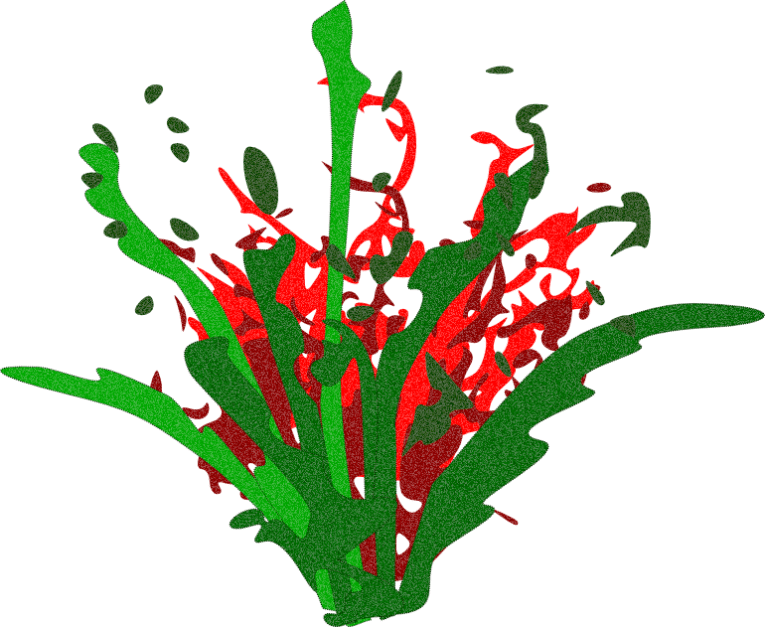
The saffron in the fresco does not look exactly any earthly sort, and it could be vector art rendered more or less as here. Saffron is good for eyesight, and owls have been famed for excellent vision.
It is likely someone painted that bird head for a griffin later, and the fresco at places is in bits as if someone hit it, so some elements were maybe rearranged. The thigh would be absolutely disproportionate even from an askew projector, in the idea ■here, with a winged garuda.
There was no habit to have dead bird heads for hairdo, and thus someone probably tried to add a solar threat, a soaring ■garuda, one with wings. Solar disasters on Earth ended with the Roman conquest of Egypt. The conquest was military. It was not cognitive persuasion or religious idealism.
With regard to features and attributes, a full-title female God would be a regular true God, only one that can have children. I do not see this for a weakness; rather sublime and of a tender feel, the impression would be, also with Potnia Theron properly being the Master of Animals, only female in gender and with a kid. Ability is not anything anti-family.
With a phrase as “Mother of Seven”, if we consider the number of the days of the week, the same in Old Testament too, the seven would make reference to Creator powers. In non-flectional languages the difference would not show outside the context; “Mother of Seven” would be the same for kids as well as days.
It is quite possible that a Hebrew theater was forbidden. The present-day classification for Hebrew is “fusional-synthetic”. Seven children and seven days would be shav’a yaldim, shav’a yemim; Polish is completely flex: siedmioro dzieci, siedem dni.
We could say there was a scandal about similarity in words with Jewish rabbis and ravens in context with absence of clothes, but seven days and a kid could quite make it for a God, to people who’d grant the title to the Creator of this world. Let me look at the planetary creation. The physics is sophisticated and — good looking. I have nothing against the possibility the work is by a woman. I sure would not leave in order to look for a male God.
Linguistic ■metathesis may have been part in names that are today ■Shiva, for a major deity of India, or a Chinese ■师傅 master at skill (that sounds a bit like {shivo} in movies sometimes).

Metathesis is not anything unusual, if people do not write. Gecko comes from tokek, and the Australian wandjina may have come from… the word “innumerable” in Chinese. For Her and Him, in protective clothing, let us look up the lightning couple (it is “brothers” in Australian).


Here is the Chinese glyph, for the face, countenance. The Chinese plenty to count is 建 萬, jiàn wàn. Inserting a stop sound, as d or t, happens between illiterate syllables or the literate vowel hiatus as in French. The difference is the French absolutely do know what they’re doing, but the sound is just a natural thing to happen. It is human articulation.
Akrotiri frescoes were discovered in 1967, but they may have traveled the world in drawings and tales. Greeks were not likely those who borrowed from the word garuda, because their stem is in the participle. For the amaruge, feel welcome to the ■Garuda again.
Into the participle straight — people possibly never have borrowed words and do not today either, whereas the plain Greek verb does not have the {g}; it is amarusso.
I do remain a non-believer, and philosophy is my choice. People are people, and frescoes are frescoes. If there are other people in the outer space, and they even created planet Earth, this does not make them God as the original creator. People on Earth do things in genetic labs, never having created the species.
However, to claim the original Creator died for you is not something I’d say “sound”, also if you mean a fresco does not show the true God. If the idea to talk about God would be to reflect against people, like people don’t do this and don’t do that, so we have it for God — this would not work either, because to think about afterlife, you need to think about a continuation. Otherwise, it is not your life anymore and you do not have afterlife really.
Well, having created the planet would be some merit and thus deserve credit. (I am not willing to make any claim on another life generally, Gods included; if I’d harm or kill, it would be in self-defense). Praise be to the Creator, if this potentially created planet was created really, and may he or she live well.
My philosophy is about embracing the ultimate idea, of my life after my physical body dies. It cannot be anything on this side of partible physics anymore. It cannot be anything to make merely a reflection, and I cannot go there with a story I don’t believe. I have started my ■Shapely and Handsome Fable.
There may be no need to try having any people for Gods. It sure never worked well for ancient Rome, and it would be some ■Heart of Darkness or ■Apocalypse now, for powers a human being has no cause to claim: gods would live forever, and who would stay on this planet for eternity really? The Shapely and Handsome tale is about that original cause too.
There is a piece of writing that Thomas Paine questioned, about saints coming out of rock and going to town. The name “saint” would imply human shapes recognized for someone good. Maybe Earth was visited, and the people who decided the Bible enclosed the description. It would have been locally and very long ago, there remaining only that single description.
We should not mistake the outer space for the Other Side, and archaeological discoveries do not persuade me without ■carbon dating (where I would not believe all and everything either), yet those far-Eastern, Indian and Chinse, they compare in considerable majority to a ■270 million-year-old rock that says the Chinese Communist Party is to fall. There is no carbon in this today, just as there was no Chinese Communist Party 270 millions of years ago.
This does not mean I would not favorably appreciate this world. I only really do not know who, if, created it, and if there is one author or two authors, or a few, or many, of this world of ■bird color eggs, where pendulums it is enough to swing, and nature gives shows of physics in winter avalanches (better watched from a safe distance, of course), and of incredible spring time hues.
In the Act of Creation the shape would have come withe the Creator fingers; otherwise, with an accident in the “cosmic soup”. Alternately, there is a constans — as I have mentioned with the ■Garuda. Manually to drive a paint bucket without such a constans might be difficult.
Part-determined stochastics may be interesting, but it does not guarantee divine interest forever. Maybe someone did theirs and went on to do something else.
Objectively and on planet Earth, it would be a game more than an honest discussion, if one said God is, another said God is not, and the everyday man was to go to war. Neither of the two could know for a fact on Earth today, whereas speaking with relevance might advise the plain maybe.
Atheism looks difficulty using the grammatical negative. You have not been the cosmos entire, not even on the Moon in person, yet you say God sure is not. As if everyone cared to assist from distant lands, only if they existed.
Atheism is like trying the negative to see if it fits. For the Universe entire and any Other Side as likely more than not — the negative does not work for me. It is presuming.
The affirmative is not the same pair of shoes, as it relates to logically stating on things, where No berry is better than a bad berry may serve a beginner example. Non-being has to have being to be — is more advanced (non-being has to exist, to be spoken about sensibly; a thing already the Ancients discussed).
To talk with relevance to myself, I’d say God maybe is — affirmatively without exaggeration. I have no idea if God would do anything for me: this is yet equally true about anyone on Earth. Most people who say that God is, mean that God does things for them, or that they are with that option or opportunity that God would for.
History has examples. To need God’s intervention, people would have been under other people, sometimes such as to claim God on their side with the Bible: yes, the book about the Jewish with kids’ heads in baskets, or Moses telling his troops to take underage hostage girls for the obvious purpose.
The Old Testament was not excluded from teachings with the coming of the New, and a prominent example might come with the ■Order of the Cross fighting Poles, where both were Christian and both were Catholic, the Polish accusing the knights of mutilations and robbery, to omit from reports own practices of ■impalement or ■Judas cradle (national and sexually deviant method of torture; tap to translate to English).
It is the preeminent deviance I hate most, about those ideas for nationality, and I do not wonder, honestly, why no God ever would come to help. The nick, “torture for the sleepers” would hint at the prevalent in Poland (also today, or until the time I left forever) emphasis on self-oriented sexuality, whereas forcing it can be only sick. It would give Teutons a Cause.
About the flogging habit by the Polish Humer, you may read here, with the ■Toolbox Poland (I want to change my citizenship). The Polish Home Army Kedyw continues to sound foreign, or like the Egyptian Khedivate. The ambition was sure territorial, and maybe solar too (it would be usually odd then, to see how some people think they belong to a secret organization and know things other people could not notice).
I sometimes wonder if there would be solar innuendos to fuel the present conflict between Russia and Ukraine. Russians would have a point then, against the Ark of Covenant Zelensky (he is of a Hebrew religion).
Back to the Cradle proper, in legends it has been the name for a good afterlife and no torture, since times before Christian. The word for the afterlife would have been ■kolebka at the times the torture was invented by the Polish, but there was no difference in everyday use from ■kołyska, exactly as in the name for ■the torture.
Legend has it, God (the Creator) gave the human essence as in a bud. The essence existed before in the Cradle as a place of origin, on that Other Side, different from the partible physics of this world. This might be why some people say it is being back with God, when your body dies.
I do not believe the essence would have had deviance in it. Things like the Polish “cradle” are naturally repulsive to me, and I think I am not the only one.
I don’t know if the Polish would have been compulsive about offending afterlife, or maybe the Polish only never thought.
Here’s my Honeybee, who said:
The Great Design did not seek direction with lower parts, for the mind. In languages, the gender for a book could be “her”, “him”, or “it”. As well, it was no erotic behavior, to stand and read a book; ancient Greeks had a word as ἔρομαι, eromai, for asking questions, and a word shape as ἐρωτημᾰτῐκός, erotematikos, became to mean the interrogative.
Finally — about visions and revelations — any visual or auditory impression from outside the body must come in a human being via his or her functioning primary sensory cortex, in the brain. The cortex responds to physical parameters within the human range. We cannot see infrared, because the human sensory cortex does not have responsiveness for it. If we hear further than 20 kHz, it means we’re under stress; as nobody can go broader than 30 without technological aid, and 20 is the natural everyday, it remains the accepted range. I do not buy headphones above that.
The sensory function is standard; this is how people happen to see or hear “the same”. I do not know about all possible suggestion technologies and techniques, yet it has to be of a physical parameter, of this earthly reality, for a person to report images of color and shape.
As a proponent of Deism, Thomas Paine wanted certainty in belief, that God is. Well, is there certainly, or is there certainly not, a fountain of fresh mineral water — somewhere nobody knows… Am I ever going to get to such water — somewhere nobody knows?
Would you tell troops there is a mountain, you are sure, you only have never seen it, and they cannot see it either?
Mineral springs or mountains should be so much easier than matters of God, and already here, at this easy level, answers would be discouraging. Therefore, I will stay with my resolve that God maybe is. Possibility is good enough: people would not go into this or that, in case — if the After would rather have sane guys in?
To live on this Earth keeping own sanity: the planet does not look good at times and places, so I’m certainly not going to imply the Creator would be watching. God maybe is.
There is actually nothing wrong with admitting you do not know, if you do not. I absolutely agree with the European human charter, there should be freedom to choose a religion, but never an obligation or duty to do so.
The US has had some good experience with freedom of conscience already:
“The difficulty then was, how to avoid having two of some other sect, by means of the new choice. Several persons were named, and for that reason not agreed to. At length one mentioned me, with the observation that I was merely an honest man, and of no sect at all, which prevailed with them to chuse me” — Benjamin Franklin did not belong to any church.
We may get opinion today, that America is too politically correct to be truly Christian: the country is a democracy, and the religion is about its Kingdom of Heaven. Monarchy prevailed when the Bible was formed, but there is no evidence or proof, again, that eternal life would depend on inherited succession. It looks unlikely.
It is overinterpretation, to call the Knossos room a “throne room” — where is the throne? where is the heavy door to let only the select see the ruler? — and Greek city-states, as a political setting, actually showed unwillingness to have monarchy really, as a suzerain over the country entire. The influence was probably external, to enforce feudalism, and it was probably ancient Egyptian.
My preference is definitely democracy, always has been, and I do not associate that with any hindrance with regard to afterlife. I do not place politics over religion. For all the controversy that religion has been, I would rather have philosophy I could live by, in that lasting sense too, and I’ve written my ■fable on that: Thomas Paine lacks in affect for language, and I believe language is certainly good enough to talk about eternity. A good fable can in all be true, and remain a good fable. If there is Heaven, it is in Heaven; Earth is on Earth.


 TERESA PELKA.COM